I spent two years backpacking across Southeast Asia. First three months? I got food poisoning four times. Once so bad I ended up in a clinic in Chiang Mai, hooked to an IV drip. The nurse looked at me and said, “You ate from the cart with the cold soup, didn’t you?” She was right.
Here’s what I learned after eating at over 200 street stalls across Thailand, Vietnam, Malaysia, Singapore, Indonesia, and the Philippines. You don’t need to avoid street food. You need to learn how to read a stall.
Hot Food Kills Bacteria — That’s Your First Filter
The single most important rule: eat food that’s cooked fresh in front of you, and served piping hot. Bacteria die at 60°C (140°F). Most street food in Asia is cooked at temperatures exceeding 200°C on a wok or grill. The danger isn’t the cooking — it’s what happens after.
Buffet-style stalls are a trap
Walk past any stall where pre-cooked food sits under a heat lamp or in an open tray. That curry has been sitting there for hours. The temperature has dropped into the danger zone (4°C–60°C). Bacteria double every 20 minutes at room temperature. A chicken curry that sat out for 3 hours? You’re eating a science experiment.
In Bangkok’s Yaowarat Road, I watched a stall owner reheat the same batch of pad thai three times across an evening. Each time, more people bought it. Each time, it got riskier.
Watch the fire
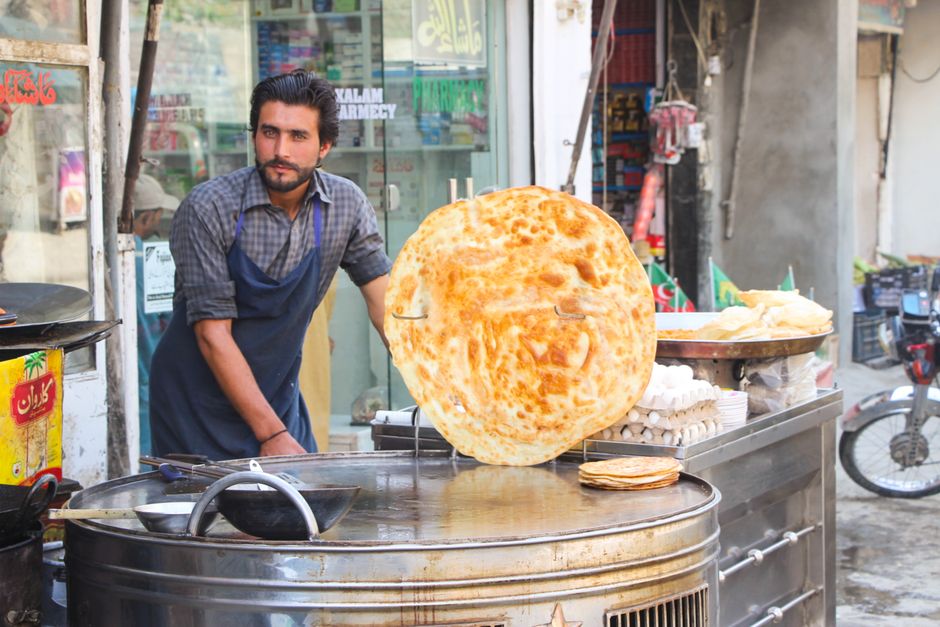
Good stalls look like a small kitchen on fire. The wok is smoking. The grill is flaming. The broth is bubbling. That’s your green light. In Hanoi, the best bun cha I ever ate came from a woman who worked a single charcoal grill, cooking each batch of pork right when you ordered. She had a line 20 people deep. No one got sick.
Ice and Water — The Hidden Danger Most People Miss
You check the meat. You check the vegetables. You forget about the drink. Ice is the #1 cause of traveler’s diarrhea in Asia that I’ve seen among fellow backpackers.
Block ice is safe. Crushed ice is a gamble. Block ice comes from commercial factories that use filtered water. Crushed ice is often made on-site with tap water. In Malaysia, I watched a stall owner chip ice off a giant block with an ice pick — that’s the safe kind. In Indonesia, I saw a woman scoop crushed ice from a plastic bag that had been sitting in a puddle on the floor. I walked away.
What to drink instead
Stick to bottled drinks with sealed caps. Hot tea is safe — the water was boiled. Fresh fruit shakes are safe if you watch them blend it with bottled water. In Thailand, cha yen (Thai iced tea) is usually made with boiled water and condensed milk. That’s fine. But if you see them scoop ice from an open cooler into your glass? Politely decline.
| Drink | Safe? | Why |
|---|---|---|
| Bottled water (sealed) | Yes | Factory-sealed, tested |
| Hot tea | Yes | Water boiled above 100°C |
| Fresh fruit shake (watched) | Yes | Bottled water used, visible |
| Ice from block | Yes | Commercial filtered water |
| Crushed ice from open bin | No | Likely tap water, unsealed |
| Tap water (any form) | No | Not potable in most of Asia |
How to Pick the Right Stall in 10 Seconds
I developed a mental checklist. Takes less than ten seconds. Saved my gut more times than I can count.
Look at the queue. Locals know which stalls are clean. If you see a line of office workers, taxi drivers, or grandmothers — that’s your sign. In Singapore’s Maxwell Food Centre, the Tian Tian Hainanese Chicken Rice stall has a line that snakes around the corner. Every local in the queue knows something you don’t: that stall sells hundreds of portions a day, so nothing sits out long enough to spoil.
Check the owner’s hands. Are they wearing gloves? If yes, are the gloves clean? I’ve seen gloves that were dirtier than bare hands. In Penang, a char kway teow master used the same pair of gloves for four hours. They were black with old sauce. Bare hands that are washed regularly are actually safer than filthy gloves.
Look at the raw ingredients. Fresh meat should be pink, not brown. Vegetables should look crisp, not wilted. Fish should have clear eyes and red gills. If the raw ingredients look sad, the cooked version won’t be better.
The one exception to every rule
Fermented foods. Kimchi, pickled vegetables, fish sauce — these are naturally preserved by salt, acid, or fermentation. They’re generally safe even if they’ve been sitting out. The lactobacillus bacteria in proper kimchi actually outcompete harmful bacteria. I ate kimchi from a street cart in Seoul that had been sitting in a ceramic pot all day. No issues.
What to Eat and What to Skip — By Country
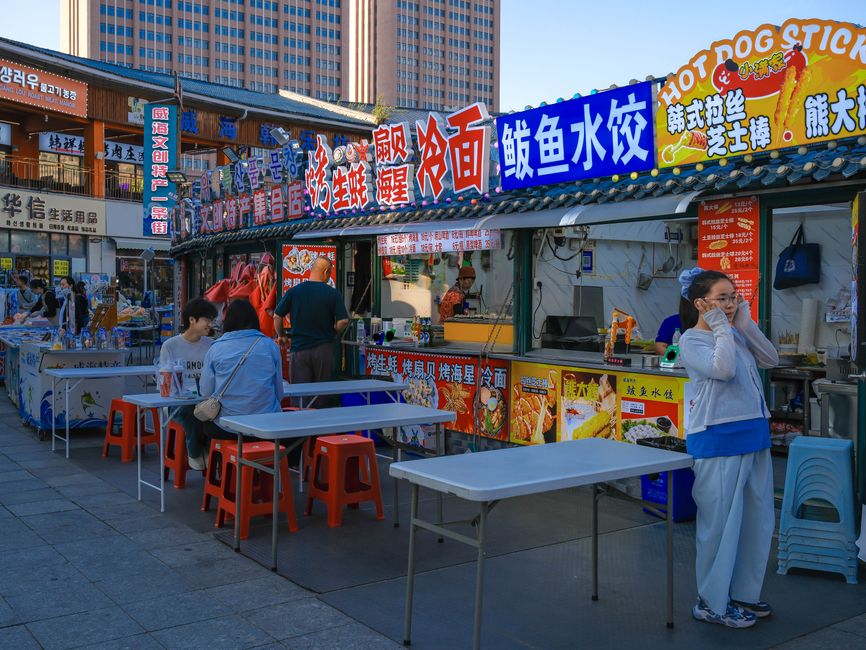
Not all street food is created equal. Some dishes are inherently safer than others.
Thailand: Eat pad thai cooked to order, som tam (papaya salad) made fresh with your chosen spice level, and moo ping (grilled pork skewers) that come straight off the charcoal. Skip the lukewarm green curry that’s been sitting in a metal pot for an hour. Skip any fried insect stall unless you see them frying fresh batches — old fried crickets get rancid oil.
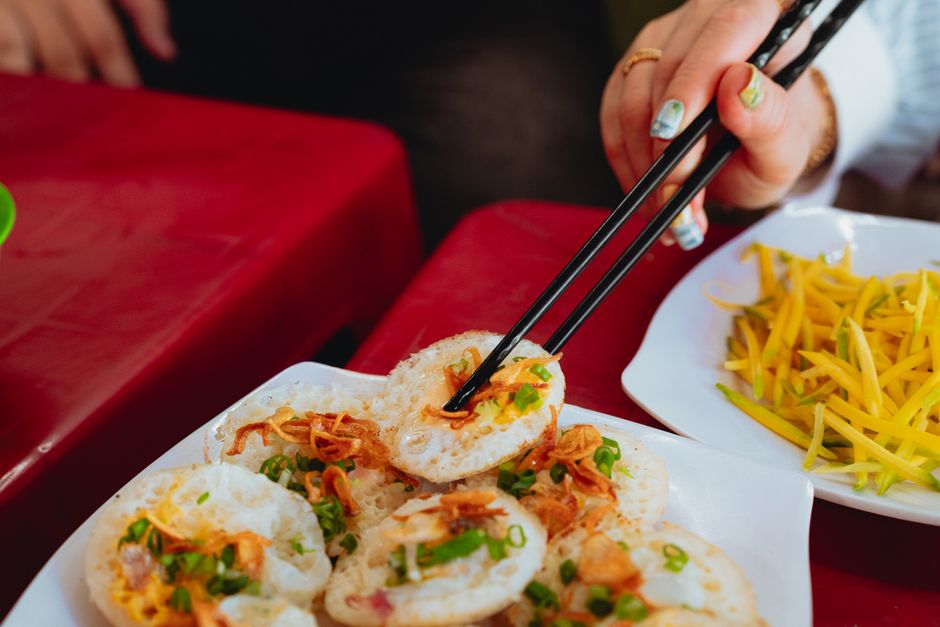
Vietnam: Pho is your safest bet. The broth is boiled for hours at high temperature. Bun cha (grilled pork with noodles) is also excellent because the pork is cooked right in front of you. Skip banh mi from stalls that pre-stuff the baguettes and let them sit. The mayonnaise and pâté spoil fast in tropical heat. A banh mi made to order? Fine.
Malaysia and Singapore: Hawker centers are generally cleaner than street carts. The government regulates hygiene. Look for A or B grade stickers displayed at the stall. Satay (grilled skewers) and nasi lemak (coconut rice with sides) are almost always safe because they’re cooked fresh in high volume. Skip the cendol (shaved ice dessert) from stalls that don’t use block ice.
Condiments and Sauces — The Silent Spoilers
Here’s something most guides don’t tell you. The food is fine. The condiment bottles are a biohazard.
In Bangkok, I watched a stall owner refill a fish sauce bottle that had been sitting in the sun for three days. She just topped it off. The old fish sauce at the bottom had been fermenting in the heat, growing who-knows-what. Same with chili flakes jars, sugar shakers, and vinegar bottles. These containers rarely get washed.
My rule: Use condiments from single-use packets. In Vietnam, most stalls have little plastic packets of chili sauce and soy sauce. Grab those. In Thailand, 7-Eleven sells tiny packets of Sriracha and fish sauce for 5 baht. Carry a few in your bag. If a stall only has communal bottles, I skip the condiments entirely. The food usually has enough flavor on its own.
When Your Gut Still Rebels — Damage Control
Sometimes you do everything right and still get sick. Maybe the stall was clean but your stomach wasn’t ready for the local bacteria. It happens. Here’s how to handle it without ruining your trip.
Carry oral rehydration salts (ORS). These are cheap, lightweight, and available at any pharmacy in Asia. DripDrop ORS packets ($6 for 10 on Amazon) are my go-to. They replace electrolytes faster than plain water. In Thailand, buy “Electral” at any 7-Eleven for 15 baht ($0.40). Mix one packet with 1 liter of bottled water and sip it through the day.
Immodium is for emergencies only. I carry it, but I only use it if I have a long bus ride or a flight. Stopping diarrhea means your body can’t flush out the bacteria. Let it run its course for 24 hours. If it lasts longer than 48 hours, or if you see blood, find a clinic. In Bangkok, BNH Hospital has English-speaking doctors and charges around $40 for a consultation.
Probiotics before and during travel. I start taking Culturelle Digestive Health Probiotic ($18 for 30 capsules) three days before I leave and continue through the trip. It populates your gut with good bacteria that crowd out the bad ones. Does it guarantee you won’t get sick? No. But I noticed a clear difference. My first trip (no probiotics) = 4 bouts of illness. My second trip (with probiotics) = 1 mild case that resolved in 12 hours.
Bottom line: Eat hot food from busy stalls. Avoid lukewarm buffets and crushed ice. Use single-serve condiments. Carry ORS. And trust the queue — locals know which stalls are safe. Your stomach will thank you, and you’ll eat the best meals of your life.