
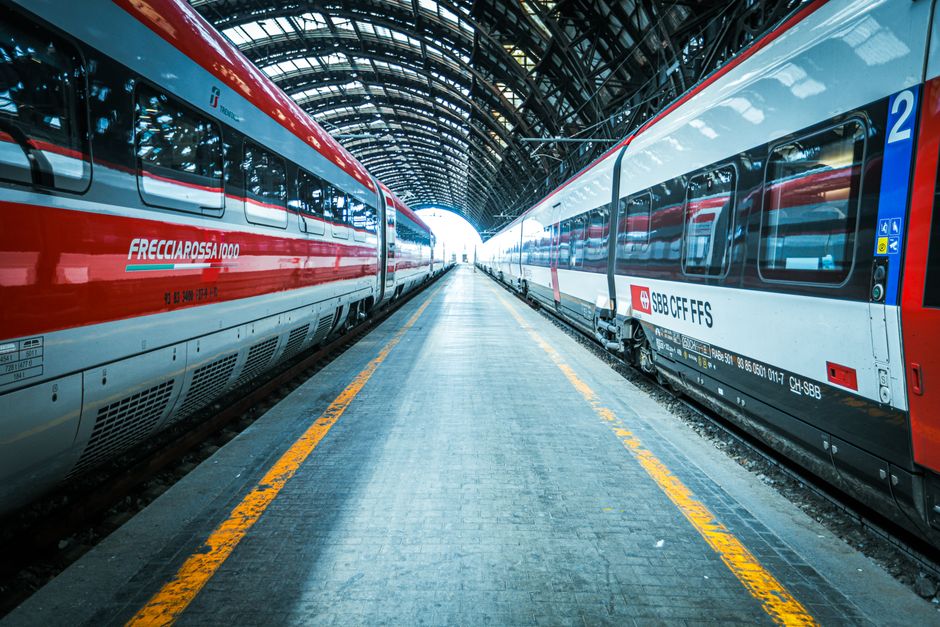
Italian regional trains let you travel between cities, smaller towns and everyday neighbourhoods without driving. The stressful part is usually understanding the details: which station to choose, whether your ticket needs validating and how to find a train whose final destination is somewhere else. A simple routine helps. Plan the whole journey, read the instructions on your actual ticket and use the departure board to confirm what happens next.
Understand which train you are booking
Regional services appear in journey planners under names such as Regionale and Regionale Veloce, sometimes shortened to R and RV. They serve local and regional journeys, with stopping patterns that vary by route. A Regionale Veloce may skip stops that another regional service makes, so compare the journey details rather than choosing by departure time alone.
Check the category for every leg of a journey involving changes. An itinerary can combine regional services with an Intercity or high-speed train, and the ticket conditions may differ between them. Do not assume a ticket for one category covers another simply because both trains travel between the same cities.
Regional trains generally have unreserved seating. Buying a ticket does not normally give you a particular seat, and popular services can be busy. If sitting together matters, avoid making the day depend on finding an empty carriage.
Choose the right stations at both ends
Large Italian cities have several stations, and the most familiar name is not always the most useful. Compare the station location with your accommodation before buying. Firenze Santa Maria Novella and Firenze Campo di Marte, for example, are different stations; a booking to one should not be treated as a booking to the other.
Smaller destinations need the same attention. A station named after a hill town may sit in the valley below it. Check the walk, terrain and onward transport before deciding that arriving by train gets you all the way there. Repeat that check for the return, especially if you will leave after an evening meal.
- Save the full departure and arrival station names.
- Note the train number and any interchange station.
- Check the route from the station to your final address.
- Look at return options before committing to a day trip.
Buy a ticket you can confidently use
Use the operating railway’s official website, app, ticket office or station machines to check options and conditions. Trenitalia runs many regional services, while other operators serve particular areas. Identify who operates your train, especially when travelling across a regional boundary or using a local transport pass.
Before paying, review the date, stations, passenger details and ticket type. Check the conditions for children, bicycles or animals if relevant. A city transport ticket or regional pass should only be used on a train when its official validity explicitly includes that service and route.
Keep the actual travel ticket accessible. A payment receipt is not necessarily the document inspectors need. For a mobile ticket, open the code and instructions before leaving reliable internet access. Save an offline copy where the operator permits it, charge your phone and carry identification when required.
Understand validation before boarding
Paper tickets
Many conventional paper regional tickets require validation at the station before boarding. Read the ticket instructions and locate a validation machine with time to spare. Insert the ticket as indicated and check that the machine has marked it successfully. Buying a ticket and validating it are separate steps when validation is required.
If the machine fails or the instructions are unclear, seek railway staff immediately. Follow the operator’s official procedure for a broken or unavailable validator. Do not assume that boarding and waiting for an inspection is an acceptable substitute.
Digital tickets
Digital tickets follow their own conditions. Trenitalia’s Digital Regional Ticket activates automatically at the selected train’s scheduled departure, but other operators and ticket products may work differently. Read the instructions supplied with your purchase and check current guidance on the operator’s official website.
If your plans change, check the permitted change process before the booked departure. Never assume you can take any earlier or later service. Ticket flexibility, activation and validity are separate questions, and an old travel tip may describe a different product.
Find your train using its number
At the station, look for Partenze, meaning departures. Arrivi refers to arrivals, and binario means platform or track. Match the train number and departure time first. The destination shown on the board may be the final stop, beyond the place where you intend to get off.
Check the intermediate stops to confirm your destination, then follow the signs to the platform. Some platforms require stairs, a subway or a footbridge, so allow time to move through the station. Use designated routes and never cross the tracks.
Keep checking displays and listening for announcements after reaching the platform. Assignments can change. Before boarding, compare the train’s display with your journey details, and let arriving passengers get off before you step inside.
Make the ride comfortable
Choose luggage you can lift and manage without help. Keep doors, aisles and accessible spaces clear, and use racks where your bag fits securely. Keep valuables close, particularly while boarding, when your attention is split between luggage, tickets and finding somewhere to sit.
Carry drinking water and anything essential rather than depending on onboard catering. Have your ticket ready for inspection. Follow your progress using station names and onboard announcements; mobile reception and location tracking can be unreliable.
Gather your belongings before your stop, then move towards the exit safely. If the doors have an opening button, wait until the train has stopped and the control is enabled. Leave yourself enough time to get off without rushing past other passengers.
Leave room for changes
A connection that looks possible on a screen may feel uncomfortable with luggage or unfamiliar platforms. Prefer an itinerary with room to find your next train, especially before a flight, ferry or reserved long-distance service. Avoid relying on the final departure when missing it would leave you stranded.
If a service is delayed or cancelled, check the operator’s live information and station announcements. Ask staff what your ticket allows before taking another service. Replacement buses may depart outside the station, so confirm the boarding point rather than waiting automatically on the railway platform.
For step-free travel, check station facilities and assistance arrangements before booking. Engineering work, industrial action and local disruptions also deserve a final check through official sources close to departure. With the right stations saved, your ticket understood and some breathing space in the plan, regional rail becomes a manageable part of your holiday.