
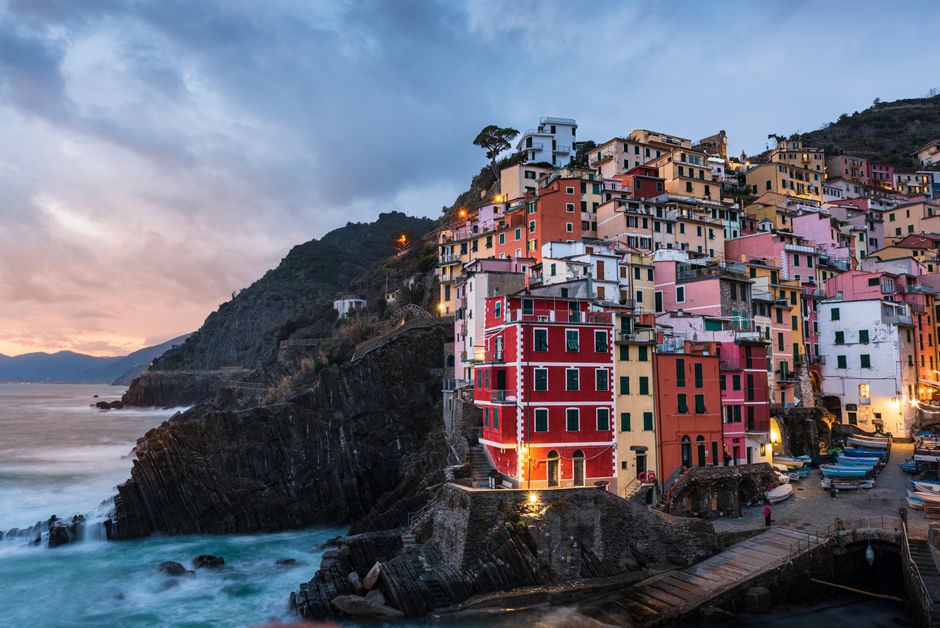
Spring gives the Cinque Terre hiking trails a fresh setting: green terraces, flowers beside old stone steps, and sea views that change with the passing clouds. Walking here brings you close to the landscape behind the colorful villages, where paths connect vineyards, woodland, and hillside settlements. The best approach is to choose a manageable route and leave room to adapt. This is steep coastal country, and a rewarding day depends more on conditions and your comfort on uneven ground than on how many villages you reach.
What spring means for your walking plans
Spring can bring comfortable walking weather, but it also brings rain, cool winds, and sudden changes. A bright morning does not guarantee a dry afternoon. Stone steps and exposed rock can become slippery, while stretches without shade may feel warm even when the air is mild. Pack for both possibilities and assess the forecast for the hills as well as the waterfront.
Earlier spring generally calls for more flexibility around unsettled weather. Later spring can feel busier, especially around public holidays and weekends. Neither guarantees empty paths or reliable sunshine. Give yourself several possible walking days if hiking is the main reason for your visit, and avoid making one particular section the entire purpose of your trip.
Understand the trail network before choosing a route
The five villages are Monterosso al Mare, Vernazza, Corniglia, Manarola, and Riomaggiore. Their familiar coastal connections are only part of a wider network extending uphill through cultivated terraces and wooded slopes. A line between neighboring villages on a map can conceal substantial climbing, long stairways, and narrow sections above the sea.
Check the Cinque Terre National Park’s official trail information before you travel and again on the morning of your walk. Look at the individual section, its difficulty, any closures, and any restrictions on direction or access. Ask at an official park information point if anything is unclear. An old itinerary or a recent photograph cannot establish whether a path is safe and open today.
Monterosso to Vernazza
When open, this connection offers a classic combination of hillside walking and views toward the villages. Expect climbing and descending on uneven steps rather than a gentle waterfront promenade. Narrow stretches require patience when meeting other walkers. Follow any required direction of travel, and choose this route only if everyone in your group is comfortable with sustained stair climbing and exposed coastal terrain.
Vernazza to Corniglia
This section also climbs above the shore, passing through a landscape shaped by agriculture. Corniglia occupies an elevated position rather than sitting directly beside a harbor, so reaching the village does not automatically mean an effortless finish. Include the onward journey to its station in your plan. If tired legs make descending steps uncomfortable, ask about current local transport options before setting out.
Higher paths through Volastra
Routes around Volastra offer a different perspective on the coast, with terraced slopes and views from above the villages. They can involve considerable ascent, particularly when starting from Manarola. Treat an uphill alternative as a separate hike requiring its own assessment, rather than assuming it is a convenient replacement for a closed coastal section. Study the official route description, junctions, and descent before committing.
Build your day around one satisfying walk
For a first visit, choose one open section that matches your fitness, then use the train for the remaining travel. This leaves time for breaks, navigation, and exploring the village where you finish. It also reduces the temptation to push onward simply because you planned to connect all five villages on foot.
Start with breakfast, refill your water, and locate the correct trail entrance before beginning. Allow a generous margin beyond the published walking estimate: steps, passing other hikers, and stopping for photographs all affect your pace. Have lunch after the walk or carry food for a suitable rest spot, without depending on finding refreshments between villages.
If you have another day, reassess how your knees and feet feel before choosing a second route. Repeated descents can be more tiring than expected. A shorter walk followed by time beside the harbor may suit you better than another steep crossing.
Prepare for steps, weather, and uneven ground
Wear supportive walking footwear with a secure fit and a sole that grips uneven surfaces. Check the park’s current footwear requirements before departure. Shoes that feel fine on a city pavement may offer poor traction on damp stone. Try your footwear on stairs before the trip, and avoid making a long coastal hike its first outing.
- Carry water for the whole planned section, with extra capacity for warm conditions.
- Bring a waterproof outer layer and a light warm layer for wind or unexpected delays.
- Pack sun protection, snacks, and a small first-aid kit with blister supplies.
- Keep your phone charged and save the official route map for offline reference.
- Use a comfortable daypack that leaves your hands free on steps and narrow passages.
Walking poles may help on sustained descents if you already know how to use them. Keep their tips controlled around other people and put them away where they obstruct safe passage. A light pack is useful, but do not remove essential water or weather protection merely to save weight.
Make access and transport part of the plan
Some popular paths have controlled access. Check official information about the relevant Cinque Terre Card, what it includes, and whether your chosen route has separate booking arrangements. Do not assume every card covers every experience or transport service. Match the product to your actual walk and travel needs before buying.
The railway makes it practical to walk in one direction and return by train. Check current services with the official operator, including your connection back to your accommodation. Keep your ticket accessible and follow its validation instructions. Allow time to reach the platform from the village, particularly where stairs separate the station from the center.
Know when to change your plans
Rain, thunderstorms, strong wind, or an official warning can make a coastal hike unsuitable. Follow closures and instructions even if other visitors continue past a barrier. Wet weather may also affect higher alternatives, so moving uphill is not an automatic solution. Ask park staff about appropriate options instead of improvising a detour.
On an unsuitable hiking day, stay within village areas that remain safely accessible, explore local streets, or rest until conditions improve. Avoid exposed viewpoints and the water’s edge in rough weather. Keeping a spare day makes changing your plans easier.
Walk carefully through a working landscape
The terraces are cultivated land, and the dry-stone walls help hold the slopes in place. Stay on marked paths, leave gates as instructed, and avoid stepping into vineyards for photographs. Let faster walkers pass at a wide, secure spot; stop fully before taking out your camera. Carry your rubbish back to the village and keep access clear for residents.
A good spring hike here leaves you with enough energy to enjoy its ending: a slow walk through village lanes, a meal, and a look back toward the terraces you crossed. Choose your route with care, respect the day’s conditions, and let the landscape set the pace.