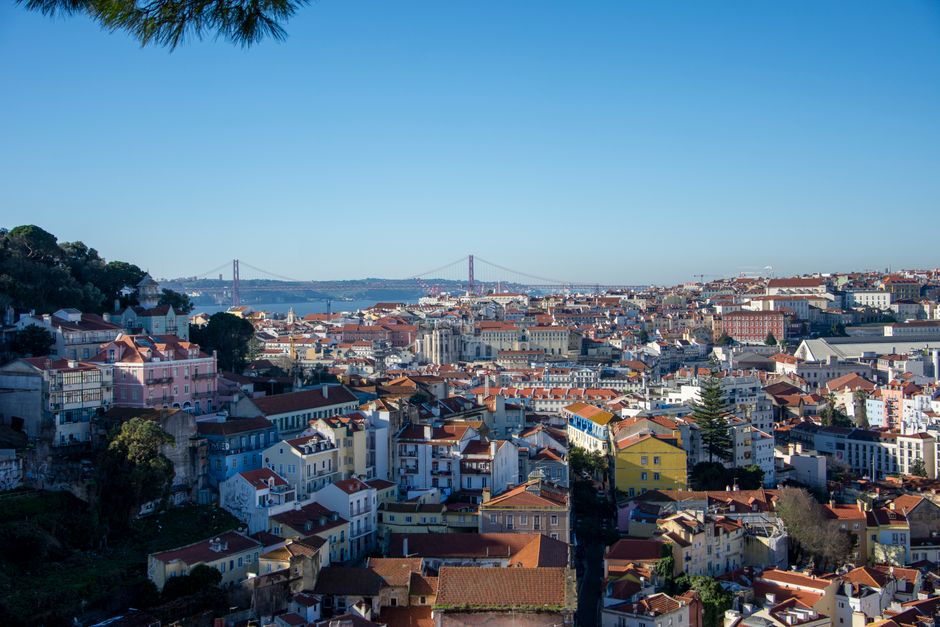
Lisbon makes more sense when you see it from above. Roofs spill towards the Tagus, the castle rises across a valley, and streets that felt confusing at ground level become part of a recognisable landscape. The city’s miradouros, or viewpoints, also give your sightseeing a welcome pause. The trick is choosing a few that work together and planning uphill journeys before tired legs make those decisions for you.
This guide to Lisbon’s hilltop viewpoints and how to reach them groups the main stops into manageable outings. You can enjoy a broad panorama, a tiled terrace and a river view without climbing every hill in a single day.
Plan around hills, not straight-line distances
On a map, Lisbon’s viewpoints can look deceptively close. Between them, you may encounter a valley, steep pavement or a staircase that turns a short connection into a demanding walk. Check the elevation and actual walking route before setting off. A route following roads may be longer but easier than one using steps.
Choose one side of central Lisbon for each outing. Graça and Alfama combine naturally on the eastern hills. São Pedro de Alcântara and Santa Catarina fit together on the western side. Crossing between those groups usually means losing height and climbing again, so treat that journey as a separate part of your day.
- Wear shoes with reliable grip on smooth or uneven paving.
- Carry water and sun protection, especially on exposed climbs.
- Save an offline map and pin your return transport stop.
- Allow room for rest breaks instead of adding another viewpoint to every gap.
Senhora do Monte: start high for a sweeping perspective
Miradouro da Senhora do Monte rewards the climb with an expansive view across Lisbon. The castle, lower neighbourhoods and river help you understand how the city fits together. It is a useful first stop if you want the big picture before exploring the lanes below.
How to reach it
Walking from Martim Moniz through the streets towards Graça involves a sustained ascent. Consult your map carefully: a suggested shortcut may include steep steps. To conserve energy, use public transport towards Graça and complete the remaining climb on foot, or arrange a vehicle drop-off on a suitable nearby street.
A drop-off does not necessarily put you directly beside the viewing edge. Check the final approach if steps, gradients or walking distance matter to your group. From Senhora do Monte, continue towards the Graça viewpoint, accepting that even a generally downhill outing can include small rises.
Graça: a city panorama with room to pause
Beside the church of Graça, this viewpoint offers another angle over the city and towards the castle. It is also known as Miradouro Sophia de Mello Breyner Andresen. Compared with the higher perch at Senhora do Monte, the surrounding streets feel more closely connected to the scene below.
How to reach it
Approach through the Graça neighbourhood, then follow signs or your map towards the church. Public transport serving Graça can reduce the climb from central Lisbon, but confirm the current stop and service before travelling. Crowded vehicles can make a flexible alternative valuable, so avoid making your entire outing depend on boarding a particular historic tram.
Graça works well as your main viewpoint or a pause on the descent from Senhora do Monte. If the uphill approach has already used your energy, linger here and shorten the remaining route. Reaching every terrace is less rewarding than having time to enjoy one.
Portas do Sol and Santa Luzia: rooftops above Alfama
Portas do Sol opens onto Alfama’s layered roofs and the Tagus beyond. Nearby Santa Luzia adds a more intimate setting, with decorative tiles and a terrace overlooking the neighbourhood. Their proximity makes them a sensible pair, although both can become busy when groups arrive together.
How to reach them
From Graça, follow a mapped route towards São Vicente and onwards to Portas do Sol. This makes a useful continuation of an eastern-hill walk. From the lower city, the approach through Alfama involves climbing; choose streets deliberately rather than assuming every picturesque alley leads conveniently upwards.
Visit both terraces before descending into Alfama if you want to avoid retracing your steps uphill. The lanes below invite wandering, but they also contain residential entrances and narrow passages. Keep doorways clear and pause somewhere wider when checking directions. After rain, descend slowly on polished paving and use handrails where available.
São Pedro de Alcântara: look across to the castle
On the opposite side of the central valley, São Pedro de Alcântara provides a broad view towards the castle hill. Its garden setting makes it an appealing place to sit and identify places you have visited. Seeing the eastern hills from here gives your earlier walks a different perspective.
How to reach it
From Restauradores, the direct pedestrian approach up Calçada da Glória is steep. A longer walk through Chiado and towards Bairro Alto can suit visitors who want to combine the viewpoint with neighbourhood exploration, though it still involves climbing. Check the route profile before choosing between them.
The upper end of the Glória route is beside the viewpoint. If you hope to use a lift or funicular to shorten your ascent, verify its current operating status with the official operator first. Keep a walking or road-transport alternative in mind, since maintenance and service changes can affect plans.
Santa Catarina: finish with the river
Miradouro de Santa Catarina shifts attention towards the Tagus and the bridge. It makes a satisfying change after looking across rooftops and church towers. Pair it with São Pedro de Alcântara by walking through Bairro Alto towards the Bica area, then following your map to the terrace.
This connection generally avoids descending all the way into Baixa and climbing back out. Nevertheless, check the precise streets and gradients. For a return towards the riverfront, plan the descent before dark if unfamiliar steps or uneven surfaces make you uneasy.
Choose a route that suits your energy
For an eastern outing, travel towards Graça, climb to Senhora do Monte if comfortable, then continue to Graça, Portas do Sol and Santa Luzia. Finish by descending through Alfama. For a shorter version, start at Graça and leave out the highest stop.
For a western outing, reach São Pedro de Alcântara, explore the surrounding streets and continue to Santa Catarina. Either route leaves space for a meal and unplanned stops. Morning can offer a gentler start in warm weather; late afternoon brings changing light but may also bring more visitors.
If you use a wheelchair, push a buggy or need to avoid steps, assess each approach individually. An outdoor viewpoint does not guarantee a level route. Consult official accessibility information and confirm transport arrangements before leaving. Check current access restrictions and services through Lisbon’s official tourism resources and transport operators. Then give yourself permission to stay wherever the view, a comfortable seat and the pace of the day feel right.