
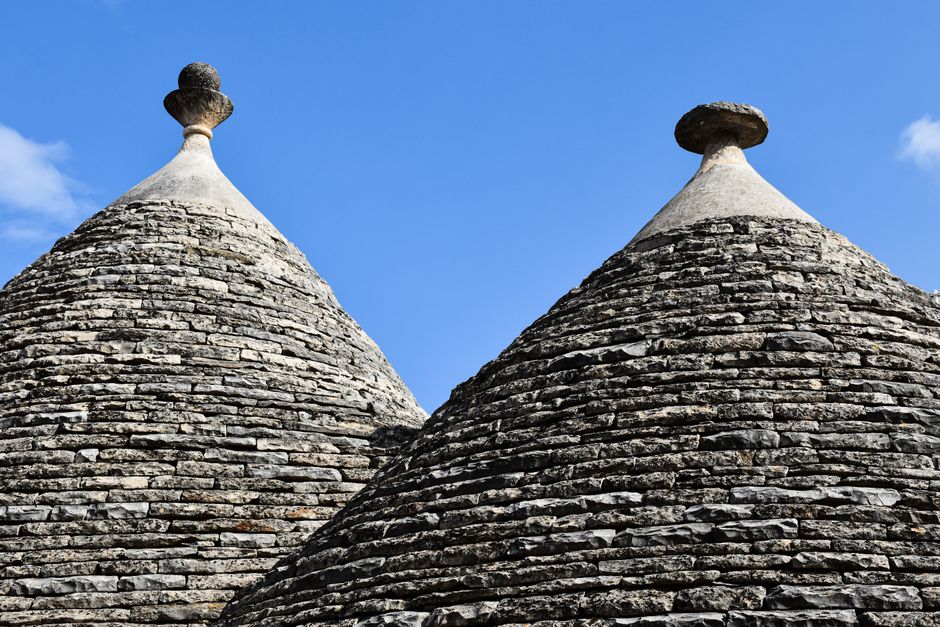
Alberobello is a place to explore slowly. Its whitewashed trulli, topped with layered stone cones, make an extraordinary roofscape, but the visit becomes more rewarding when you look beyond the photographs. Walking between the two main trulli districts, seeing an interior and allowing time for a proper break helps you understand these buildings as places where people have lived and worked. This guide focuses on planning that visit, rather than trying to fit the whole of Puglia into a day.
Know what you are looking at
A trullo is a traditional building associated with this part of Puglia; trulli is the plural. Thick stone walls and conical roofs are its most recognisable features. The building tradition uses local limestone and dry-stone construction techniques. Alberobello’s remarkable concentration of trulli has earned UNESCO World Heritage recognition, and the streets offer a chance to see how individual structures fit into a larger neighbourhood.
Notice how several cones can belong to connected rooms rather than separate houses. Look at the layered roof coverings, the different pinnacles and the proportions of doors and windows. Some roofs display painted symbols. Their interpretation deserves more care than a quick assumption that every design has an identical ancient meaning. Ask a knowledgeable guide or read interpretation in a cultural venue if this interests you.
Decide how much time to allow
A half-day is a practical starting point for walking through the main districts and visiting an interior. Give yourself a full day if you like architectural details, travel with children or prefer regular rests. Staying overnight can offer a different atmosphere for another walk, although it does not guarantee empty streets. Choose the length of your stay around your interests rather than a checklist of photographs.
Spring and autumn can be comfortable for walking. Summer requires more attention to sun, heat and breaks, while winter can bring rain and shorter daylight. Check the forecast before setting out. An early start or a later stroll may help you avoid the busiest part of the day, but holidays and group arrivals can alter the pattern. Keep your expectations flexible.
Get your bearings before climbing the lanes
Start by looking across towards Rione Monti from the central area. Seeing the roofs together helps explain the layout before you enter streets where individual walls and shopfronts dominate the view. Save a map and mark your arrival point, your return stop or your parking area. The centre is compact enough to explore on foot, but slopes and branching lanes can make walking more tiring than the map suggests.
Use a few landmarks to structure your visit instead of following a complicated sequence of photo stops. Leave room to take a side street, sit down or change direction when a lane becomes crowded. If you have a fixed departure, work backwards from it and include time to find the correct stop or return to your vehicle.
Explore Rione Monti
Rione Monti is the more commercial of the main trulli districts. Shops and visitor activity are part of the experience, alongside the architecture. Walk uphill gently and look above the displays to appreciate the rooflines. Taking a quieter side lane can make it easier to notice changes in the shape and arrangement of the buildings without stopping in the middle of a busy passage.
The Church of Sant’Antonio shows how the trullo form has influenced religious architecture. If you enter, remember that it is a place of worship. Dress appropriately, keep voices low and follow photography rules. During a service, allow worshippers their space and consider returning later. Check official visitor information if this is an essential stop for you.
You may encounter invitations to enter shops or view the roofs from a terrace. Clarify any conditions before going in, including whether a purchase or payment is expected. Choose an interpreted historic interior as well if you want a clearer understanding of domestic life. A souvenir display alone cannot explain how a household used these unusual spaces.
Slow down in Aia Piccola
Aia Piccola offers a more residential setting. Look at doorways, chimneys and the way neighbouring buildings meet. Here it becomes easier to think about everyday routines beneath the cones rather than seeing the district purely as a visitor attraction. Give it enough attention to appreciate that difference instead of treating it as an extra photo stop after Monti.
Respect the boundary between public streets and private homes. An open door does not invite inspection, and a chair outside belongs to someone’s living environment. Avoid blocking entrances, keep conversations considerate and ask before photographing people. Never climb a roof or step into a private courtyard to improve a picture. Move on if residents need to pass.
Include an interior
Trullo Sovrano stands north of the main trulli districts, near the Church of Santi Medici Cosma e Damiano. Its two-storey form makes it a useful addition to a visit focused on architecture. Check current access and visitor arrangements with official cultural or municipal sources before building your route around it.
Inside a historic building, pay attention to the connection between rooms, the available daylight and the space beneath the roof. Think about cooking, storage and movement through the home. Read interpretation before taking pictures. Thresholds, stairs and narrow passages may need care, so ask about access in advance if anyone in your group has particular mobility requirements.
Arrange transport and everyday comforts
If you drive, identify authorised parking before approaching the historic streets. Follow posted restrictions rather than assuming your navigation app has chosen a permitted route. Check the walk from your parking area, especially if hills are difficult for you. Carry essentials and leave luggage out of sight.
For public transport, consult official operators for your exact travel date and confirm both outward and return journeys. Check whether each section uses a train or bus, where you board and whether any replacement arrangements apply. Avoid combining several towns around an unverified connection. A comfortable return matters as much as an easy arrival.
- Wear secure shoes. Stone surfaces and slopes need extra attention when wet.
- Bring water and sun protection. Do not rely on continuous shade.
- Plan accessible stops. Ask directly about entrances, steps and toilet facilities.
- Allow a meal break. Read menus and ask about ingredients before ordering if you have dietary needs.
With children, leave time for rest rather than promising a succession of sights. Pushchairs may meet awkward surfaces and gradients. Travellers with limited mobility should contact local tourist information about suitable routes instead of assuming that a small centre is entirely step-free.
Finish without rushing onwards
Alberobello fits naturally into a wider Puglia trip, but nearby places still require travel and another arrival. Leave additional stops optional. Before departing, take one last look at the roofscape after exploring the rooms and streets beneath it. The cones become more than a familiar image when you understand their relationship to homes, neighbourhoods and daily life.


