Over 5 million people visit Tuscany every year. Most of them end up in the same traffic jam between Florence and Siena, eating €18 pasta in a piazza that looks exactly like every Instagram photo they’ve already seen. The real Tuscany — the one with the rolling hills, the cypress-lined dirt roads, the medieval hill towns that haven’t been turned into souvenir shops — is Val d’Orcia. And most tourists screw it up.
They drive straight to the famous “gladiator” road (SP146), snap a photo, and leave. They miss the seven towns that actually make this valley worth your time. They don’t know how to navigate the ZTL zones, when to arrive to beat the bus crowds, or which €12 bottle of wine is actually worth buying.
This is how to do Val d’Orcia right.
What is Val d’Orcia — and why does it look different from the rest of Tuscany?
Val d’Orcia is a UNESCO World Heritage site, but that doesn’t tell you much. What matters is why it was protected. This isn’t accidental landscape. The hills, the rows of cypress trees, the wheat fields that turn gold in June — it’s a designed agricultural landscape from the Renaissance. The Sienese Republic literally planned it to look this way, using a system of “sharecropping” farms (mezzadria) that shaped the land into the postcard-perfect geometry you see today.
The valley sits south of Siena, stretching about 25km from San Quirico d’Orcia down to Radicofani. The soil is clay-rich, which gives the hills that distinctive soft, almost wavy shape. When it rains, the creta (clay) turns a deep ochre that photographers lose their minds over.
Why most tourists miss the point
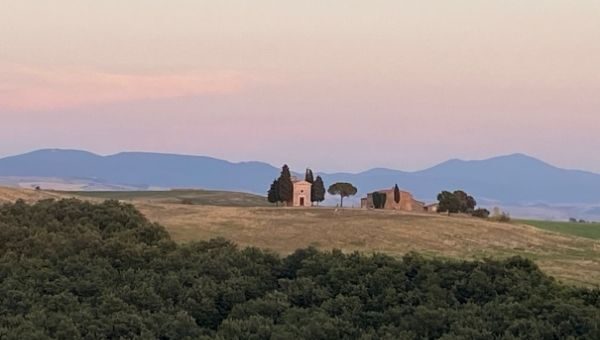
They come for the “iconic view” — the one with the lone cypress tree on a hill. That’s the Cyprus of San Quirico, and it’s fine. But the real Val d’Orcia experience isn’t a single photo stop. It’s driving the back roads (the white roads, or strade bianche) between towns, stopping at a farm stand for pecorino cheese, and spending an hour in a town like Castiglione d’Orcia that has zero souvenir shops and one excellent trattoria.
When to go (and when to absolutely not)
May and September are perfect: 22-26°C, golden light, fewer crowds. June works too but gets hot. July and August are a mistake — 35°C, every town packed with cruise ship day-trippers, and the landscape is dry and brown. April and October are the secret windows: the grass is electric green in April, and the harvest season in October means fresh olive oil and the Brunello wine harvest in Montalcino.
Avoid August 15 (Ferragosto) entirely. Everything shuts down. The whole country is at the beach.
The 7 towns you actually need to visit (ranked by real value)
There are about 15 towns in Val d’Orcia. Most are skippable. These seven are not. I’ve ranked them by how much they offer for the time you invest — not by how many Instagram posts they generate.
| Town | Best for | Time needed | Crowd level (Aug) | Must-do |
|---|---|---|---|---|
| Pienza | Architecture + pecorino | 2-3 hours | High | Walk the panoramic terrace, buy Pecorino di Pienza |
| Montepulciano | Wine (Vino Nobile) + views | 3-4 hours | Very high | Wine tasting at Contucci Cantina (€15, 3 wines) |
| Montalcino | Brunello wine + fortress | 2-3 hours | High | Visit the Fortezza, buy a bottle of Brunello for €30-50 |
| San Quirico d’Orcia | Romanesque church + gardens | 1-2 hours | Medium | Collegiata church, Horti Leonini gardens (free) |
| Bagno Vignoni | Thermal pools (unique) | 1 hour | Medium | Walk the central pool (free, no swimming) |
| Castiglione d’Orcia | Authenticity + solitude | 1-2 hours | Low | Climb to the Rocca fortress ruins (free, amazing views) |
| Radicofani | Medieval fortress + views | 1-2 hours | Very low | Visit the Rocca di Radicofani (€4, panoramic 360° view) |
Pienza is the one town you cannot skip. It was rebuilt in the 15th century as a “perfect Renaissance city” by Pope Pius II. The entire town is a grid of harmonious streets ending in a panoramic terrace overlooking the entire valley. The pecorino cheese here is the best in Italy — go to Caseificio Cugusi for a tasting plate (€8 for 3 cheeses + honey + jam).
Montepulciano is bigger and more touristy, but the Vino Nobile di Montepulciano is a serious wine that costs half what you’d pay for Brunello. The Contucci Cantina has been making wine since the 1600s and offers tastings for €15 that include three wines and a view of the valley from their terrace.
Castiglione d’Orcia and Radicofani are the anti-tourist towns. Almost no English menus. No souvenir shops. Just a medieval fortress, a few locals drinking espresso at the bar, and silence. If you only have one day, skip these. If you have three days, spend an afternoon in Castiglione and watch the sunset from the Rocca.
How to drive Val d’Orcia without getting stuck or fined
This is where most people mess up. They rent a car in Florence, plug “Val d’Orcia” into Google Maps, and end up on the SP146 — the main road everyone drives. It’s fine, but you’ll miss everything that makes this valley special. The real Val d’Orcia is on the strade bianche: the unpaved gravel roads that connect the towns.
The exact driving route (3-day version)
Day 1: Start in Montepulciano (morning, arrive by 9am to park before crowds). 3 hours exploring. Drive 20 minutes to Pienza (lunch at Osteria Sette di Vino, €15 for pasta + glass of wine). Afternoon in Pienza. Stay overnight in an agriturismo near Pienza (book on Booking.com or Airbnb, expect €80-120/night in June).
Day 2: Drive the SS146 to Montalcino (30 minutes). Visit the fortress, do a wine tasting at Fattoria dei Barbi (€20 for 4 wines, including a 2015 Brunello). Lunch at Il Leccio (€12 for pici cacio e pepe — the best pasta in town). Afternoon: drive 15 minutes to San Quirico d’Orcia for the gardens, then 5 minutes to Bagno Vignoni for the thermal pool. Stay in Montalcino or San Quirico.
Day 3: Drive south to Castiglione d’Orcia (20 minutes). Climb the Rocca (free, 10-minute walk uphill). Then continue to Radicofani (20 minutes). Visit the Rocca di Radicofani (€4). Drive back north via the SP478 through the Crete Senesi — a completely different, equally stunning landscape of clay hills and white roads. End in Siena or head back to Florence.
The ZTL trap (do not ignore this)
Every town in Val d’Orcia has a Zona Traffico Limitato (ZTL) — a restricted traffic zone. If you drive into it, cameras will photograph your license plate and a fine (€80-150) arrives at your rental car agency months later. The rule: never drive inside the historic center walls. Park outside. Every town has free or cheap parking lots (€1-2/hour) just outside the walls. In Pienza, park at Parcheggio Santa Caterina. In Montepulciano, park at Parcheggio 7 (free, then take the escalator up).
What car to rent
You don’t need a Ferrari. You need a small car with good ground clearance. The strade bianche are gravel, not pavement. A Fiat Panda (€30/day from Hertz) is perfect. A BMW sedan will be a misery on those roads. Rent from Hertz or Europcar at Florence Airport — avoid the third-party rental companies at the train station (they charge hidden fees and try to upsell insurance).
The biggest mistakes people make in Val d’Orcia (and how to avoid them)
I’ve watched tourists make the same errors for years. Here’s what to avoid.
Mistake 1: Trying to see everything in one day. Val d’Orcia is small — you can drive from Pienza to Montalcino in 25 minutes. But the towns are dense with things to see. One day means you rush through 5 towns and remember nothing. Three days is the minimum. Two days works if you skip Radicofani and Castiglione.
Mistake 2: Eating at the first restaurant in the piazza. The restaurants with English menus and photos of pasta outside are tourist traps. In Pienza, the best lunch is Osteria Sette di Vino (no English menu, €12 for pici all’aglione). In Montalcino, Il Leccio (€10 for a massive plate of pici cacio e pepe). In Montepulciano, Osteria del Conte (€15 for pinci with wild boar ragù). If the menu has more than 15 items, walk away. Good restaurants have 8-10 dishes they do perfectly.
Mistake 3: Buying wine at the winery without tasting first. Brunello from a random shop in town might be a €12 bottle that tastes like nothing. Always taste before buying. The best value in the valley is Vino Nobile di Montepulciano — you can get an excellent bottle for €15-20 that rivals a €40 Brunello. The 2019 vintage of Vino Nobile is particularly good right now. For Brunello, look for the 2016 vintage (one of the best in decades) or the 2018 vintage (more affordable, still excellent). Expect to pay €35-60 for a good Brunello.
Mistake 4: Ignoring the strade bianche. The paved roads are fine. But the gravel roads (strade bianche) lead to the iconic views: the “Gladiator” road (SP146 near Pienza), the “Cyprus of San Quirico”, and the “Cypress Alley” near Monticchiello. You can drive these in a Fiat Panda. Just go slow (30km/h) and watch for cyclists. The light is best at sunrise and sunset.
Mistake 5: Not booking accommodation in advance. May through September, the good agriturismos sell out 2-3 months ahead. The best ones — Agriturismo Il Casale (Pienza area, €100/night), Agriturismo La Piaggia (Montalcino, €120/night), Agriturismo Palazzetto (near San Quirico, €90/night) — have waitlists. Book by March for a June trip. If you’re last-minute, stay in Castiglione d’Orcia (fewer options but cheaper and quieter).
When Val d’Orcia is NOT the right choice (and what to do instead)
Val d’Orcia is incredible. But it’s not for everyone. Here’s when you should skip it.
You have less than 2 days in Tuscany
If you’re doing a Florence-to-Rome road trip in 3 days total, don’t add Val d’Orcia. You’ll spend 2 hours driving each way and see nothing. Instead, spend your time in Siena and San Gimignano (both closer to Florence) or Lucca and Pisa (west coast, less driving).
You want nightlife
Val d’Orcia towns go to sleep at 10pm. If you want bars, clubs, or restaurants open past midnight, go to Florence, Siena, or Bologna. The only exception is Montepulciano in summer — it has a few wine bars open until midnight.
You’re traveling with kids under 5
The towns are steep, cobblestoned, and not stroller-friendly. The strade bianche are dusty and bumpy. Kids will be bored. Consider Lake Garda or the Adriatic coast instead — flat, kid-friendly, with beaches and amusement parks.
You’re on a backpacker budget
Val d’Orcia is not expensive, but it’s not cheap either. A basic agriturismo room costs €80-120/night in summer. A meal with wine is €25-35 per person. If you’re on a €50/day budget, head to Umbria (similar landscape, 30% cheaper) or Le Marche (even cheaper, fewer tourists). The town of Spello in Umbria gives you the same hilltop medieval vibe for half the price.
You want to swim in the sea
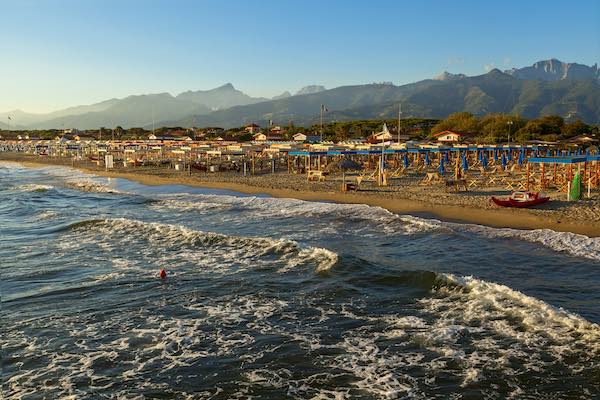
Val d’Orcia is landlocked. The nearest beach is 90 minutes away (at Castiglione della Pescaia on the Maremma coast). If you want a beach-and-wine trip, stay on the Maremma coast (towns like Orbetello, Porto Ercole) and do a day trip to Val d’Orcia from there.
But if you want the iconic Tuscany — the rolling hills, the cypress trees, the wine, the cheese, the silence at sunset — Val d’Orcia is the only place to go. Skip the Florence crowds. Come here. Drive the white roads. Eat pici cacio e pepe at a €12 trattoria. Drink a €15 bottle of Vino Nobile on a terrace overlooking the valley. That’s the Tuscany people fly across the ocean for. And it’s still here, exactly where it’s always been.