I spent six months living out of a 40-liter backpack across Europe, Southeast Asia, and North Africa. My first packing list was a disaster — 23 kilograms of “just in case” items that I hauled through train stations and airport security. By month two, I had mailed home half my gear and bought replacements locally. This packing list is what survived. It is built for the person who wants to move between cities, climates, and countries without checking a bag, without repacking at 3 AM, and without buying a second suitcase at a flea market in Marrakech.
Every item here has a specific weight, a specific price, and a specific job. No vague recommendations. No “pack a scarf for layering.” This is the list I use now, and it works.
Why Most Packing Lists Fail (and How This One Is Different)
The problem with typical packing lists is they assume you have unlimited space and a patient back. They tell you to bring three pairs of shoes, a hairdryer, and a “travel-sized” toiletry kit that still takes up half your bag. That works for a week in a resort. It fails for international travel where you walk 20 minutes to your hostel, change trains twice, and sleep in a different bed every third night.
This list solves three specific problems:
- Weight creep — Every item is under 500 grams unless it is your shoes or your jacket. If it weighs more, it must earn its place by doing two jobs.
- Climate whiplash — You land in 35°C Bangkok and fly to 10°C Chiang Mai the next day. Your bag must handle both without a full repack.
- Security theater — Airport security, bus station x-rays, and hostel lockers are not designed for your convenience. Your bag must open fast, close fast, and not look valuable.
The result is a bag that weighs under 7 kilograms (15 pounds) fully packed — light enough to carry up five flights of stairs, small enough to fit in any overhead bin, and organized enough that you can find your charging cable without unpacking everything.
The Core Packing System: Bag, Clothes, and Shoes
Start with the bag. After testing four different backpacks, I settled on the Osprey Farpoint 40 ($185, 1.6 kg). It opens like a suitcase (clamshell), has a padded laptop sleeve, and fits every budget airline’s carry-on limit. The hip belt tucks away when you don’t need it. The shoulder straps are comfortable for 20-minute walks to the train. Do not buy a duffel bag — you will hate it after the third time you carry it on one shoulder for an hour.
Clothes are where most people waste space. Here is the exact system I use for any trip between 5 days and 6 months:
The 5-Item Clothing Core
- 1 pair of pants — Outlier Slim Dungarees ($200, 450g). They look like chinos but stretch like sweatpants, dry in 3 hours, and resist stains. I wore them on a 12-hour flight, a hike in the Dolomites, and a dinner in Rome. One pair, no backup.
- 3 shirts — Uniqlo Airism t-shirts ($15 each, 120g). They dry in 2 hours, wick sweat, and pack smaller than a pair of socks. One black, one navy, one gray. That is enough.
- 1 long-sleeve layer — Patagonia Nano Puff Hoody ($250, 310g). Packs into its own pocket, warm enough for 5°C with a t-shirt underneath, and blocks wind. It is your jacket, your pillow on the plane, and your buffer against air conditioning in tropical hostels.
- 3 pairs of socks — Darn Tough Vertex ($25 each, 60g). Merino wool, no smell after 3 days, lifetime warranty. Wash one pair in the sink, rotate through the others.
- 3 pairs of underwear — ExOfficio Give-N-Go ($28 each, 80g). Quick-dry, antimicrobial, comfortable. Same sink-wash strategy as socks.
Shoes: The Single Hardest Decision
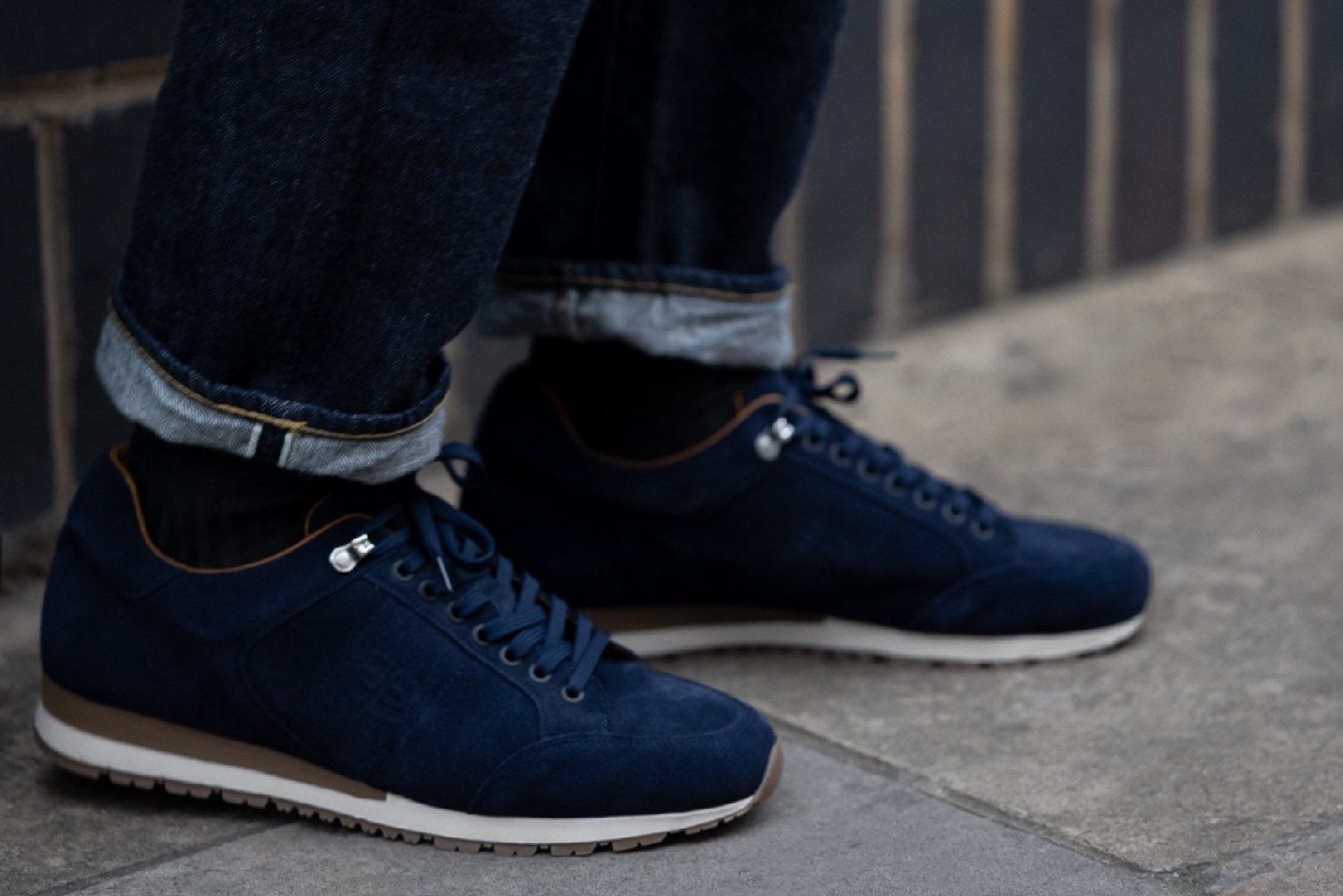
You wear one pair, you pack zero pairs. That is the rule. I wear Allbirds Tree Runners ($110, 250g) for warm climates or Merrell Moab 3 Low ($130, 450g) if I expect hiking. Both are comfortable for 8 hours of walking, dry fast, and pass as semi-presentable for restaurants. Do not bring boots unless you are actually climbing mountains. Do not bring sandals unless you are staying on a beach for the entire trip. Pick one pair, wear them every day.
Gadgets and Electronics: The Minimum Viable Kit
Electronics are heavy, fragile, and expensive. Every extra cable is a failure of planning. Here is my exact kit, which fits in a single 1-liter zippered pouch:
| Item | Brand / Model | Price | Weight | Why It Works |
|---|---|---|---|---|
| Phone | iPhone 15 Pro | $999 | 187g | Replaces camera, GPS, maps, wallet, and entertainment |
| Power bank | Anker PowerCore 10000 | $26 | 180g | Charges phone 2.5 times, fits in a pocket |
| Charging brick | Anker Nano II 65W | $36 | 90g | Charges phone + laptop at full speed, GaN tech = tiny |
| Cables | Anker PowerLine III (USB-C to C, 1.8m) | $13 | 30g | Braided, durable, long enough to reach hostel bed from outlet |
| Earbuds | Samsung Galaxy Buds2 Pro | $190 | 5g each | Noise canceling, small case, 5-hour battery |
| Adapter | Ceptics World Travel Adapter Kit | $22 | 100g | Handles all plugs, USB ports built in, no separate adapter needed |
Critical tip: Download offline maps (Google Maps allows this), download your airline app, and buy an eSIM before you leave. I use Airalo ($5-20 per 5GB depending on region). No SIM card swapping, no finding a local shop at 11 PM after a delayed flight.
Do NOT bring: a laptop unless you work remotely, a tablet if you have a phone, a camera if you have a phone made after 2026, a Kindle if you read on your phone, or any device with a proprietary charger. Every extra device is a point of failure.
Toiletries and Health: The 500-Gram Rule
Your toiletries bag must weigh under 500 grams total. If it does not, you are carrying luxury items you will use once. Here is what fits in a 1-liter clear bag and lasts 2 weeks:
What to Pack (Exact Products)
- Dr. Bronner’s 18-in-1 Hemp Soap ($14, 240ml) — Use it for body, hair, face, laundry, and shaving. One bar, five jobs. Solid bars last longer than liquid and bypass the 3-1-1 liquid rule.
- Matador FlatPak Soap Case ($13, 20g) — Holds the soap bar, dries it out so it doesn’t melt into your bag, and collapses flat when empty.
- Toothbrush — A basic foldable travel brush ($5). Electric toothbrushes are heavy and need charging.
- Toothpaste tablets — Bite Toothpaste Bits ($12 for 3-month supply). No tube, no TSA liquid limit, no mess.
- Deodorant — Native Crystal Deodorant ($10, 60g). Lasts 6 months, no residue.
- Sunscreen — Supergoop! PLAY SPF 50 ($22, 89ml). Small bottle, non-greasy, works for face and body.
- First-aid mini kit — 5 bandages, 2 antiseptic wipes, 3 ibuprofen tablets, 1 roll of leukotape (for blisters), 1 antihistamine. That is it. You will not need the full pharmacy.
Failure mode: People bring full-size shampoo, conditioner, body wash, face wash, and lotion. That is 1.5 kilograms of liquid that will leak, get confiscated at security, and be replaced by the exact same products available at your destination for $3. Stop it. Buy at the destination if you need something specific.
Documents, Money, and Security: The Digital-First Approach
I have been pickpocketed in Barcelona and had my wallet stolen in Prague. I now travel with a system that means losing any single item is an inconvenience, not a crisis.
What I Carry
- Travelon Anti-Theft Crossbody Bag ($45, 200g) — Slash-proof strap, RFID-blocking pockets, lockable zippers. Worn under my jacket in crowded areas. It holds my phone, passport, and a backup credit card. Nothing else.
- Passport — In the Travelon bag. Never in a pocket, never in the backpack.
- 2 credit cards — Chase Sapphire Preferred (no foreign transaction fees) and Charles Schwab debit card (unlimited ATM fee refunds). Keep one in the Travelon bag, one hidden in the backpack’s secret pocket.
- Copies — Photos of your passport, visa, and credit cards stored in a secure cloud folder (Google Drive or iCloud). Also a printed copy in your backpack’s bottom compartment.
- Cash — $100 equivalent in local currency, hidden in a sock or inside the lining of your bag. For emergencies only.
What NOT to do: Do not carry a wallet in your back pocket. Do not carry your passport in a backpack that you take off in crowded areas. Do not keep all your money in one place. These are the three mistakes that get travelers robbed, and they are entirely preventable with a $45 bag and 30 seconds of planning.
What to Leave at Home: 5 Items You Will Not Need
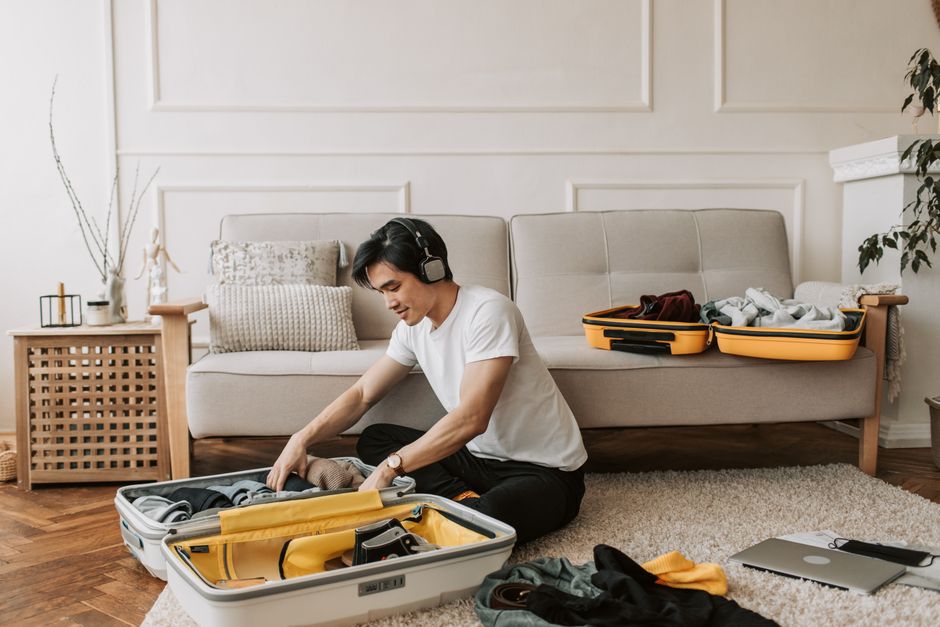
Every gram you do not pack is a gram you do not carry. Here are the items I removed after the first trip and never missed:
- Jeans — Heavy, take 24 hours to dry, and smell after two wears. Replace with the Outlier Slim Dungarees or similar travel pants.
- More than one pair of shoes — Already covered. Wear the one pair that fits your trip. If you need dress shoes, you are on a business trip, not international travel.
- A towel — Hostels and hotels provide them. If you are camping, buy a PackTowl Nano ($20, 60g) but only if you are actually camping.
- A guidebook — They are heavy, outdated by the time you buy them, and contain information you can get for free on your phone. Download the Lonely Planet PDF for your destination or use Google Maps reviews.
- Travel-sized bottles of everything — You will use 10% of the contents and throw the rest away at security. Buy a bar of soap. Buy toothpaste tablets. Buy sunscreen at the destination.
The real test: If you have not used an item on your last three trips, do not pack it this time. This includes that “emergency” sewing kit, the backup phone charger, and the book you have been meaning to read for two years.
How to Pack It All: The Compression and Organization System
Buying the right gear is step one. Packing it correctly is step two, and most people fail here. They stuff everything into the bag randomly, then spend 10 minutes at every hotel searching for their toothbrush.
The Exact Packing Order
- Bottom of the bag (the heavy stuff): Shoes in a shoe bag, then the packing cube with pants and long-sleeve layer. This keeps the weight near your spine when wearing the backpack.
- Middle of the bag: Packing cube with shirts, socks, underwear. One cube for tops, one cube for bottoms. Eagle Creek Pack-It Specter Compression Cubes ($25 each, 40g) reduce volume by 30% and keep everything organized.
- Top of the bag (the quick-access stuff): Toiletries bag, electronics pouch, a light jacket or hoodie.
- Front pocket: Documents, power bank, earbuds, pen, and a reusable water bottle.
Why this works: You can open the bag at airport security, pull out the electronics pouch and toiletries bag in 5 seconds, and close it. You can find your socks without unpacking your pants. You can grab your power bank from the front pocket without opening the main compartment. This system saves you 10 minutes every time you open the bag, which adds up to hours over a trip.
Do not use packing cubes that are too large — they defeat the purpose. You want 3-4 small cubes (roughly 20x15x10 cm each), not one giant cube that holds everything. The whole point is modularity: grab one cube for a 2-day side trip, leave the rest at the hostel.
The bag closes easier, the weight distributes better, and you never have to repack from scratch. Try it once. You will never go back to the chaos method.