Let me be blunt: the $10-a-day Southeast Asia trip is dead. It died around 2019, and inflation, tourism recovery, and visa changes finished it off. But here’s the real question: can you still backpack this region on a tight budget in 2026? Yes. But you need to know exactly where the money leaks are.
What $50 a Day Actually Gets You in 2026
I’m not talking about the Instagram version. I mean real costs: bed, three meals, local transport, one attraction, and a beer. Here’s the breakdown by country.
| Country | Dorm Bed (USD) | Street Meal (USD) | Local Beer (USD) | 30-min Taxi (USD) | Daily Total (USD) |
|---|---|---|---|---|---|
| Thailand (Bangkok) | $8-12 | $2-3 | $2-3 | $6-10 | $40-55 |
| Vietnam (Hanoi) | $5-8 | $1.50-2.50 | $0.80-1.50 | $3-5 | $28-38 |
| Laos (Luang Prabang) | $4-7 | $1-2 | $1-2 | $2-4 | $22-32 |
| Cambodia (Siem Reap) | $4-8 | $1.50-2.50 | $1-1.50 | $3-6 | $25-38 |
| Indonesia (Bali) | $8-15 | $3-5 | $3-5 | $5-8 | $45-65 |
Vietnam and Laos are still the cheapest by a clear margin. Thailand and Bali have crept up fast — Bali especially, where a decent dorm in Canggu now runs $15+. Your $50 goes further in Hanoi than in Kuta. Period.
The Real Cost of Getting Around
Flights between countries are the budget killer. A one-way from Bangkok to Hanoi on AirAsia runs $60-90 in 2026. That’s two days of your budget gone. Overnight buses and trains are cheaper: the Bangkok-Chiang Mai sleeper train costs $20-25, and you save a night’s accommodation. Use 12Go Asia for bus and train bookings, not the counter — prices are the same, and you avoid the commission game.
The Two Mistakes That Will Drain Your Wallet
Most people blow their budget before they even land. Here’s what I see over and over.
Mistake 1: Flying Every Move
Booking a flight between every city adds up fast. Bangkok to Chiang Mai? $40-60 flight. Bus? $15-20. Train? $20-25. Over a month, that’s $100-150 saved. Use Rome2Rio to compare land vs. air, and always check the bus option first. The time difference is often 2-3 hours, not a full day.
Mistake 2: Paying Tourist Prices for SIM Cards
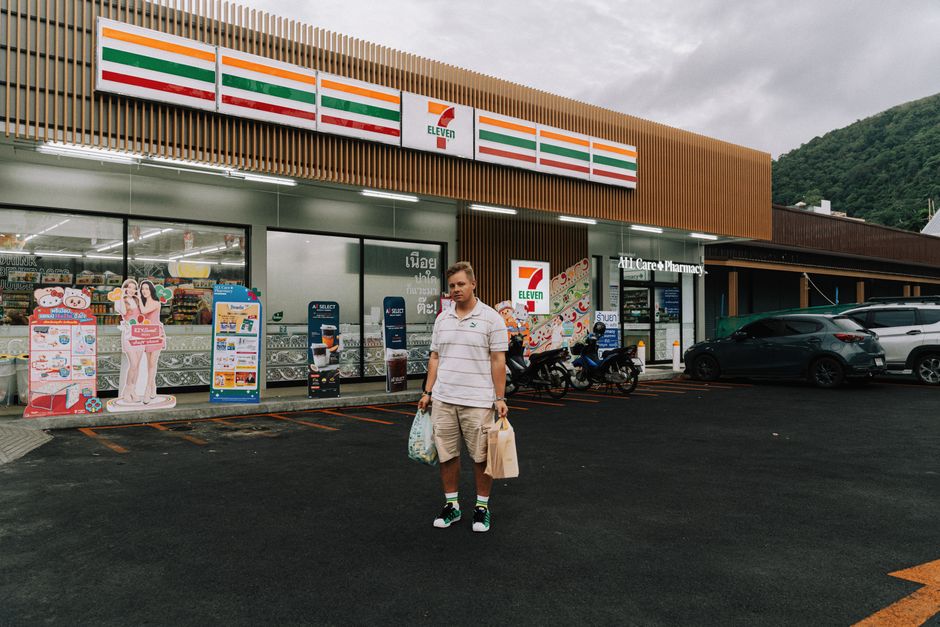
Airport SIM cards cost $15-25 for 30 days. Walk 10 minutes to a 7-Eleven or local shop, and you pay $6-8 for the same plan. In Thailand, AIS and TrueMove both offer 30GB for 300-400 THB ($8-11). In Vietnam, Viettel gives you unlimited data for 100,000 VND ($4). Do not buy at the arrivals hall.
Is Southeast Asia Still the Best Budget Destination?
No. Not anymore. That title now belongs to Central Asia — Uzbekistan, Kyrgyzstan, and Georgia offer similar experiences at lower costs. But Southeast Asia still wins on infrastructure, English accessibility, and the sheer density of backpacker routes. You can show up in Bangkok with no plan and figure it out. Try that in rural Kyrgyzstan. Good luck.
When you should NOT go to Southeast Asia in 2026: If your budget is under $30 a day and you want to stay in private rooms, eat Western food, and drink cocktails. That math doesn’t work. Go to Nepal or Sri Lanka instead. If you’re fine with dorms, street food, and local beer, Southeast Asia still delivers. Just skip Bali and stick to Vietnam, Laos, and northern Thailand.
Where Your Money Actually Works in 2026
I’ll name names. These are the places where $40 a day still feels like a decent lifestyle.
- Chiang Mai, Thailand: Dorms for $6-8. Khao Soi for $2. A massage for $6. The digital nomad infrastructure is solid — fast WiFi, coworking spaces, and cheap laundry. Best value in Thailand by far.
- Hanoi, Vietnam: A bowl of pho for $1.50. Bia hoi (fresh beer) for $0.40 a glass. Hostels like Hanoi Buffalo Hostel run $5-7 a night. The old quarter is walkable, so you skip transport costs entirely.
- Luang Prabang, Laos: Slower pace, cheaper everything. A guesthouse room for $10. Buffet dinner at the night market for $2. The waterfall entrance fee is $3. This is the closest you’ll get to 2015 prices.
- Kampot, Cambodia: Overlooked by most tourists. Riverfront bungalows for $12. Crab market dinner for $3. No party scene, so no temptation to overspend. Quiet, cheap, real.
Avoid: Koh Samui, Phi Phi Islands, and Bali’s Canggu. These places have priced out budget travelers. A dorm bed in Koh Samui in 2026 is $18-25. That’s insane. You’re paying for the Instagram backdrop, not the experience.
Booking Strategy That Actually Saves Money
Here’s the exact system I use.
- Book accommodation 2-3 days ahead, not months ahead. Prices drop on Hostelworld and Agoda when rooms don’t fill. Last-minute dorms in Chiang Mai often hit $5. Booking two months out locks you into the highest rate.
- Use Grab instead of tuk-tuks. In Bangkok, a Grab from Sukhumvit to Khao San Road is $6-8. A tuk-tuk driver will quote $15 and argue. Always check the Grab price before negotiating. In Vietnam, GrabBike is half the price of a car.
- Eat where locals eat. If the menu has English and pictures, you’re paying a 50% markup. Walk two blocks away. The plastic-stool places with no sign serve the same dish for half the price. In Bangkok, a pad thai on Khao San Road costs $4. At Soi Rambuttri, it’s $2. Same street, different price.
- Skip the island tours. The 4-island tour in Thailand costs $40-60. You can rent a kayak for $8 and see the same spots. The markup on packaged tours is brutal.
Verdict: Worth It If You Do It Right

Budget backpacking in Southeast Asia in 2026 is not the no-brainer it was five years ago. The golden era of $15-a-day travel is over. But if you skip the tourist traps, eat local, and book smart — Vietnam and Laos will still give you a month of travel for under $1,000. That’s a deal by any standard. Just don’t expect to party in Bali on that money. You won’t.