Savannah rewards a weekend spent looking closely: at live oaks shading a square, ironwork beside a doorway, and changing light along the river. Its historic centre invites wandering, but a little structure helps you enjoy the city without turning every block into another task. Build your visit around the squares, allow time for a thoughtful history stop, and give meals and rest breaks their proper place. You can see plenty while keeping the unhurried rhythm that makes Savannah appealing.
Choose a convenient base
For a first visit, focus on the Historic District between the Savannah River and Forsyth Park. Staying within this area makes it easier to return to your room between outings. The northern streets put you close to the waterfront and busy commercial areas; streets nearer Forsyth Park suit a weekend centred on shaded walks and residential architecture. Ask about street noise, stairs, lifts, and parking before choosing accommodation.
A car can help with excursions outside central Savannah, but driving between downtown stops adds unnecessary complications. If you arrive with one, settle its parking arrangements before starting your walk. Read posted restrictions and check official city parking information. For airport transfers or local transport, confirm current routes and service details with the relevant provider rather than building your arrival around an assumed connection.
Friday evening: start beside the river
Keep arrival evening simple. Head towards Bay Street and the Savannah River, then explore a manageable stretch of waterfront. River Street sits below the bluff, with historic warehouse buildings and views of working river traffic. The contrast between the broad water and the close-set streets above gives you an immediate sense of Savannah’s setting as a port city.
Changes in level matter here. Some approaches involve steep steps, and uneven paving can make progress slower than a map suggests. Wear supportive shoes and choose another route if stairs or rough surfaces are difficult for you. Anyone using a wheelchair or pushing a stroller should investigate an accessible approach in advance. Allow enough energy for the return uphill.
Choose dinner according to your appetite and energy. Waterfront areas can feel lively, while a meal farther inland may suit a quieter evening. If a particular dining experience matters, check availability ahead. Otherwise, leave enough flexibility to choose somewhere that fits your pace. An early night can be a good investment before a day on foot.
Saturday morning: let the squares guide you
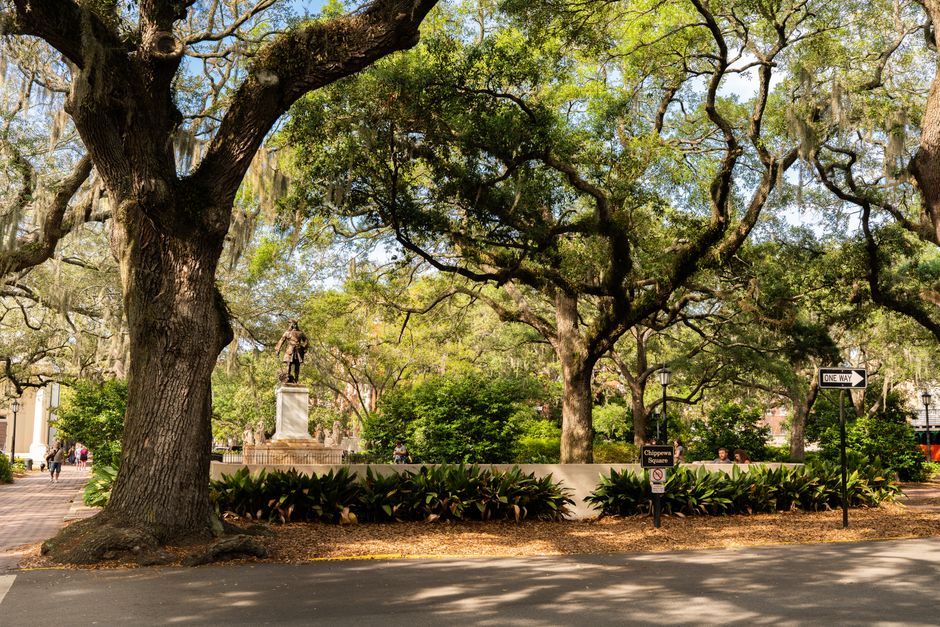
Use Bull Street as the backbone of your first substantial walk. Heading south from the northern Historic District takes you through a sequence of squares towards Forsyth Park. Johnson, Wright, Chippewa, Madison, and Monterey squares provide useful landmarks along the way. You do not need to study every corner: sit down, notice the surrounding buildings, and follow occasional side streets that catch your eye.
The squares are public spaces within a living city. Traffic moves around them, so use appropriate crossings and watch for turning vehicles. Keep doorways clear when taking photographs, and remember that attractive steps and gardens often belong to private homes. A quiet conversation on a bench can be as rewarding as another photograph.
Look beyond the postcard views
Notice how the squares differ. Some feel enclosed by houses; others open towards churches or busier streets. Read selected historical markers and consider whose stories a monument presents and whose experiences need more explanation. Savannah’s beauty sits alongside histories of slavery, commerce, conflict, and community life. Allowing space for those histories makes the walk more meaningful.
Take a short detour along Jones Street if you enjoy architectural details, then return towards your southbound route. Appreciate its residential character through a slow stroll, keeping entrances clear and voices considerate. If the weather becomes oppressive, shorten the detour and save your energy for the park. There is no prize for covering every attractive block.
Saturday afternoon: pause at Forsyth Park
Forsyth Park opens up the landscape after the smaller squares. Its fountain is a natural stopping point, but continue beyond the first photographs to enjoy paths, trees, and open space. Bring water and use the park as an opportunity to rest. Shade helps, although humid conditions can still make a gentle walk tiring.
After lunch, decide whether you want another attraction or a break indoors. A weekend works better with one meaningful visit than several rushed interiors. If you choose a museum or historic property, consult its official website for admission arrangements, accessibility information, and reservation requirements. Leave spare time around the visit so a delayed meal or sudden shower does not unravel the afternoon.
Make time for the city’s deeper history
Include an experience that explains the people and labour behind the elegant streets. The Owens-Thomas House & Slave Quarters examines relationships between wealthy residents and the enslaved people whose work supported their household. Consult the museum’s own information when planning a visit. Allow time to absorb difficult material rather than treating the interiors simply as decorative backdrops.
If you prefer a guided walk, choose by the guide’s stated focus and approach. Look for clear descriptions of historical sources and coverage of Black history alongside architecture and prominent residents. Ask about walking distance, opportunities to sit, and the balance between outdoor and indoor time. A ghost tour offers a different experience from a researched history tour; choose according to what you want to understand.
Sunday: return to somewhere you enjoyed
Resist filling your final morning with distant excursions. Revisit a favourite square, explore a parallel street, or spend more time near the river. Familiar ground often reveals details you missed while navigating on arrival. Leave a comfortable margin for collecting luggage and travelling onwards, particularly if you have parked away from your accommodation.
If shopping appeals, browse central streets at your own pace and distinguish locally made work from generic souvenirs. Ask about makers and materials when buying something presented as regional craft. Keep purchases manageable for your journey home. A relaxed breakfast and a final walk can also be a complete Sunday plan; the last few hours do not need another packed itinerary.
Eat comfortably and prepare for walking
Menus may feature shrimp and grits, seafood, biscuits, and other Southern dishes, but preparations vary. Ask about ingredients, especially if you have dietary requirements. Avoid booking every meal close together. Warm weather, walking, and a substantial lunch can change what sounds appealing at dinner. Leave room to enjoy a meal without watching the clock.
- Footwear: Bring shoes with reliable grip for uneven brick, paving, and waterfront approaches.
- Weather: Pack sun protection and a light rain layer, then adjust outdoor plans to the forecast.
- Comfort: Carry water and schedule seated breaks before you feel exhausted.
- Planning: Confirm essential visits and meals directly, keeping the spaces between them flexible.
Before departure, check official city, museum, and transport sources for current arrangements. Once you arrive, let the squares shape your days: walk a little, look carefully, and stop when somewhere feels inviting. Savannah’s atmosphere becomes easier to appreciate when your weekend has room for both its beauty and the stories beneath it.