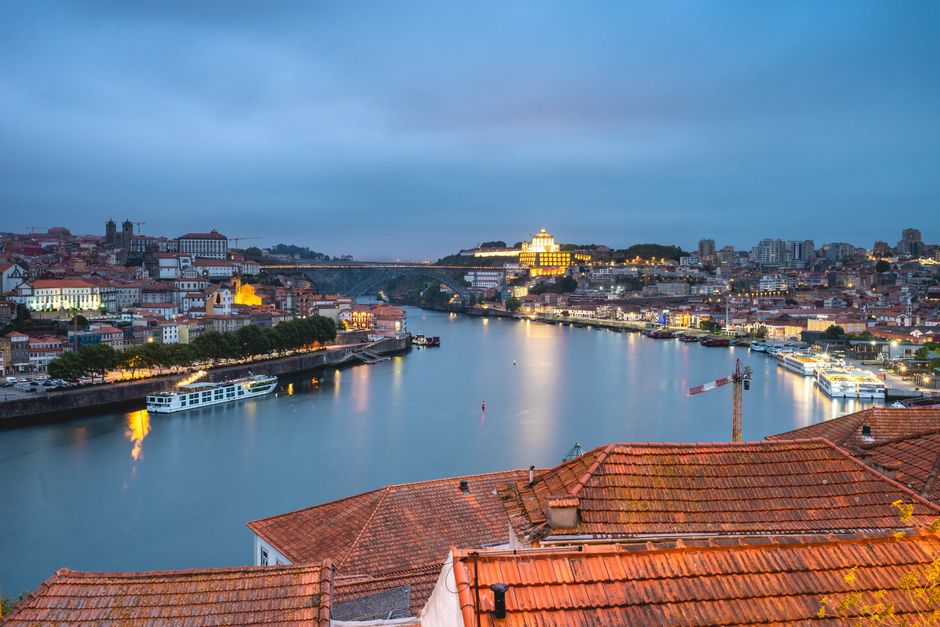
Porto rewards a slow walk, especially when you plan around its hills. Streets that look close on a map can sit at very different heights, while an inviting staircase may leave you well below your next stop. A little thought about direction makes all the difference. This walk connects the cathedral hill, the Douro waterfront and Vila Nova de Gaia, giving you broad views and narrow streets without repeatedly climbing the same slopes.
Plan around changes in height
Begin near Sao Bento station, head uphill to the Se cathedral and continue towards the upper deck of the Luis I Bridge. Across the river, pause at Jardim do Morro before descending through Gaia to its quay. Return to Porto using the lower crossing and explore Ribeira at river level. This arrangement puts most of the sustained climbing near the beginning, although downhill walking still requires care.
Leave a generous part of the day if you want lunch, photographs and time inside monuments. For a shorter outing, choose either the upper section or the waterfronts. You do not need to complete the whole circuit to appreciate how Porto relates to its river. Decide where you will finish before setting off, particularly if your accommodation is high above the water.
- Wear shoes with grip on uneven stone.
- Carry water and a light layer for exposed viewpoints.
- Save an offline map and inspect routes for steps.
- Plan a comfortable return before making a long descent.
Start near Sao Bento
Sao Bento station makes a convenient landmark for getting your bearings. Its tiled entrance hall deserves attention, but it is also a working transport space. Stay clear of people travelling through, keep your belongings close and take photographs from the edges rather than standing across the main flow. A brief stop can be enough to appreciate the decoration.
From here, make your way uphill towards the cathedral. Compare walking directions before choosing a path: a direct route may use stairs, while a slightly longer street approach may suit you better. Avoid trusting estimated walking times too closely. Gradients, crowds and frequent stops can change how a short distance feels.
Read the city from the cathedral hill
The open space around the Se provides an introduction to Porto’s shape. Roofs descend towards the Douro, and the opposite hillside belongs to Vila Nova de Gaia, a separate city across the river. Spend a few moments identifying the waterfront and bridge before continuing. Seeing their relationship from above makes later turns easier to understand.
An interior visit can be added, but check current arrangements directly with the monument before planning around it. If your priority is walking, the surrounding streets and views already offer plenty. This is also a useful decision point: continue towards the upper crossing for a panorama, or head down towards Ribeira if you prefer enclosed lanes and a shorter route.
Cross the upper deck
The upper deck of the Luis I Bridge connects the cathedral side of Porto with Jardim do Morro in Gaia. As you cross, the Douro opens beneath you and the waterfront buildings become a layered composition of walls and roofs. Look around as you move rather than aiming for a single photograph. The changing perspective helps explain just how steep the city is.
Metro trains also use this level. Stay in the designated pedestrian space, pay attention near the tracks and avoid stopping where others need to pass. Wind can make the crossing feel cooler than sheltered streets. If exposed heights make you uncomfortable, leave this section out; the riverfront offers an enjoyable alternative with impressive views of the bridge itself.
Pause before descending through Gaia
Jardim do Morro is a natural place to pause after crossing. Look back towards Porto and trace the route you have taken from the cathedral hill. The nearby Serra do Pilar area offers another elevated perspective, but reaching it adds uphill walking. Choose according to your energy rather than trying to collect every viewpoint.
Use mapped public streets to descend towards Gaia’s quay. Do not assume every staircase leads through or that an unmarked passage is public. If you want transport to handle the change in height, consult official operators for current service and accessibility details. Check before relying on a particular option, especially if stairs or steep slopes are difficult for you.
Follow the river back to Porto
Gaia’s waterfront gives you a clear view across to Porto’s tightly packed riverside buildings. Walk along the quay before turning back towards the bridge, noticing how gaps and angles change the scene. Port wine is part of this bank’s identity, but a cellar visit is optional. The walk remains satisfying without adding a tasting or organised activity.
Return to Porto by the lower pedestrian crossing of the Luis I Bridge, following posted signs and local diversions. The iron structure feels different from below, rising above the river instead of framing distant rooftops. Keep moving through narrow sections and find a wider space before stopping for photographs. Watch for other pedestrians as well as the view.
Explore Praca da Ribeira and the nearby lanes at an unhurried pace. Step inland from the busiest waterfront stretch to notice stonework, doorways and sudden changes in level. These are lived-in streets, so keep entrances clear and avoid climbing private steps for a picture. Consideration is particularly important where visitors gather close to residential windows.
Add a western walk another time
If you want more riverside exploration, follow Porto’s bank west towards Miragaia. The emphasis shifts from the bridge to buildings tucked beneath the hillside. Pay attention to traffic and changing pavement widths: a route beside the river is not automatically a continuous pedestrian promenade. Turn back when it suits you rather than committing to a distant endpoint.
Passeio das Virtudes offers an elevated outlook towards the river and the western part of the old town. Reaching it from the waterfront means climbing, so consider a separate outing from the upper centre. After a long descent through Gaia, another steep ascent may add more fatigue than pleasure. Returning with fresh legs gives the area room to become a walk of its own.
Adjust for weather and mobility
After rain, take extra care on polished stone and steps. In warm weather, carry water and build in shaded breaks before you become tired. If you stay out for evening light, identify your return route while visibility is still good. Familiar main streets can feel easier than searching for an unfamiliar staircase after dark.
This circuit includes steep gradients, uneven surfaces and potentially stairs. Travellers with limited mobility should check official accessibility guidance and assess each section individually. Confirm access directly with attractions and consult official tourism and transport sources for closures or service changes. Then leave space for small discoveries: a tiled facade, a quiet corner and the river appearing unexpectedly at the end of a lane.