Bruges is easy to admire from its main square, but its quieter streets deserve just as much attention. Leave the Markt behind and you can follow canals between brick houses, find windmills above grassy slopes and pause beside water away from the busiest shopping streets. Discovering Bruges beyond the main square is about making space for these smaller encounters, with a walk that connects neighbourhoods instead of rushing between photographs.
You do not need an ambitious itinerary. Choose a direction, keep a map available and leave room for breaks. The northern canals, eastern Sint-Anna district and southern waterside each offer a different view of the city. Explore one area thoroughly on a short visit, or combine them over a day with time to sit down along the way.
Give your walk a practical shape
If you arrive by train, Brugge station provides a useful starting point for the southern side of the historic centre. Begin around Minnewater before continuing towards the central streets. Alternatively, start near the Markt and head north towards Jan van Eyckplein, then work east into Sint-Anna. Both approaches let the city unfold gradually.
Distances can look deceptively small on a screen. Cobbles, bridge crossings and frequent stops slow your progress, so choose one indoor attraction as an anchor rather than planning several tightly spaced visits. Save an offline map and mark your return point. You can then change direction without worrying about losing track of the journey back.
- A short walk: connect Jan van Eyckplein with the northern canals and a few streets in Sint-Anna.
- A longer outing: continue through Sint-Anna to the windmills on the eastern ramparts.
- A relaxed full day: explore the southern waterside separately, with a meal break before the northern and eastern sections.
Follow the canals north of the centre
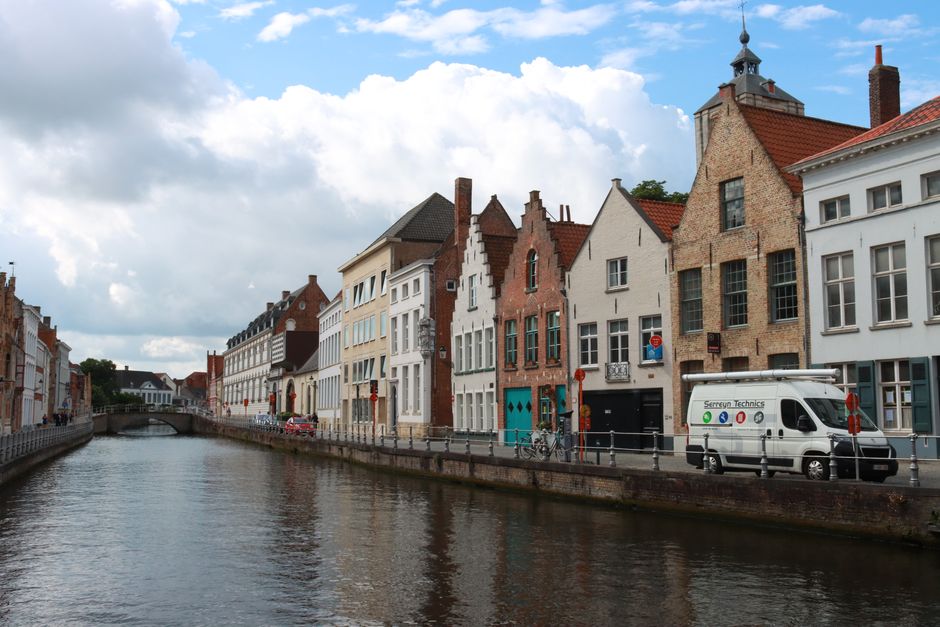
Jan van Eyckplein makes a rewarding first stop beyond the main sightseeing circuit. Its waterside setting and substantial buildings suggest the importance of trade to the city. Pause long enough to look along the canal, rather than treating the square as another place to tick off. Notice the different rooflines and how streets draw your eye away from the water.
Continue towards Spiegelrei and Langerei, using the waterways as a loose guide. Cross bridges when the opposite bank looks interesting and occasionally look behind you. Reflections, doorways and the arrangement of buildings change with your direction. You can enjoy this area without identifying every facade or following a detailed historical route.
These are also ordinary streets where people live and travel. Keep entrances clear, watch for bicycles and avoid stopping in narrow crossing points. If you want a photograph, find somewhere you can stand safely without forcing others into the road. A quieter atmosphere makes considerate behaviour especially noticeable.
Turn into Sint-Anna
The Sint-Anna district lies east of the central canals and rewards walking beyond the waterfront. Approach along Sint-Annarei, then turn into the surrounding lanes. Modest houses, churches and changes in brickwork give the neighbourhood its character. Put your map away between junctions so that you can notice details above eye level.
Pick one interior that interests you
The Jerusalem Chapel within the Adornes estate offers a distinctive focus if you enjoy religious architecture and family history. The Museum of Folk Life provides another way to explore everyday life in Bruges. Choose according to your interests instead of assuming that every named attraction needs a visit.
Consult official attraction information before making either an essential part of your day. Access arrangements and temporary closures can change. If an interior is unavailable, continue exploring the neighbourhood rather than letting a closed entrance derail the walk. There is plenty to appreciate from the public streets.
Let small detours earn their place
A pleasant junction, an unusual doorway or a view down a narrow lane may justify a brief diversion. Keep these detours small enough that you remain comfortable with your bearings. The point is to pay attention, not to seek out private courtyards or enter residential passages that are not clearly open to visitors.
Walk towards the windmills
From Sint-Anna, continue east towards Kruisvest and the windmills on the city ramparts. Here the enclosed streets give way to green slopes and more open sky. The change of setting makes this a satisfying extension to a canal walk, especially if you have spent the morning moving between buildings.
Sint-Janshuis Mill is a working grain mill with visitor access governed by its operating arrangements. The interior involves steep stairs, so check the official museum information before deciding to enter. Enjoying the windmills from the surrounding paths is a worthwhile option in itself, particularly if climbing is uncomfortable for you.
Bring a layer for the exposed ground even when the centre feels sheltered. Rain can also make surfaces slippery. If conditions turn unpleasant, shorten this part of the walk and return through the neighbourhood. Completing a planned loop matters less than keeping the day enjoyable.
Find a different pace in the south
The Beguinage and nearby Minnewater provide another rewarding area beyond the main square. Whitewashed buildings around the Beguinage green create a contemplative setting. Move quietly, follow posted rules and remember that places of historic interest may also be places of residence and worship. Keep conversations low and leave entrances unobstructed.
At Minnewater, water and trees open up the view. Follow public paths, pause on a bench if one is available and allow yourself a proper rest. This is a useful place to adjust the rest of your itinerary after an indoor visit or a long stretch on cobbles.
These places are well known and can still be busy. Enjoy the different surroundings without expecting solitude. When a bridge or entrance becomes crowded, keep moving until there is enough space to stop comfortably. Often the most pleasant pause is a little beyond the first obvious viewpoint.
Keep comfort at the centre of the day
Wear shoes that remain comfortable on uneven paving. Travellers using wheelchairs, mobility aids or pushchairs should consult official Bruges accessibility information and check individual entrances. A short route may still include awkward surfaces or steps. Build in alternatives so that an unsuitable crossing does not become a major obstacle.
Carry water and rain protection, and stop for food before you become exhausted. Read displayed menus and choose somewhere that suits your needs. Before travelling, check Visit Bruges and official museum sources for current access details and local notices. Then leave some time unassigned: the pleasure of this walk is being able to follow a canal farther or sit beside it without watching the clock.