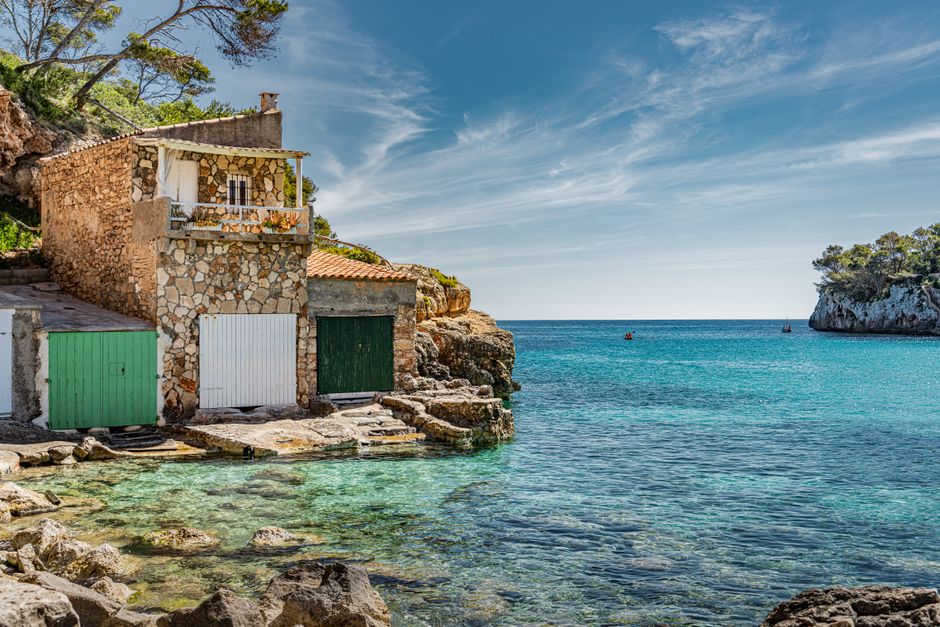
Mallorca’s coves and mountain villages reward a trip planned around contrasts: a morning among stone lanes and terraced hillsides, followed by time beside the sea. The trick is to respect the island’s geography. A cove that looks close to a village on a map may sit below a winding road or a steep footpath. Build your days around manageable areas, leave room for changing weather, and you can enjoy both landscapes without spending your holiday chasing parking spaces.
Plan around two different coastlines
The Serra de Tramuntana runs along Mallorca’s northwest, where mountain slopes meet a rugged coastline. Valldemossa, Deià and Sóller make useful reference points for exploring this side of the island. Here, the pleasure often lies in the journey between places: olive terraces, stone walls and glimpses of water beyond the bends.
The southeast offers a different rhythm. Around Santanyí, sandy inlets and lower coastal landscapes lend themselves to beach days with short walks. Trying to combine this area with several Tramuntana villages in one outing creates a long day of transfers. Give each region its own time, even if that means visiting fewer places.
Choose a base that suits your priorities
If villages and walking matter most, consider staying in or near the Tramuntana. Sóller offers a town setting, while Port de Sóller puts you beside its bay. Remember that these are separate places when comparing accommodation. A hillside address may have lovely views but involve steps or a climb whenever you go out.
If sandy coves are your main draw, the southeast is a more practical starting point. Palma can work for a varied trip, especially if you want city time as well, but outings still need planning. Before booking, check the actual walking route to transport, whether parking is available, and how easily you can find an evening meal without driving.
Explore mountain villages at walking pace
Valldemossa: lanes, stonework and mountain views
Valldemossa is a good introduction to the Tramuntana’s village scenery. Its stone buildings and narrow streets invite slow wandering, with the former Carthusian monastery providing a focal point. Decide whether you want to visit the monument or simply explore the town; trying to fit both into a hurried stop can make the visit feel rushed.
Leave your vehicle in a designated parking area and continue on foot. Move beyond the busiest approaches, while remembering that quieter streets are residential. Keep doorways clear, avoid photographing people through windows, and wear shoes that grip on sloping paving.
Deià: a hillside village with a separate coastal outing
Deià’s setting is its great attraction: buildings clustered against steep slopes, with the sea below. Enjoy the village as a place to walk and pause rather than treating it only as a viewpoint. Steps and gradients can make even a short exploration more demanding than the map suggests.
Cala Deià should be treated as a separate excursion. This is a rocky cove with stones and coarse sand, rather than a broad sandy beach. If you walk down, allow energy and daylight for the climb back. Check the route beforehand, and carry what you need instead of assuming supplies will be available at the water.
Fornalutx and Sóller: combine a village with a town
Fornalutx offers stone lanes and mountain surroundings, while nearby Sóller gives you a larger town to explore. They make a sensible pairing if you want a village walk followed by a more substantial pause for food. Keep the day flexible enough to enjoy whichever place holds your attention.
Do not assume that a walking connection between settlements is a casual pavement stroll. Check a reliable route description for surface, climbing and navigation. If you prefer a gentle day, explore each centre separately and use suitable transport between them.
Choose coves for access as well as scenery
Mondragó: beach time within a protected landscape
Mondragó Natural Park, in the southeast near Santanyí, combines coastal scenery with walking opportunities. Ses Fonts de n’Alis, also known as Cala Mondragó, and nearby S’Amarador are sandy options to consider. The surrounding landscape adds interest if you want more than a day lying on the beach.
Use designated access points and marked paths, and follow park instructions about protected areas. Check official park information before setting out for current access arrangements and route advice. Choose a short walk that fits the heat and your group’s energy, leaving enough water for the return.
Cala Santanyí: consider the practical approach
Cala Santanyí is worth researching if you prefer a beach outing near a developed area. Nevertheless, nearby buildings do not guarantee that every approach will suit a pushchair or someone with limited mobility. Check the route from your accommodation or arrival point to the sand, including any slopes and steps.
For any cove, decide what you need before choosing it: sand for sitting, straightforward entry into the water, shade, or a manageable walk. Photographs rarely show the full approach. A less dramatic setting that everyone can reach comfortably may make a much better day.
Make transport part of the plan
A car gives you flexibility, but mountain driving demands attention. Roads can be narrow and winding, with cyclists and limited places to stop. Use designated viewpoints, allow faster traffic to pass where safe, and never leave the vehicle where it blocks access. If a parking area is full, move to your alternative.
Without a car, build your route around confirmed public transport connections. Check current information with Mallorca’s official transport operator, TIB, including the return journey and the distance from the stop to your destination. A bus serving a village does not necessarily take you to its cove. Keep connections simple and avoid relying on the final departure.
Balance swimming, walking and weather
A sheltered-looking inlet can still have difficult swimming conditions. Follow beach flags and local instructions, assess the entry and exit, and stay out when conditions exceed your ability. Clear water alone tells you little about safety. Rocky coves require particular care when waves make getting back onto shore awkward.
Hot weather changes the effort involved in village steps and coastal paths. Carry water, sun protection and proper walking shoes, and save demanding walks for cooler conditions. After rain, stone surfaces can become slippery. Check official weather and emergency information before mountain outings, and change plans when conditions warrant it.
Build a flexible sequence of days
- Village day: Explore Valldemossa, with time for its lanes and whichever cultural visit interests you.
- Mountain day: Pair Sóller and Fornalutx, adding a researched walk only if conditions suit.
- Northwest coast day: Visit Deià and consider Cala Deià as an optional outing with its own access plan.
- Southeast day: Choose Mondragó or Cala Santanyí, keeping the emphasis on one relaxed coastal area.
Swap these days around the forecast and your starting point. Carry a bag for litter, respect private land and leave room for residents on narrow lanes. Mallorca’s appeal comes through most clearly when you have time to notice it: the shade beside a stone wall, the curve of a mountain terrace, or a quiet pause above the water.