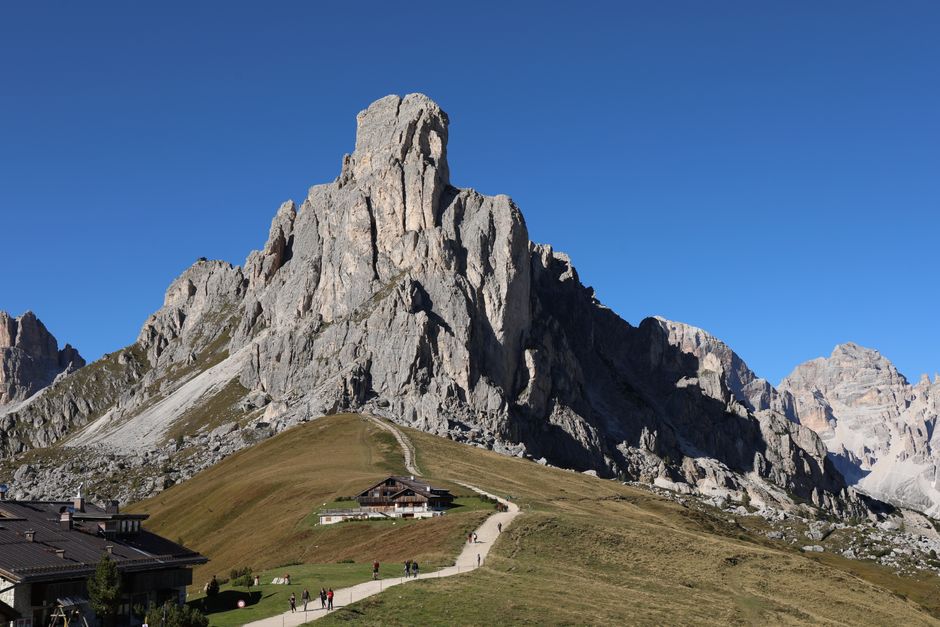
Summer in the Dolomites without a car works best when you build your holiday around one well-connected valley. Trains bring you towards the mountains, buses reach the villages, and lifts open up high walking country. Choose your base carefully and you can spend your days among pale limestone peaks and green meadows without making every outing a complicated transfer. Leave room for changing weather, resist collecting distant landmarks, and let the transport network shape a more relaxed trip.
Choose a valley before choosing your walks
The Dolomites cover a large area. Places that look close on a map can sit on opposite sides of a mountain range, with awkward public transport connections between them. For a first visit, select a cluster of walks reachable from the same village, then check the transport before booking accommodation.
Val Gardena is a useful starting point. Ortisei, Santa Cristina and Selva occupy different positions within the valley, with buses connecting them. Ortisei suits visitors who want village facilities and lift access towards Seceda and Alpe di Siusi. The other villages may suit different walks better. Compare the actual walk from your accommodation to the relevant stop or lift, including its gradient.
If your wish list includes widely separated mountain areas, divide the holiday between bases and allow a proper transfer day. Moving accommodation repeatedly with luggage can consume the time you hoped to spend outside. A smaller geographical area gives you more freedom to rearrange outings when clouds obscure the peaks.
Plan your arrival from the railway
For Val Gardena, investigate rail journeys through Bolzano, Bressanone or nearby valley stations, followed by the appropriate bus connection. The best interchange depends on your starting point and current services. Use official railway and regional transport planners to check the complete journey, including the location of the bus departure point.
Allow a comfortable connection after a long train journey. You may need to walk between platforms and a bus station, locate the correct stop or buy a separate ticket. Late arrivals can leave fewer onward options. Reaching your village while public transport is still running comfortably is worth prioritising over a slightly shorter journey on paper.
Pack luggage you can lift and carry yourself. Village streets can be steep and accommodation entrances are not always beside the road. Ask your host which stop is closest and whether the final approach involves steps or a substantial climb.
Book somewhere convenient for daily life
A peaceful hillside address can become inconvenient when every departure starts with a steep walk and every return depends on another bus. Look for a practical combination of transport access, food shops and somewhere to eat in the evening. Check walking directions rather than relying on straight-line distances.
- Identify the exact stop: confirm which services use it and whether they reach your intended starting points.
- Ask about guest transport benefits: establish what your accommodation provides, when it becomes valid and which journeys it covers.
- Check mountain lifts separately: a public transport benefit does not automatically cover sightseeing cable cars.
- Consider quieter evenings: somewhere comfortable to spend time matters when the weather turns or you finish walking early.
Understand tickets and seasonal services
Use official regional planners for buses and trains, and the relevant lift operator for mountain access. In South Tyrol, südtirolmobil provides public transport information. Local tourism offices can help you interpret route options. Check current operating details with these official sources before committing to an outing.
Summer bus services and lift seasons do not all begin or end together. A valley connection may operate when a higher route is unavailable. Check your exact date, direction, ticket validity and any reservation requirements. Establish how tickets must be activated or validated, and save essential journey information before leaving reliable reception.
Compare lift passes against your actual plans. A multi-day product may suit several lift-based outings, while individual tickets may work better when you mix village walks with higher excursions. Read the coverage carefully because mountain lifts and regional public transport can have separate ticket arrangements.
Build each day around one mountain area
Explore the meadows of Alpe di Siusi
From Ortisei, the lift towards Alpe di Siusi offers access to an extensive upland meadow landscape. Choose a walk from a proper trail map rather than assuming the whole plateau is flat. Paths vary in gradient and surface, while distances across open country can feel longer in sunshine or wind. An out-and-back route makes it easier to shorten the day.
Head higher towards Seceda
The lifts from Ortisei towards Seceda provide access to dramatic mountain scenery. Treat arrival at the upper station as the beginning of a mountain outing, even if your main aim is enjoying the views. Check visibility and trail conditions before buying a ticket. Stay on designated paths, keep back from exposed edges and choose terrain that matches your confidence.
Keep a village day available
Leave a lower-level day for tired legs or uncertain mountain weather. Explore your village, choose an appropriate signed local walk and enjoy a leisurely meal. Lower elevation does not guarantee safety during severe weather, so use the forecast to decide whether walking is sensible. A flexible day also keeps your holiday from becoming a rushed checklist.
Work backwards from the journey home
Before each walk, identify your return stop or lift station and check the final services. Choose an earlier departure as your target, allowing a margin for slow walking, queues or a missed connection. Avoid making the last bus your only workable option, especially where alternatives are limited.
For a walk ending somewhere different from its start, check the return connection first. Confirm that the stop is reachable on foot and that the service operates on your travel day. Save a timetable screenshot and an offline map, then check for service notices again before departure. Do not assume a walking route beside a mountain road will provide a safe fallback.
Prepare for mountain conditions
Bring supportive footwear, waterproof layers, sun protection, water, food and a charged phone. Carry an offline trail map and enough battery for navigation and transport information. Early summer can leave snow on higher trails. Ask the tourism office or local mountain information service about current conditions before choosing your route.
Assess walks by ascent, surface and exposure as well as distance. A lift removes part of the climb but does not make every onward path easy. Start modestly, follow marked trails and turn back when conditions exceed your comfort. With a convenient base and realistic plans, travelling without a car leaves plenty of room for unhurried time in the mountains.