
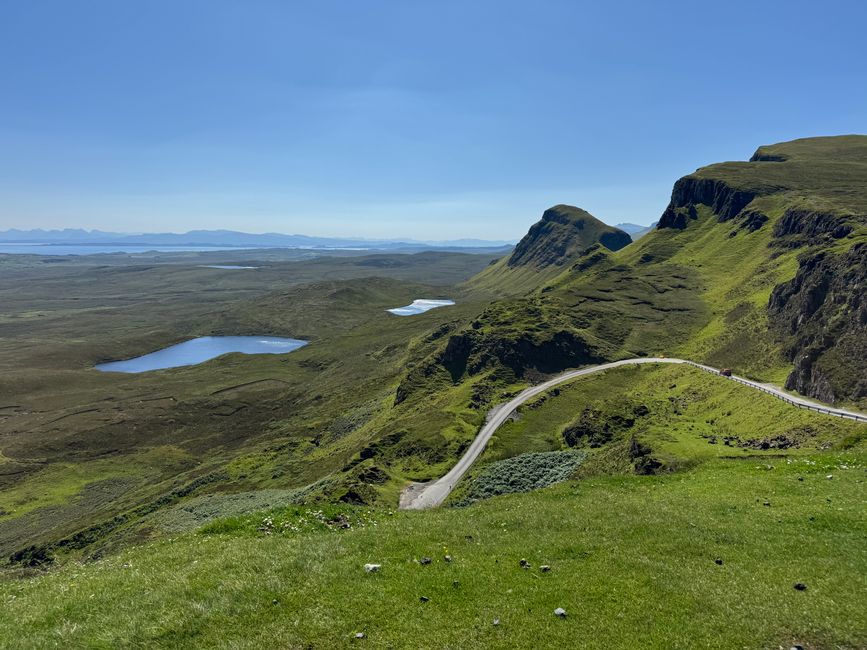
Exploring the Isle of Skye is most rewarding when you leave room for the weather. Mountains disappear into cloud, sea lochs catch sudden light, and a short walk can become the highlight of your day. Choose a few areas to enjoy properly, with time for slow roads and unexpected pauses. You will get more from the island by spending an afternoon in one landscape than by rushing between distant viewpoints.
Give your visit room to breathe
Allow several nights if you can. A day trip offers a glimpse but gives you little flexibility when conditions change. Divide your plans geographically: Trotternish in the north, the coast around Dunvegan in the northwest, and the southern landscapes around the Cuillin and Sleat. Combining these areas in a single day can leave you with more driving than exploring.
Choose one main outing each day and keep a gentler alternative nearby. A hill walk might become a harbour stroll when cloud settles low. Keep arrival and departure days relatively open, especially if they involve a ferry or a long mainland journey. You do not need a packed itinerary to feel that you have experienced Skye.
Choose a base around your priorities
Portree is a practical option if you want a town setting, places to eat and access to the north. Its harbour and surrounding streets make a pleasant change after time outdoors. Staying outside town can offer a quieter atmosphere, although an isolated address may add considerable driving to meals and everyday errands.
Broadford can suit trips focused on southern Skye and the mainland approach. Dunvegan is useful for the northwest, while Sleat offers woodland, coastal scenery and a softer introduction to the island. Before booking, map the actual journeys to your priorities. Somewhere that looks central on an island outline may sit at the end of a slow road.
Plan how you will get around
The Skye Bridge connects the island with the mainland at Kyle of Lochalsh. The ferry between Mallaig and Armadale offers another approach, arriving in southern Skye. Check the operator’s official information for reservations, service updates and vehicle requirements before planning around a sailing. Leave some flexibility for disruption rather than building a tight onward connection.
A car makes dispersed sights easier to reach, but driving requires patience. Narrow roads, bends, livestock and unfamiliar drivers can all slow your progress. On single-track stretches, use passing places to allow approaching vehicles through and let traffic behind overtake when safe. Passing places must remain available for traffic. Stop for photographs only where parking is permitted and safe.
Without a car, choose accommodation and outings around confirmed bus connections. Check both outward and return services with the operator, including differences between travel days. Roads may lack pavements, and walking between attractions is often impractical. A guided excursion can help you visit remote landscapes without driving, particularly if you have limited time.
Give Trotternish a full share of your attention
The Storr and the Quiraing
The Old Man of Storr and the Quiraing offer some of Skye’s most distinctive scenery, with rock formations, steep slopes and changing views. Treat them as walking destinations rather than quick photographs. Assess wind, visibility and ground conditions before starting, then choose a route that matches your fitness and experience.
The climb at the Storr can feel demanding even if the distance sounds modest. Around the Quiraing, some paths cross steep ground and become slippery when wet. Turning back is a sensible choice if conditions deteriorate. A shorter walk in clear weather can be more satisfying than completing a circuit while struggling to see your surroundings.
Leave space between famous stops
Trotternish also invites slower exploration through coastal settlements and crofting landscapes. Avoid adding every possible viewpoint to a driving loop. Find an appropriate place to pause for lunch, follow an established path and notice the sea beyond the fields. If a car park is full, move on instead of blocking access or squeezing onto fragile verges.
Explore the western coast at a slower pace
Northwestern Skye combines sea lochs, scattered settlements and open coastal views. Dunvegan makes a useful focus, and its castle offers a cultural counterpoint to outdoor sightseeing. Check the castle’s official visitor information before travelling specifically for entry, as seasonal availability and access arrangements can change.
Farther west, Neist Point draws visitors to its lighthouse setting and dramatic coastline. Allow time for the narrow approach roads and a comfortable return journey. Coastal wind can be much stronger than it felt at your accommodation. Stay well back from cliff edges, and avoid organising an unfamiliar late walk entirely around the hope of a sunset.
Enjoy the Cuillin landscape within your abilities
The Cuillin mountains provide a striking backdrop, but you do not need to attempt a summit to appreciate them. The Black Cuillin include serious mountaineering terrain. If your experience is mainly with ordinary countryside paths, choose established lower-level routes. Seek qualified local guidance for more ambitious objectives rather than assuming a popular destination has an easy approach.
The Fairy Pools near Glen Brittle offer a well-known walk beside pools and flowing water beneath the mountains. Expect uneven ground and exposure to the weather. Rain can change water levels and footing, while low cloud may conceal the peaks. Enjoying the pools from the path is enough; entering cold, moving water brings risks that photographs rarely communicate.
Pack for a changing day outdoors
Bring waterproof outer layers, warm clothing and footwear with reliable grip. Protect spare clothing from rain, and carry food and water even for a relatively short outing. Download maps before leaving a reliable connection, charge your phone and carry backup power. Do not make mobile reception your only navigation plan.
Check the Met Office and an appropriate mountain forecast before walks, considering wind and visibility as well as rainfall. In warm, still conditions, midge repellent and a head net can be useful. During colder months, shorter daylight requires shorter plans and a clear turnaround point. Let the day’s conditions determine your route.
Travel considerately through island communities
Reserve accommodation ahead and consider booking meals where alternatives are limited. Carry a simple lunch so your outing does not depend on finding food at a particular moment. Confirm dietary requirements directly and check current opening arrangements with venues. Official tourism information and individual operators are better sources for changing details than old travel accounts.
Follow the Scottish Outdoor Access Code, respect privacy around homes and crofts, and leave gates as you find them. Keep dogs under close control around livestock, take litter away and use provided toilets. Stick to established paths where possible to avoid widening worn ground. Give yourself permission to linger somewhere beautiful, then leave it as carefully as you found it.


