Yes — but only if you book early, pick the right seat tier, and understand what kind of show you’re actually walking into. Allegiance is not a feel-good night out. It’s a full-weight historical musical about Japanese American internment during World War II, and it earns every moment of its nearly two-and-a-half-hour runtime. Here’s how to see it without overpaying or arriving unprepared.
This is not a professional theatre review. It’s practical guidance for visitors making a real spending decision about their evening.
What Allegiance Is Really About — and Why It Hits Differently
Most people stumble onto Allegiance through a recommendation or a quick London theatre search. Few know what they’re signing up for before they walk in.
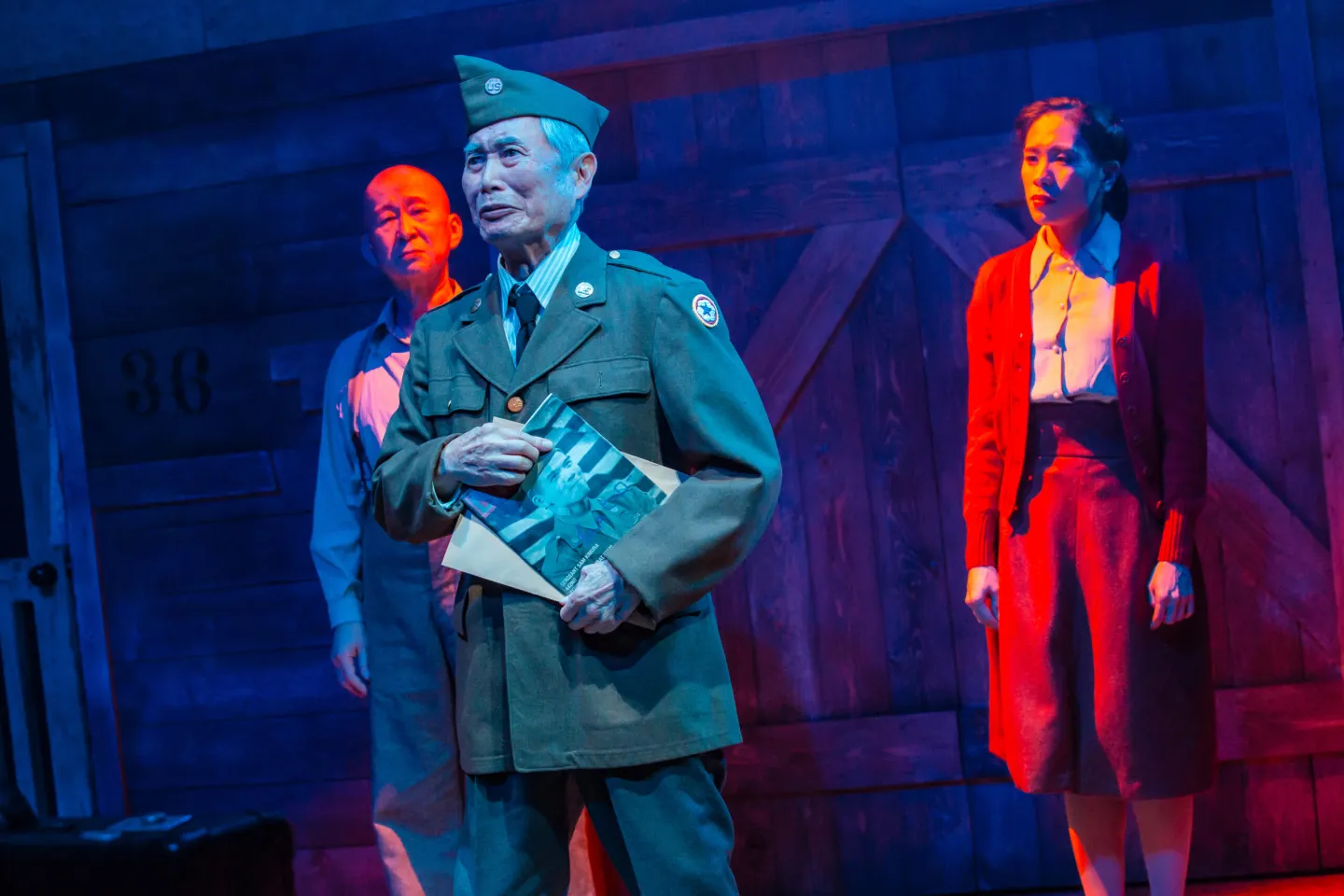
The musical follows the Kimura family — Japanese Americans forcibly removed from their homes and relocated to internment camps after the 1941 attack on Pearl Harbor. The story draws directly from the real childhood experiences of George Takei, who spent years in one of those camps and later starred in the original Broadway production in 2015, alongside Lea Salonga and Telly Leung. The score is by Jay Kuo. The book is by Marc Acito, Jay Kuo, and Lorenzo Thione.
The music doesn’t sound like anything else currently running in London. It sits closer in emotional register to the darker passages of Miss Saigon than to the rhythmic pop of Hamilton. Sweeping ballads carry the weight of loss. The ensemble numbers are surprisingly percussive and urgent. It’s a score that earns your attention rather than demanding it through volume alone.
The Central Tension That Makes It Work
The drama pivots on a generational fracture. The older generation chooses compliance — prove loyalty, endure quietly, survive. The younger characters fight back, some enlisting in the 442nd Regimental Combat Team, the most decorated military unit in U.S. Army history, fighting for a country that imprisoned their families. Neither choice is framed as correct. That moral ambiguity is what separates Allegiance from standard Broadway fare where the right answer is obvious from scene one.
The show doesn’t wrap up cleanly. You leave with questions rather than resolution — which is entirely the point.
Runtime, Content, and Who Should Actually See This
Total runtime is approximately 2 hours 30 minutes including a single interval. Plan dinner before the show, not after — you’ll want time to decompress, not rush a meal. The content is appropriate for ages 12 and up. Wartime violence, forced displacement, and themes of racial prejudice are handled with restraint but not avoided or softened.
For anyone who has studied this period of American history, Allegiance adds emotional texture to facts you already know. For anyone who hasn’t, the show functions as a complete education with no prior context required. If you want theatre that challenges rather than comforts, this is the right pick. If you’re looking for something light and escapist, it isn’t — and knowing that before you buy is worth more than any seat recommendation.
Ticket Prices, Seat Tiers, and How to Buy Without the Markup
Charing Cross Theatre is an off-West End venue, which means pricing sits below the major Shaftesbury Avenue houses but above what you’d pay at a small fringe room. Expect to spend between £25 and £60 for most performances, depending on seat category, catching a preview, and the day of the week.
| Seat Category | Typical Price Range | Sightline Quality | Best For |
|---|---|---|---|
| Premium Stalls | £50–£60 | Excellent — direct eye level with stage | First-time visitors, special occasions |
| Standard Stalls | £35–£49 | Good — slight angle on far sides | Best value, clearest view-to-cost ratio |
| Rear Stalls / Restricted View | £25–£34 | Variable — some distance or partial obstruction | Budget-conscious visitors, repeat viewers |
| Day Seats (if available) | £15–£20 | Rear or standing positions | Students, spontaneous same-day plans |
Where to Actually Buy Your Tickets
Buy directly through the Charing Cross Theatre box office or their primary ticketing partner. ATG Tickets handles a significant portion of off-West End transactions and is a legitimate face-value source. See Tickets is another authorized platform. These two are your safe options.
Avoid Viagogo and StubHub for productions still actively in their run. Both platforms resell at 30–80% above face value, and seats that appear scarce online are often still available at face value through official channels. Call the box office directly — they’ll tell you exactly what remains.
The venue holds approximately 170 seats. Weekend performances and Saturday matinees sell out first, often 2–3 weeks ahead. If you’re visiting London specifically to see Allegiance, book as soon as your travel dates are confirmed. Don’t assume you’ll sort it on arrival.
Discount Routes That Actually Exist
Preview performances — the run of shows before official press night — typically price £5–£15 lower than the main run. Check the theatre’s website directly for preview dates. The TKTS booth at Leicester Square occasionally carries off-West End tickets, but availability is inconsistent and not guaranteed for popular shows. Student standby deals, when offered, are announced on the theatre’s social media the morning of the performance.
Bottom Line: Standard Stalls at £35–£49 is the sweet spot. The venue is intimate enough that no seat is genuinely bad, but central stalls put you at eye level with the emotional scenes that make Allegiance worth attending in the first place. Skip the Premium tier unless it’s a special occasion — you’re not getting £15 worth of extra theatre.
Charing Cross Theatre: The Honest Venue Reality Check
An intimate space beneath a working railway station. Which sounds like a warning but isn’t.
Charing Cross Theatre sits beneath Charing Cross mainline station. The entrance is unassuming — you descend into a purpose-built theatre with around 170 seats in a traditional end-on configuration. Legroom is reasonable for the venue size. Sightlines from stalls seating are strong across most positions. The acoustics work well for musical theatre: you feel the orchestra rather than just hearing it through a PA system.
The bar area is compact and gets crowded during interval. Order drinks before the show starts if you want to avoid a 15-minute queue eating into a 20-minute break. There is no cloakroom — plan your coat situation in advance, particularly in winter months when bulky outerwear becomes a genuine inconvenience in a tight seat. Accessibility: the venue has step-free access for wheelchair users, but confirm your specific requirements with the box office when booking rather than assuming layout details.
Bottom Line: It’s a professionally run theatre, not a converted pub room. The intimacy is an asset for Allegiance specifically — the show’s confrontation scenes hit harder when the actors are 8 rows away rather than 50.
The Mistakes That Actually Ruin London Theatre Evenings
Arriving late is the most common — and most damaging — error.
Charing Cross Theatre enforces strict latecoming policies for musical productions. If you miss the opening, you may not be seated until interval. With a 2.5-hour runtime and a story-driven first act that builds all the character relationships the second act depends on emotionally, walking in mid-show removes the context that makes everything land. Arrive 20 minutes before curtain. Not 5 minutes. The Strand is consistently more congested than Google Maps predicts during evening rush hour, and the tube platform at Embankment backs up during peak times.
The second mistake: buying restricted-view seats for a first viewing of a show this narratively dense. The key confrontation scenes in the second act require reading faces clearly. Save the budget seats for a return visit, not for the first time you experience the story. The third mistake is booking without checking the actual performance calendar. Allegiance typically runs Tuesday through Sunday with Saturday and Sunday matinees, but confirm the specific schedule on the theatre’s official website before locking in your travel dates — limited runs occasionally shift midweek performances.
How to Build a Complete London Day Around the Show
Charing Cross Theatre’s location is one of its practical advantages. Trafalgar Square is a 3-minute walk north. The South Bank is 10 minutes on foot across Hungerford Bridge. Covent Garden is 8 minutes east along the Strand. You can build a full day that requires no tube journeys between 10am and curtain time — which reduces both cost and the accumulated friction that makes city days exhausting.
A Realistic Day Schedule for an Evening Performance
- Morning (10am–12:30pm): National Portrait Gallery on Trafalgar Square — free entry, recently reopened after major renovation, 5 minutes from the theatre. Two hours is sufficient for a focused visit without museum fatigue.
- Lunch (12:30–2pm): Avoid the immediate tourist traps on The Strand. Adelaide Street and Villiers Street, both under 5 minutes from the theatre entrance, offer substantially better food at lower prices. Flat Iron steak runs £14–16. Wahaca Mexican lands at £12–15 for a full meal. Both beat the hotel restaurant price point by a meaningful margin.
- Afternoon (2–5:30pm): Walk the South Bank from Waterloo Bridge toward Borough Market or Tate Modern (permanent collection free). You’ll cover roughly 2 miles at a relaxed pace and arrive back at Charing Cross with energy rather than accumulated fatigue.
- Pre-show (5:30–7pm): The Harp pub on Chandos Place, 2 minutes from the theatre, is one of London’s better traditional pubs — real ale, no loud music, reasonable prices at £5.50–6.50 per pint. Arrive early. The area fills fast before evening performances.
- Post-show: Allegiance earns quiet rather than loud bars. Gordon’s Wine Bar on Villiers Street — one of London’s oldest, carved into a Victorian vault — is the right call. Open late, atmospheric, genuinely unlike anywhere else in central London.
Getting There Without Overpaying
Three stations sit within a 3-minute walk: Charing Cross mainline, Embankment underground (District and Circle lines), and Charing Cross underground (Northern and Bakerloo lines). An Oyster Card or contactless payment card is essential if you’re coming from outside zone 1 — a zone 1–2 off-peak single is £2.80 versus £6.70 for a paper ticket. A black cab on The Strand during evening rush will cost you £15–25 and take longer than walking from Embankment. Don’t do it.
Where to Stay Without Overpaying for the Postcode
You don’t need to pay zone 1 hotel prices to reach this theatre easily. Premier Inn Waterloo runs approximately £100–130 per night and sits 15 minutes away across the river. The Z Hotel Strand — compact rooms, correct location, honest pricing — is 4 minutes from the theatre entrance and often prices below what you’d expect for that address. Travelodge City is a functional option for visitors putting money toward the show rather than the room.
What the off-West End circuit keeps demonstrating — through venues like Charing Cross Theatre, the Menier Chocolate Factory, Southwark Playhouse, and the Turbine Theatre — is that serious, emotionally demanding theatre no longer requires a West End postcode or West End pricing. As that trend continues and more productions bypass the big commercial houses entirely, the question stops being whether £120 Shaftesbury Avenue seats justify themselves. It becomes whether you’ve been paying three times too much for work you could have seen better, closer, and for £40 two streets away.