
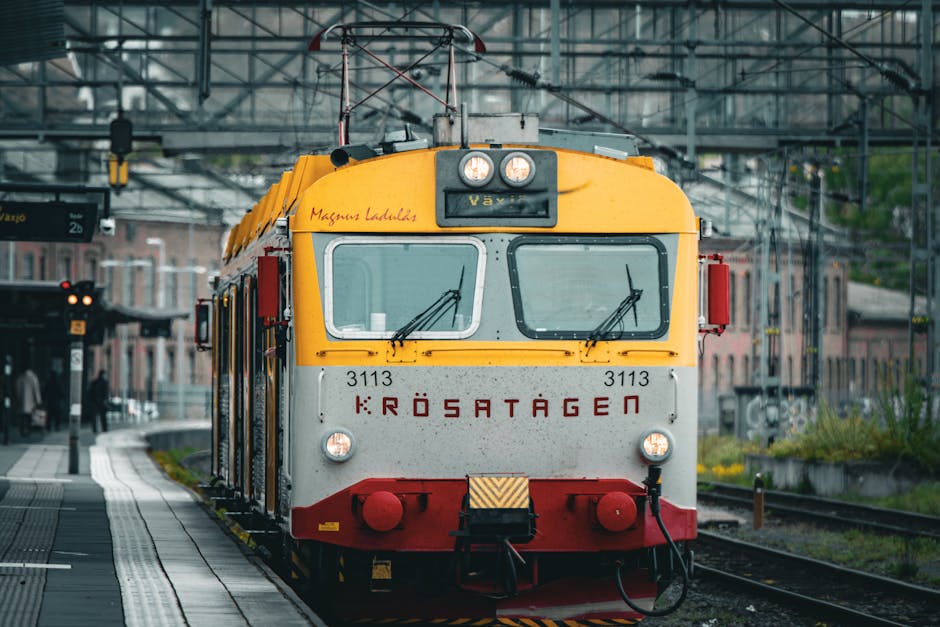
The pitch for European rail sounds clean: buy a pass, hop on trains, see the continent at your own pace. The reality involves mandatory seat reservations, trains your pass cannot touch, and point-to-point advance tickets that undercut the pass price by 60% on the most popular routes. None of that means rail is wrong — it usually is not — but the decisions that save or cost you money are more specific than most travel guides admit.
Eurail vs Point-to-Point Tickets: What the Math Actually Shows
The Eurail Global Pass is genuinely useful for long, flexible multi-country trips. For most people who know their dates 4–8 weeks out, individual advance tickets are cheaper on the routes that matter most. The table below uses 2026 advance pricing against a Global Pass (10 days in 2 months, adult second class: approximately €385) plus mandatory reservation fees per journey.
| Route | Advance Ticket (2nd class) | Pass + Reservation Fee | Verdict |
|---|---|---|---|
| London → Paris (Eurostar) | £39–£69 | ~€64 + £38.50 reservation | Advance ticket wins |
| Paris → Amsterdam (Eurostar International) | €29–€59 | ~€38 + €13 reservation | Advance ticket usually wins |
| Milan → Rome (Frecciarossa) | €19–€39 | ~€38 + €13 reservation | Advance ticket wins clearly |
| Madrid → Barcelona (Renfe AVE) | €14–€45 | ~€38 + €10 reservation | Advance ticket wins |
| Zürich → Geneva (SBB IC) | CHF 52 | ~€38 + no reservation | Pass can win (Swiss fares are expensive) |
| Vienna → Salzburg (ÖBB Railjet) | €17–€39 | ~€38 + no reservation | Advance ticket usually wins |
The pass earns its keep in Switzerland, Scandinavia, and late-booking scenarios. For Western Europe with fixed dates, advance tickets almost always win outright.
What Eurail Does Not Cover That Surprises People
The Eurostar London–Paris requires a £38.50 reservation fee on top of the pass. The Glacier Express in Switzerland adds CHF 33–49. Nightjet couchettes run €25–60 per berth depending on route. Budget €10–40 per high-speed journey in reservation costs — it is not optional on most major corridors, and it is not trivial across a two-week trip.
Interrail vs Eurail: Which One You Can Actually Buy
Interrail is for European residents. Eurail is for everyone else. The passes are nearly identical in structure, but Interrail is typically priced €30–50 cheaper per tier. British passport holders can buy either — Eurail if your journey starts in the UK, Interrail for travel beginning on the continent.
Five Rail Routes That Are Worth Taking in Their Own Right
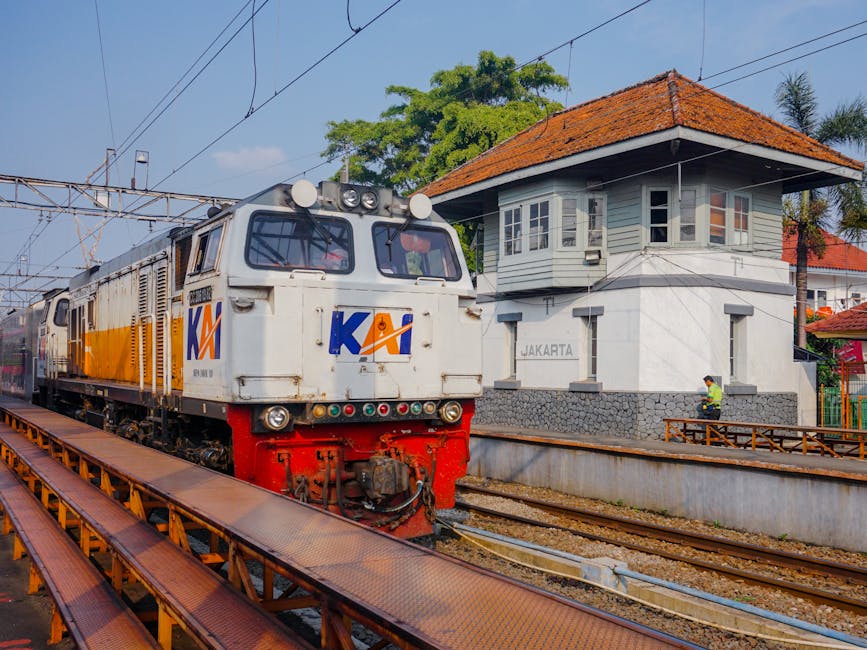
These are not just connections between cities. They are journeys that hold up as experiences, with real booking details attached.
- London to Paris via Eurostar — 2h15 from St. Pancras International to Gare du Nord. Advance fares from £39 are consistently available outside July and August. Business Premier from £150 includes lounge access and a meal, which starts making sense if you would already pay for a hotel upgrade on a weekend trip.
- Barcelona to Madrid via Renfe AVE — 2h30. Spain’s high-speed network is the most underrated in Europe. City-centre to city-centre time beats flying easily. The cheapest non-refundable Básico fare starts around €14 and opens around 60 days ahead. Book at renfe.com directly — third-party aggregators regularly miss the cheapest AVE inventory.
- Florence to Venice via Frecciarossa or Italo — about 2 hours, routing through Bologna. This is the corridor where private operator Italo competes directly with Trenitalia’s Frecciarossa, which keeps fares as low as €9.90 when booked 2–3 months ahead. Check both italotreno.it and trenitalia.com separately — they undercut each other regularly and neither shows up fully on third-party sites.
- Vienna to Budapest via ÖBB Railjet — 2h40, bookable at öbb.at from around €17 in advance. One of the better-value cross-border trips in Central Europe. Comfortable, punctual, and it connects two cities where a single flight would be impractical.
- Brussels to Amsterdam (Eurostar International intercity direct) — 1h50. At this price and duration, it is the clearest case where the train wins against every alternative without needing any argument about convenience.
Italy by Train: The Country Where Rail Makes the Most Sense
No other country in Europe makes the case for train travel as convincingly as Italy. The high-speed network connects every major city at 250–300 km/h. Rome to Milan takes 3 hours. Naples to Rome is 1h10. Florence to Naples is 3h. Driving those routes takes 5–7 hours; flying loses its advantage the moment you add airport transfers at both ends. Rail is not the convenient option for Italy — it is the obviously correct one.
Trenitalia vs Italo: How to Pick and When to Book
On routes both operators serve — primarily the Rome–Milan axis with branches to Florence, Naples, Salerno, and Venice — competition keeps fares genuinely low. Italo’s cheapest non-refundable Economy fare reaches €9.90 for Rome–Naples on off-peak departures. Trenitalia’s equivalent tiers are Base and Economy. Both operators open fares roughly 120 days in advance; on the Rome–Milan corridor, the cheapest seats typically sell out 6–8 weeks before departure in summer. Book Trenitalia at trenitalia.com and Italo at italotreno.it. These two sites are the only reliable sources for each operator’s full fare inventory.
First class is worth a look on long corridors. Italo’s Prima class on Rome–Milan runs €60–80 and includes catering at your seat, comfortable pitch, and a quieter cabin. It is a different product from standard European first class — legitimately good value relative to the base price of the journey.
Regional Trains: The One Rule That Catches Visitors Every Time
Italy’s Regionale and Regionale Veloce services — the slower trains connecting smaller towns — are mostly walk-up, pay-on-the-day, and do not require booking. The catch: you must validate (stamp) your ticket in the yellow machines on the platform before boarding. Not after. Not on the train. A valid, paid, unstamped ticket still earns you a €50+ fine. This is not an edge case; it catches hundreds of visitors monthly on the Cinque Terre and Amalfi Coast routes where regional trains are the primary transport.
Night Trains: The Only Verdict That Matters Right Now

Nightjet, operated by ÖBB, is the only meaningful night train network left in Europe. A couchette berth (shared 6-person cabin) starts around €49–79; a private sleeper runs €120–180 per person. It connects Vienna, Salzburg, and Innsbruck to Paris, Brussels, Amsterdam, Hamburg, Berlin, Zürich, and Rome. Book 90–120 days ahead for summer routes — popular departures sell out entirely at that lead time. It does not serve the UK, Spain, or Scandinavia.
The Two Scenic Railways Worth Paying a Premium For
Most train journeys in Europe are utility. These two are not — they are the reason some travelers build an entire itinerary around a rail segment.
Glacier Express: Zermatt to St. Moritz
Eight hours. 291 bridges. 91 tunnels. The Glacier Express climbs to 2,033 meters at its peak and passes through terrain that has no real equivalent on the continent. A second-class seat costs CHF 152 plus a mandatory CHF 33 reservation fee. First class (CHF 236 + reservation) runs through panoramic domed carriages — a meaningful upgrade for this particular journey. Book at rhaetische-bahn.ch or Rail Europe; fares open roughly 90 days out and the panoramic first-class seats go first in summer. If you need to travel between Zermatt and St. Moritz for any other reason, take the faster combination of regular SBB trains (about 4 hours, 40% cheaper). The Glacier Express is worth booking because you want 8 hours in those mountains, not because it is efficient transport.
Bernina Express: Chur to Tirano
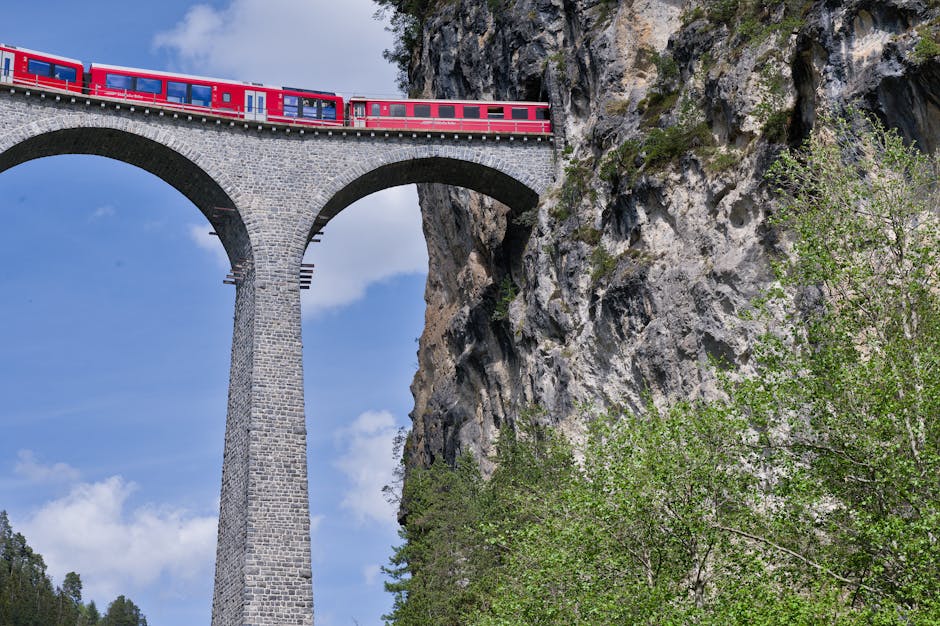
The Bernina Express runs 122km of UNESCO World Heritage railway from Switzerland into northern Italy, crossing the Alps at 2,253 meters — the highest railway crossing in the Alps open year-round. Journey time is 4 hours. Second-class fare starts around CHF 62 plus a CHF 16 reservation. The Brusio circular viaduct near the Italian border — a full 360-degree spiral loop the train uses to descend altitude — is one of the most photographed railway segments in the world. The route ends in Tirano, from which Trenord regional trains connect to Milan in about 2.5 hours for around €12.
Six Booking Mistakes That Cost Real Money
- Ignoring reservation fees when pricing a pass. A 10-day Eurail trip through France, Italy, and Spain can easily generate €100–150 in mandatory seat reservations. Price the complete cost — pass plus reservations — before comparing to advance point-to-point tickets.
- Booking Italian trains on Trainline. Trainline charges a service fee and does not reliably surface the cheapest Italo fares. Book Trenitalia at trenitalia.com and Italo at italotreno.it directly. The gap on a Rome–Milan booking can be €8–15 per ticket.
- Skipping ticket validation in Italy and Spain. On Italian Regionale services and Spanish Cercanías commuter rail, buying the ticket is not enough. Yellow stamping machines on the platform are mandatory before boarding. A valid, unstamped ticket still costs you a €50+ fine.
- Using third-party sites for Swiss rail. SBB at sbb.ch shows every Swiss departure, connection, and fare — including Supersaver fares that open 60 days out and sell fast. Third-party aggregators routinely miss these cheaper tiers.
- Assuming the fast train is the best choice through scenic regions. The Frecciarossa between Milan and Naples runs through Apennine tunnels for much of the journey. The slower Intercity along the Tyrrhenian coast adds 30 minutes, costs €10 less, and shows you the sea. Knowing which trains use which corridors changes what you actually want to book.
- Skipping seat selection on Eurostar. Seat choice is available at booking on Eurostar — takes 30 seconds. Skip it and you may ride 2h15 at a table seat facing backwards on a busy Friday evening departure. Not a disaster, but entirely avoidable.
When the Train Is Genuinely the Wrong Answer
The London to Edinburgh argument is worth making once: LNER’s fastest service takes 4h30 and costs £30–90 advance; a Ryanair or easyJet flight costs £25–55. Door-to-door from central London to central Edinburgh, the train wins on total time because Edinburgh Waverley is in the city centre while Edinburgh Airport is not. The calculation inverts sharply on longer routes. London to Lisbon by train takes just under 25 hours. London to Budapest is nearly 24. At that duration, budget airlines win unless the journey itself is the point.
Where Flixbus Beats Rail in Eastern Europe
Flixbus is not a fallback in Eastern Europe — on several routes, it is the correct choice. Prague to Berlin is €9–19 on Flixbus (about 5 hours) versus a Czech-German train connection at €30+ for a similar journey time. For travel through the Balkans, large parts of rural Poland, and Romania, rail connections are either absent or impractically slow. Check Flixbus alongside rail before assuming train is optimal east of Vienna.
Portugal is the other exception. Lisbon to Porto on the Alfa Pendular takes 2h45 and costs €23–39 — that is fine. But Lisbon to Faro (Algarve) takes 3h15 by the fastest train, while Rede Expressos buses cover the same route in 3h30 for €19. The savings are real, and the bus terminal in Faro sits closer to the resort coastline than the train station.
The most useful mental model for European rail: treat high-speed utility journeys and scenic experience trains as entirely separate categories — booking logic, timing, and cost comparisons are different for each, and conflating them is where most planning goes wrong.