Bologna rewards a walk with no urgent destination: a shaded arcade leads to a square, a food shop draws you into a narrow lane, and lunch becomes part of the sightseeing. Exploring Bologna’s porticoes and food markets brings those pleasures together. You can follow the covered pavements between architectural details and shopping streets, then pause to understand the ingredients behind the city’s cooking. Keep the route compact, leave room for an unhurried meal, and treat the markets as working places rather than a checklist of snacks.
Plan a walk around the historic centre
Piazza Maggiore makes a useful starting point because several rewarding areas lie close together. The Quadrilatero food streets sit beside the square, the Pavaglione offers a distinctive stretch of portico nearby, and Piazza Santo Stefano provides a natural continuation. Mercato delle Erbe lies west of the central square, so you can visit it before or after the eastern streets without turning the day into a long excursion.
If seeing fresh produce is a priority, aim to explore the markets earlier in your day and leave architectural wandering for later. Individual shops, grocery stalls and places serving meals can follow different schedules. Check current information with the market’s official website and Bologna’s official tourism service before setting out, especially around public holidays. An open dining area does not necessarily mean every food counter is trading.
Look closely at the porticoes
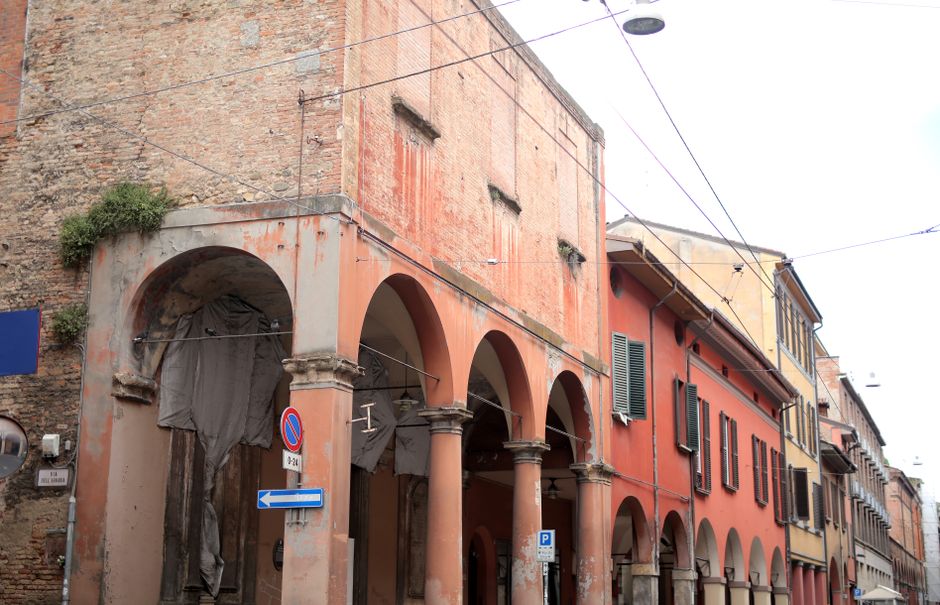
Bologna’s porticoes are covered walkways formed where buildings extend above the pavement. They are practical public passages, but they also give the streets a strong sense of enclosure and rhythm. As you walk, look for changes in column shape, ceiling height, paving and decoration. Some stretches feel intimate; others open into broad, formal spaces. The differences are more interesting than trying to photograph every arch.
Start around the Pavaglione on Via dell’Archiginnasio, close to San Petronio and Piazza Galvani. Its long sequence of arches makes it easy to appreciate how the portico connects shopping, walking and the buildings above. Pause at the edge of the pedestrian flow to look along the columns. Then step into the square to see how different the same architecture feels from outside its shelter.
Continue towards Piazza Santo Stefano for a different relationship between arcades and open space. The porticoes frame the approach to the Santo Stefano religious complex, while the widening street creates room to stand back and look. You do not need specialist architectural knowledge: notice where the light falls, how the buildings meet the ground, and how people use the shaded edges of the square.
Explore the Quadrilatero through its ingredients
The Quadrilatero is a small network of food shopping streets east of Piazza Maggiore. Lanes such as Via Pescherie Vecchie and Via Drapperie invite slow browsing, with displays of produce, cheese, cured meats and pasta. It is a district rather than one enclosed market building. Walk through a few connected streets before buying anything, so you can distinguish grocery counters from places primarily serving drinks and meals.
Pay attention to what is being sold rather than simply hunting for the busiest doorway. A pasta display can reveal the difference between broad ribbons and small filled shapes. A cheese counter offers a chance to ask about texture and maturity. Seasonal vegetables show another side of a city often associated chiefly with rich dishes. You can learn plenty without ordering a large tasting selection.
Know a few local food terms
- Tagliatelle al ragù: ribbon pasta served with a meat sauce associated with Bologna.
- Tortellini: small filled pasta, traditionally associated with a meat filling and often served in broth.
- Mortadella: a delicately seasoned cooked pork sausage strongly associated with the city.
- Parmigiano Reggiano: a hard cheese from a defined production area that includes part of the Bologna province.
These names help you read displays and menus, but they do not guarantee identical recipes everywhere. Ask what a dish contains, particularly if you avoid meat or have an allergy. Broth, sauces and filled pasta may contain ingredients that are not obvious from their appearance. Vegetarian travellers can browse vegetables, bread and cheese while checking the details of prepared dishes individually.
Give Mercato delle Erbe its own stop
Mercato delle Erbe, reached from the Via Ugo Bassi area, offers the contrasting experience of a covered market hall. Its grocery stalls bring together produce and other fresh foods, while dining spaces add another reason to linger. Look around the shopping areas first if your aim is to understand the market, rather than heading directly for a seat.
This is a useful place to assemble a modest picnic or buy ingredients if your accommodation has a kitchen. Choose amounts you can comfortably carry and use, and consider refrigeration before purchasing cheese, meat or other perishable foods. If you want something ready to eat, ask whether it is intended for immediate consumption or needs cooking. Fresh pasta displayed for sale is not necessarily a takeaway lunch.
Allow the two market areas to complement each other. The Quadrilatero’s narrow outdoor streets offer a close connection with the surrounding city, while Mercato delle Erbe concentrates shopping within a hall. You do not need to eat a full meal in both. Browse one, lunch at the other, and leave enough appetite to enjoy what you choose.
Order and browse with confidence
Watch how a counter handles customers before joining in. There may be a queue, a numbered ticket system or an informal order that the vendor is keeping track of. Greet the person serving, explain what you would like, and ask for a small quantity if you are tasting something unfamiliar. Check the unit used on a displayed price before agreeing to a purchase.
Ask before touching unpackaged produce or photographing a stall at close range. Keep bags near your body in crowded lanes, and move aside after buying so the next customer can approach. If you want to sit down, confirm whether the food or drink you are ordering includes table service. A little observation makes these exchanges easier without requiring fluent Italian.
Make the route comfortable
Porticoes offer welcome shade and some protection from rain, but the route is not continuously sheltered. Crossings, squares and gaps between arcades remain exposed, and covered paving can still become slippery. Wear comfortable shoes, carry water, and bring weather protection appropriate to the forecast. In warm conditions, use the shaded streets for walking and take proper seated breaks.
For wheelchair users, travellers with pushchairs or anyone who finds uneven surfaces tiring, plan conservatively. Historic paving, thresholds, narrow passages and busy counters can complicate an otherwise short route. Check access details for any building you intend to enter, and ask the official tourism service about a suitable walking route. A wide portico does not guarantee a step-free entrance to the shop beside it.
Keep the portico route towards the Sanctuary of San Luca for a separate outing if you want a longer walk involving an uphill section. For this visit, the central arcades and markets provide plenty to absorb. Finish by returning to a square you enjoyed, putting your purchases away, and watching the ordinary movement of the city beneath the arches.