Verona is a rewarding place to slow down in spring. Roman stonework, elegant squares and the curves of the Adige River give you plenty to explore without travelling far between sights. With two days, you can enjoy the main landmarks and still leave room for a long lunch or an aimless walk. This plan groups nearby places together, then takes you across the river for a different perspective. Use it as a loose framework, with one or two priorities each day and everything else open to change.
Make the weekend easy from the start
If possible, arrive the evening before your first full day. That gives you time to settle in and begin exploring without luggage. Verona Porta Nuova, the main railway station, is outside the historic core. Choose between walking, a local bus and a taxi according to your bags and energy, checking current transport details with the official operator before travelling.
Stay in or near the historic centre if you want to return easily for a rest. Accommodation across the river can also be convenient, but check the walking route rather than relying on a straight line on a map. If driving, confirm parking and restricted traffic zones with your accommodation before heading into the centre.
Spring weather calls for flexibility. Bring comfortable shoes with grip, a light waterproof jacket and a warmer layer for evenings. Rain can make polished stone and steps slippery. Around Easter and public holidays, check visitor arrangements in advance and expect popular places to feel busier. Avoid filling both days with reservations; one planned interior visit each day is a useful starting point.
Day one: the Arena, central squares and Castelvecchio
Begin in Piazza Bra
Start in Piazza Bra, where the broad space lets you appreciate the Arena before entering the narrower streets. Walk around the Roman amphitheatre and look at its surviving arches. Even from outside, its scale makes a strong impression and gives some context to the ancient remains you will encounter elsewhere in Verona.
If you want to enter, consult the Arena’s official visitor information before building your morning around it. Events and preparations can affect access. Allow enough time to enjoy the interior rather than treating it as a quick photograph stop. If you prefer to stay outside, take another turn around the square and begin your walk when you feel ready.
Continue towards Piazza delle Erbe
Via Mazzini provides a straightforward route towards Piazza delle Erbe. Its shops can make it lively, so take a smaller parallel street if you would enjoy a quieter approach. In the square, look above the stalls and passing crowds: the varied facades, balconies and painted surfaces reward attention beyond street level.
Continue into nearby Piazza dei Signori, an enclosed space with a different mood. The elaborate Gothic Scaliger Tombs are close enough to include without a lengthy detour. Keep this part of the morning unhurried. A coffee break or a few minutes sitting down will help you enjoy the next stop more than squeezing in another landmark.
Juliet’s House is nearby if its literary associations appeal to you. Treat it as part of Verona’s cultural relationship with Shakespeare’s lovers, rather than evidence of a documented couple. Check official access details if you want to visit. If the surroundings feel crowded, move on comfortably; the weekend does not depend on seeing this particular attraction.
Spend the afternoon around Castelvecchio
Have lunch before heading towards Castelvecchio. Read menus and choose somewhere that suits your appetite and pace. Regional risotto or pasta can make a satisfying meal, but there is no need to turn lunch into a checklist of dishes. Leave yourself time to sit properly, especially after a morning spent walking and standing.
Castelvecchio brings brick walls, fortified architecture and a striking bridge over the Adige. Visit the museum if art and architecture interest you, giving it enough time to justify going inside. Otherwise, enjoy the exterior and walk across the bridge, pausing for views along the river. Either approach makes a natural change from the busy central squares.
Keep the evening close to your accommodation. Dinner followed by another look at Piazza Bra is enough to round off the day. You may notice details you missed that morning as the light changes. Resist the temptation to add a distant stop simply because you have time available; tomorrow includes a hillside walk that is easier with rested feet.
Day two: follow the river and cross to the hills
Walk towards Ponte Pietra
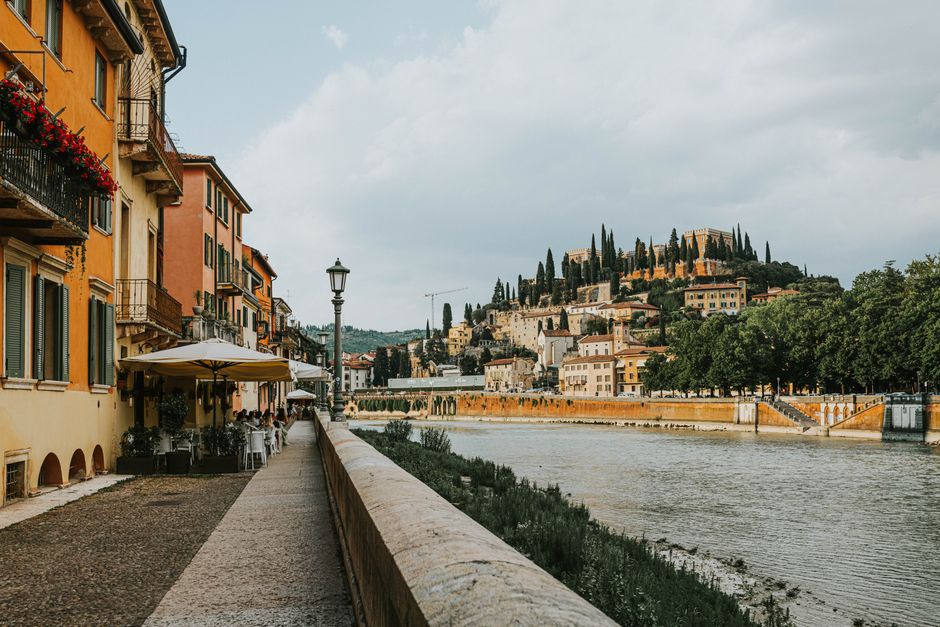
Begin with a riverside route towards Ponte Pietra, following the Adige where convenient. Its bends create changing views of the city, making this a pleasant way to move between places without continually checking a sightseeing list. Stop on the bridges to take in the water and buildings rather than using every crossing purely as a shortcut.
The cathedral is a possible visit before you cross the river. Choose it if religious architecture interests you, and check visitor access around services. Dress respectfully and remember that churches remain places of worship. You do not need to enter every important building to have a worthwhile understanding of the city.
Explore the far bank and the viewpoint
Cross Ponte Pietra and spend a little time in the streets beyond. The Roman Theatre and its archaeological museum offer another possible indoor visit, particularly if ancient history is your priority. Choose between this and the cathedral if you want to preserve a relaxed pace, rather than automatically doing both.
Continue uphill towards Castel San Pietro for a broad view over the rooftops and river. The climb includes steps, so take your time and pause as needed. Check current official information about the funicular if you would prefer an alternative. Historic streets and hillside approaches should not be assumed step-free; confirm individual routes and entrances if accessibility matters for your visit.
At the viewpoint, give yourself time simply to look. Seeing the river curve around the centre helps connect the places you explored yesterday. If rain makes the climb uncomfortable, skip it without trying to compensate with extra stops. A gentle lunch across the river can be a better choice than struggling uphill for a view hidden by poor weather.
Choose your final afternoon
If you want a garden visit, consider Giardino Giusti, east of the central sights. Its formal spaces and hillside setting offer a different experience from the squares. Check current opening and admission information with the official source before going. Slopes and steps may affect how much you wish to explore, so judge the visit against your remaining energy.
Alternatively, stay with an easy neighbourhood walk before returning to the centre. This suits an afternoon departure, when collecting luggage and reaching the station need space in the plan. Finish with a seated break and a final look at the river. Leaving one attraction for another visit is preferable to spending the last part of your weekend watching the clock.
Let the weather shape the details
- For persistent rain: spend longer in your chosen museum and shorten exposed walks.
- For a bright spell: prioritise the bridges and viewpoint while conditions suit them.
- For busy squares: visit earlier or return later, using quieter streets between stops.
- For tired feet: remove an optional visit and keep a proper lunch break.
The route gives each day a distinct character: ancient landmarks and civic squares first, then river views and a hillside perspective. Between those anchors, leave room for the small pleasures that make Verona feel like a place you have enjoyed spending time in.