
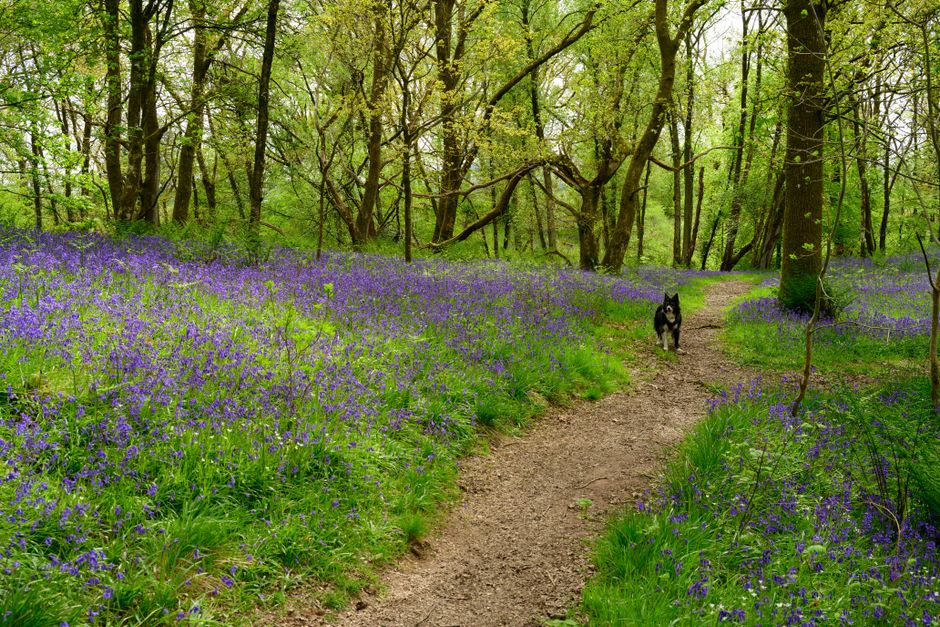
A spring walk through an English bluebell wood rewards a slower pace. Beneath branches still opening into leaf, flowers spread across the ground in pools of violet and blue, with birdsong carrying through the trees. The best outing is not necessarily the longest walk or the most famous woodland. It is one timed with local flowering conditions, planned around a suitable path, and enjoyed without stepping into the flowers. Here is how to choose where to go, prepare for changeable weather, and make a woodland visit feel like a proper day out.
When to look for bluebells
Bluebells generally flower during April and May in England, but there is no dependable national peak. A sheltered southern wood may be well into its display while a cooler northern site is still developing. Temperature, altitude, exposure, and the particular woodland all affect timing. Even within one wood, sunny edges and shaded hollows can look quite different.
Use the season as a starting point, then look for recent updates from the organisation managing your chosen site. Photographs published by the landowner or conservation charity can be more helpful than an old list of recommended visiting dates. Check the date and location of any image before treating it as evidence of current conditions.
If your travel dates are fixed, choose a woodland with other reasons to visit: varied trees, a viewpoint, or a pleasant network of paths. Fresh leaves, wood anemones, and spring birdsong can make the walk worthwhile even when the bluebells are not at their fullest.
Choose a wood that suits your day
Start with your travel radius and walking needs rather than a photograph. A smaller wood close to your accommodation can offer a more relaxed experience than a celebrated destination reached after a long drive. Consider whether you want a short flower-focused loop or a longer walk combining woodland with open countryside.
Ashridge Estate, Hertfordshire
Ashridge is a familiar choice for woodland walks in the Chilterns, with Dockey Wood particularly associated with bluebells. The wider estate gives you scope to build a longer outing, but do not assume that every path leads through a flower display. Consult the National Trust’s current guidance for the bluebell area, including any seasonal arrangements and recommended arrival points.
Micheldever Wood, Hampshire
Micheldever Wood is known for spring bluebells among its beech trees. It suits visitors who want a woodland setting as the main event rather than a garden visit. Use Forestry England’s official information to identify the appropriate entrance and walking routes, and check notices about forestry operations or temporary closures before travelling.
Winkworth Arboretum, Surrey
Winkworth offers bluebells within a managed landscape of trees and sloping ground. It can work well if your group enjoys looking at spring foliage as much as flowers. The terrain matters when choosing a route, so consult the National Trust’s access information rather than assuming an arboretum means level paths throughout.
A woodland closer to your base
Local Wildlife Trusts, the Woodland Trust, and council countryside services are useful starting points for finding less obvious options. Look for a site description that specifically mentions bluebells and public access. A woodland appearing on a map does not automatically mean you may wander throughout it; use authorised entrances and follow the routes the owner identifies.
Plan the journey and the walk together
Before choosing a route, establish exactly where it starts. Large estates can have several entrances, and a general map pin may send you to the wrong side. Save the official arrival instructions and a route map before leaving, particularly where mobile reception may be unreliable.
For a visit by public transport, check the entire connection from station or bus stop to the woodland entrance. A short distance on a map can involve a busy road without a pavement. Confirm the return options through the relevant transport operator and leave enough margin to walk back comfortably.
If driving, use designated parking and have an alternative plan if it is full. Narrow lanes, passing places, farm entrances, and residential verges are not overflow parking. Choosing another nearby walk is better than adding to congestion around a popular bluebell site.
- Check route length, gradients, surfaces, and any steps or stiles.
- Identify a shorter option before starting, especially with children.
- Locate toilets through official visitor information rather than assuming they are available.
- Allow time for stopping and looking, as well as walking.
Protect the flowers while enjoying the view
Stay on established paths even where an informal track seems to offer a better photograph. Bluebell leaves need to keep growing after flowering, helping the plant store energy. Footsteps can damage that growth and compact the surrounding soil. A flattened patch can also encourage other visitors to follow.
Do not pick flowers or dig up bulbs. Keep bags, picnic blankets, tripods, and children out of the planted or naturally flowering areas. If a path is muddy, walk through it where safe rather than widening the trail around its edges. When conditions make a section unsafe, turn back or use an authorised alternative.
Follow the site’s dog rules, including any lead requirements. Even a friendly dog can run through flowers or disturb wildlife. Keep dogs close beside you where permitted, carry waste away, and choose a different outing if the restrictions do not suit your pet.
What to wear and carry
Woodland conditions can feel cooler and damper than the street where you started. Wear footwear with grip that you are comfortable getting muddy, and bring a waterproof layer even if the morning looks promising. Light layers make it easier to adjust when you move between shaded paths and sunny clearings.
Carry water, a snack, a charged phone, and an offline map. For children, spare socks can be more useful than extra entertainment. If you plan to eat outdoors, find a permitted resting spot clear of flowers and take every scrap of rubbish home.
Make the visit work for everyone
For wheelchair users or anyone who needs firm, level ground, look for detailed access descriptions covering the actual bluebell route. An accessible visitor centre does not establish that the woodland paths are suitable. Ask the managing organisation about surface conditions, slopes, gates, and resting places if the published information leaves questions unanswered.
With young children, keep the route modest and give the walk a simple focus: listening for different birds, noticing new leaves, or spotting flowers from the path. For photographs, frame the display between tree trunks or use your camera’s zoom from a permitted standing place. Soft light can reveal the colour beautifully without needing to enter the flowers.
Leave space in the day for an unhurried return. One thoughtfully chosen wood, a manageable route, and time to pause usually offer more pleasure than racing between several displays. Check official access and travel details before setting off, then let the woodland determine the pace.