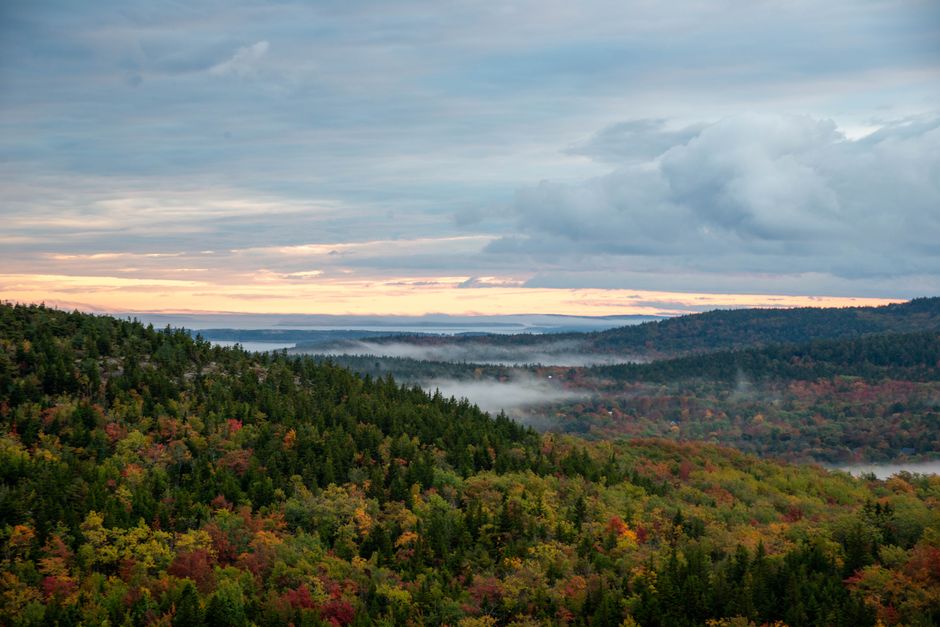
Summer in Acadia National Park brings together granite mountains, spruce woods, freshwater ponds and an Atlantic shoreline that changes with the weather. You can spend a morning beside the surf and an afternoon beneath trees without making every outing a demanding hike. The most useful approach is to choose a manageable area each day. Leave space for crowded parking areas, coastal fog and the simple pleasure of stopping when a view catches your attention.
Choose a base that suits your plans
Much of a first visit centres on Mount Desert Island, where park land sits among towns and private property. Bar Harbor is convenient for exploring the eastern side, while Southwest Harbor and surrounding communities suit outings on the western side. Think about where you want to walk before choosing accommodation. A location that looks close on a map may still involve repeated drives around the island.
Allow several days if you want a mix of shoreline, woodland and mountain scenery. With only one day, choose a coastal walk and one contrasting inland stop. Schoodic Peninsula, on the mainland, offers another part of Acadia’s rugged coastline, but deserves a separate outing. Adding it to an already crowded Mount Desert Island day can leave little time outside the car.
Check access before leaving home
Consult the National Park Service’s official Acadia information for current entrance requirements, road conditions, campground arrangements and trail closures. Driving Cadillac Summit Road requires a separate vehicle reservation during its managed season. A park entrance pass does not replace that reservation. Check the current process through the park and its official reservation service before building a day around driving to the summit.
The seasonal Island Explorer shuttle can help you reach selected park destinations. Check its official route map and current service details, including your return journey. Do not assume it reaches every trailhead or the Cadillac summit. Download maps before setting off because mobile reception can be unreliable. If you drive, have a backup destination ready for times when your preferred parking area is full.
Begin beside the ocean
The Ocean Path area makes a rewarding introduction to Acadia’s meeting of forest and sea. Between Sand Beach and the Otter Point area, you can sample coastal views without committing to a mountain climb. Choose a section that suits your energy and turn back when you wish. You do not have to complete the whole route to enjoy the changing shapes of the shoreline.
Sand Beach sits between wooded headlands, with a setting that makes lingering tempting. The Atlantic can feel very cold even on a warm day, so treat swimming as a separate decision from enjoying the beach. Check posted conditions, supervise children closely and avoid rough water. Bring a dry layer for the breeze after a paddle or a long pause on the sand.
At Thunder Hole and other rocky viewpoints, stay behind barriers and away from wave-washed edges. Sound and spray depend on sea conditions, so there is no guaranteed performance. Wet granite is slippery, and a quiet interval does not make a low rock shelf safe. Established paths offer plenty to see without searching for a more exposed photograph.
Slow down at Jordan Pond
Jordan Pond offers a quieter visual contrast, with freshwater, wooded banks and views towards the rounded Bubbles. Allow time to notice reflections and the light moving across the surrounding hills. If you want to walk around the pond, read the official trail description first. Sections are uneven or use narrow boardwalks; a waterside route is not necessarily a smooth promenade.
The pond supplies drinking water, and swimming and wading are prohibited. Respect shoreline signs and stay out of the water. For a shorter visit, enjoy the southern end and a manageable stretch of path. Carry water and a snack so you can pause comfortably without making the outing depend on immediate access to refreshments.
Walk or cycle the carriage roads
Acadia’s carriage roads wind through woods and past lakes, crossing stone bridges that invite a closer look. They offer an alternative to technical mountain trails, though the hills can still require effort. Choose a modest route using an official map, checking gradients and the numbered intersections. Leave enough energy for the return rather than judging the outing by the easy opening stretch.
Walkers, cyclists and horses share these routes. Cycle at a controlled speed, announce yourself politely before passing and give horses room. Check current bicycle rules, particularly for electric bicycles, and respect boundaries where adjoining property has different restrictions. A short route with time to examine bridges and woodland details can be more satisfying than covering as much ground as possible.
Match a hike to your whole group
Acadia’s mountains can look approachable while hiding steep granite, exposed ledges and routes with iron rungs. Distance alone is a poor measure of difficulty. Read official trail descriptions and consider everyone’s confidence with heights, scrambling and uneven footing. Agree on a comfortable route before arriving at the trailhead, where enthusiasm can make a difficult option seem easier than it is.
Beehive and Precipice require particular care and confidence. They should not be chosen casually because a summit photograph looks appealing. Wildlife protections can also close trails, so check park alerts before departure. Keep an easier alternative in mind, especially when rain makes rock slippery or fog limits visibility. Turning back is a useful decision when conditions exceed your comfort.
Cadillac Mountain offers broad views when the weather cooperates, but its exposed summit can feel cool and windy. Pack a layer even in summer. If cloud covers the mountain, a woodland walk may give you a more enjoyable outing. Let the weather influence your plans rather than expecting one viewpoint to carry the whole visit.
Pack for changing coastal conditions
- Choose shoes with dependable grip. Roots, rough paths and damp granite deserve more traction than a town stroll.
- Carry water, lunch and extra snacks. Give yourself the freedom to stop somewhere pleasant.
- Bring a rain shell and warm layer. Fog, showers and wind can change the feel of a summer day.
- Use sun and insect protection. Check for ticks after walking through vegetation.
- Keep navigation available offline. Bring a charged phone and a paper map where practical.
Leave room in each day
Pair a coastal walk with beach time, or Jordan Pond with a short carriage road outing. Save an ambitious hike for suitable weather and fresh legs. When parking is full, follow signs and move to your alternative instead of stopping on vegetation or obstructing access. Building in choices makes a busy summer visit feel much less pressured.
Stay on marked routes, give wildlife space and carry your rubbish away. Before each outing, check official weather information and park alerts. Then give the landscape your attention: moving mist, a stone bridge or sunlight across granite may become the moment you remember best.