
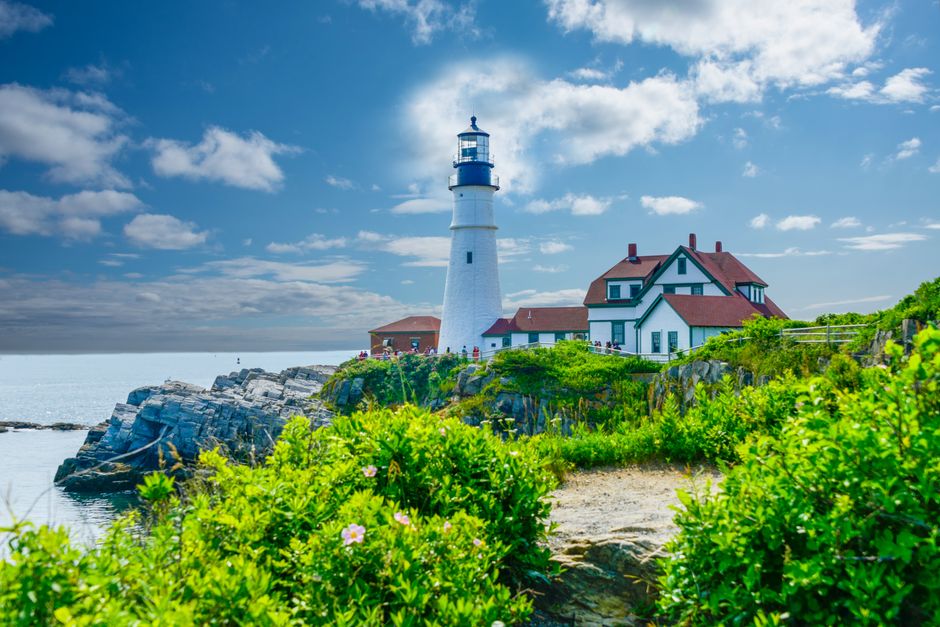
Maine’s coast rewards a driver willing to leave the main road and stay awhile. A lighthouse may inspire a detour, but the harbour along the way can become the place you remember most. Boats swing at their moorings, streets climb away from the waterfront, and rocky headlands interrupt the wooded shore. Plan a trip that gives these places breathing room. Instead of collecting lighthouse photographs, connect a handful of coastal stops with time to walk, eat, and watch the water.
Build a route around the peninsulas
US Route 1 forms a useful backbone for a coastal drive, but it does not provide continuous ocean views. Reaching a lighthouse often involves following a smaller road down a peninsula, then returning along the same route. Places that appear close across a bay can require a considerable drive between them. Look at the actual roads before deciding how many stops fit into a day, and include the return journey from each headland.
For a first visit, the stretch between Portland and Camden offers a satisfying combination of city waterfront, fishing villages, and lighthouses. With a weekend, focus on either Portland and its surroundings or a smaller Midcoast area. With several nights, connect the two at a relaxed pace. This guide concentrates on those harbour towns and lighthouse detours rather than extending the drive into a separate national park holiday.
Start with Portland and Cape Elizabeth
Portland gives you an easy introduction to the coast before you tackle smaller roads. Walk the Old Port’s streets and enjoy the waterfront from public areas. Pay attention to the boundary between places intended for visitors and working piers. Deliveries, fishing operations, and marine businesses need space to function. A promising view does not make a private wharf a public walkway, so follow signs and keep access routes clear.
Pair the city with Portland Head Light in Cape Elizabeth, within Fort Williams Park. The white tower and rocky shoreline make a striking coastal scene, while the park allows you to spend time outdoors beyond a single viewpoint. Plan around the setting rather than assuming you can enter the tower. Lighthouse grounds, museums, and interiors can have different visiting arrangements; check the park and lighthouse authorities for current details.
Give Boothbay Harbor room in the day
As you travel northeast, choose your harbour detours carefully. Boothbay Harbor suits a day when you want to park once, browse the centre, and spend time near the water. Avoid treating it as a quick stop between several distant lighthouses. A harbour becomes more interesting when you have time to notice the boats, explore public streets, and sit for a while rather than constantly watching the clock.
If a boat outing appeals, make it the main event instead of squeezing it between long drives. Check the operator’s current arrangements, ask about accessibility and likely sea conditions, and allow time to board without rushing. Keep a land-based alternative in case conditions change. Simply walking around the town and watching activity on the water can make a rewarding visit without committing to an excursion.
Follow the road to Pemaquid Point
Pemaquid Point, in Bristol, demonstrates why these peninsula drives deserve patience. The lighthouse rises above dramatic rock ledges facing open water. Give yourself time to look at the setting rather than taking a photograph and immediately leaving. A stop around Damariscotta can complement the headland with a riverfront town experience. Together they show how much the character of the coast changes between sheltered water and an exposed point.
Appreciate the ledges from safe, permitted areas. Wet stone, uneven surfaces, and waves make descending toward the surf a poor shortcut to a better picture. Respect barriers and leave exposed rocks alone in rough conditions. Before making the detour, check current access through the town’s official park information and the lighthouse’s official sources. Coastal weather and storm damage can affect a visit even when the road itself is open.
Combine Port Clyde with Marshall Point
Port Clyde offers the close relationship between village and sea that makes this road trip appealing. Nearby Marshall Point Light has a distinctive walkway leading toward its small tower. Allow time for the whole setting, and check which visitor areas are open before you arrive. Do not assume that access to the grounds includes every structure or path. Follow local signs and keep your plans flexible if part of the site is unavailable.
In the village, use designated public parking and leave room for harbour operations. Narrow roads require patience, particularly when larger vehicles need to pass. Take photographs from public places and avoid standing in loading areas. These simple choices make a visit more comfortable for everyone. They also encourage you to slow down and understand the waterfront as a working place rather than merely a scenic backdrop.
Choose your Rockland outing to suit conditions
Rockland makes a useful overnight base and offers a different kind of lighthouse experience at its breakwater. Reaching the lighthouse involves a long, exposed walk across uneven granite blocks. Before starting, consider wind, visibility, your footwear, and everyone’s confidence on irregular surfaces. Remember that you must walk back as well. The outing should be an enjoyable choice for your group, not an obligation attached to reaching town.
Keep a town-based alternative for poor weather or tired legs. Explore public waterfront areas and check official visitor information for indoor cultural options. If you are travelling with someone who has limited mobility, research each lighthouse separately. Being reachable by car does not guarantee a smooth or short final approach. Ask specifically about parking, surfaces, gradients, and the distance to a usable viewpoint.
End with a slower stay in Camden
Camden provides a pleasant finish, with a sheltered harbour and hills behind the town. After several days of headland detours, stop driving for a while. Walk the centre, find a public place near the water, and enjoy the contrast with the exposed lighthouse settings. Leave enough time for a meal and an aimless stroll. You do not need another attraction to justify staying somewhere that already feels inviting.
Choose overnight bases that reduce repeated packing. Portland followed by a Midcoast stay can work better than changing rooms in every town. Check parking arrangements before booking accommodation in compact centres, and consider whether you can walk to an evening meal. Carry layers, waterproof clothing, and shoes with dependable grip. Save maps before leaving town, keep fuel in reserve, and confirm current weather, road conditions, and access with official sources.
The most useful daily rule is to choose one main coastal stop and let everything else remain optional. Fog may hide a lighthouse while making a harbour atmospheric; rain may favour a town afternoon over an exposed walk. Leave space to swap those experiences around. Maine’s coast becomes more rewarding when you have the freedom to stay longer beside a particular stretch of water instead of hurrying toward the next turn.