
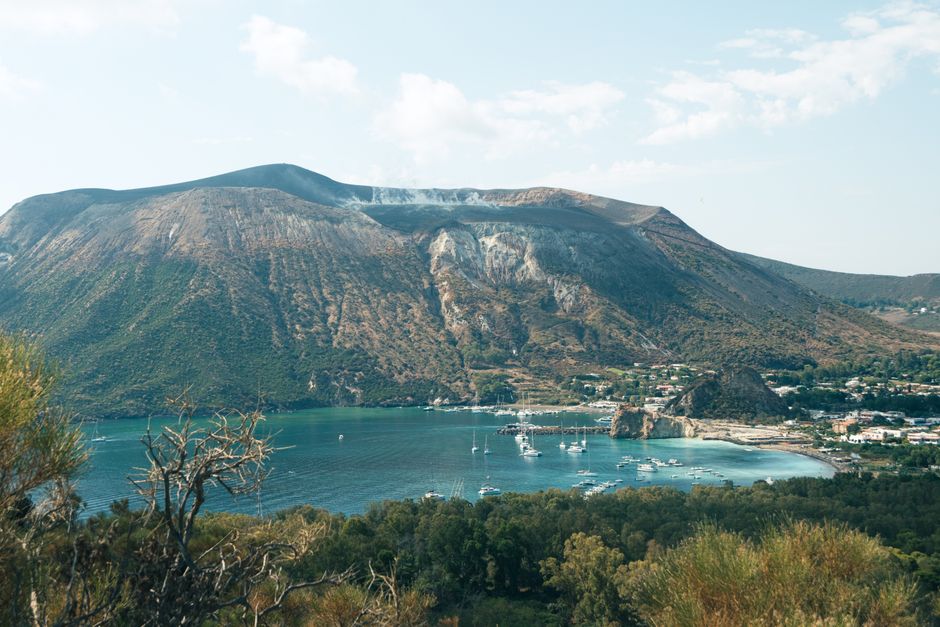
Visiting the Aeolian Islands by ferry begins with a simple pleasure: watching Sicily fall behind as volcanic silhouettes emerge across the water. The practical side deserves just as much attention. These islands are connected by working transport services, and a satisfying trip depends on choosing sensible crossings, understanding your arrival port, and leaving room for the sea to change your plans. You do not need to visit every island. A comfortable base and a few well-chosen journeys can give you a much richer experience.
Build your trip around the crossing
The Aeolian archipelago lies north of Sicily and includes Lipari, Vulcano, Salina, Panarea, Stromboli, Filicudi and Alicudi. Milazzo, on Sicily’s northeastern coast, is a principal gateway. Other departure ports may suit your wider itinerary, but check that a service actually operates on your travel date before choosing accommodation or arranging a mainland transfer.
Start with the island you most want to stay on, then work backward through the journey. An airport arrival, a road or rail transfer, and a ferry departure are separate stages. Allow for collecting luggage, finding the correct terminal and dealing with delays. A night near your departure port can make more sense than trying to squeeze the entire journey into one afternoon.
Fast passenger craft or conventional ferry?
Fast passenger vessels, often described as hydrofoils, are useful when you want to travel without a vehicle. Conventional ferries offer a different onboard experience and may carry vehicles where permitted. Compare the actual sailing, including intermediate stops, rather than assuming every departure between the same places follows an identical route.
If seeing the islands from outside matters to you, check the vessel’s passenger arrangements. Do not assume you can stand on an open deck aboard a fast craft. Likewise, a larger ship is not a guarantee against disruption. Choose according to your needs and the published service information, while keeping flexibility in your itinerary.
Choose a base before adding island hops
Lipari is a practical starting point if you want a substantial town as well as access to other islands. Its harbour area, lanes and historic citadel give you something rewarding to explore between crossings. Staying near your departure point can simplify early starts, although you should still confirm which harbour your particular service uses.
Salina suits a stay shaped around green hills, villages and time away from the waterfront. Check the port carefully: Santa Marina Salina and Rinella are different arrival points. The accommodation that looks closest to your destination on a small map may require an onward journey across the island.
Vulcano offers a striking volcanic landscape close to Lipari. Panarea has a compact settlement and coastal scenery, while Stromboli draws visitors for its active volcano and dark volcanic shoreline. Filicudi and Alicudi suit travelers happy with a slower pace and more deliberate transport planning. On Alicudi, steep stepped paths make luggage and accommodation access especially important.
Pick your base for the stay itself, not simply for the number of islands you hope to tick off. A quiet afternoon ashore is often more enjoyable than another transfer with your bags.
Read the booking details carefully
Search official ferry operators’ booking systems for your exact date and passenger requirements. Routes and availability vary with the season. An itinerary described in a travel account may be perfectly plausible but unavailable when you visit. Check both your outward and return journeys before committing to a day trip or a change of base.
- Confirm the departure port, destination port and any intermediate calls.
- Check whether luggage needs a separate booking or supplement.
- Read the rules for changes, cancellations and missed departures.
- Check requirements for children, pets, bicycles or mobility equipment where relevant.
- Save your ticket and booking reference somewhere accessible offline.
Booking ahead is sensible when a particular sailing is essential to your plans. Leave yourself enough time to understand the boarding instructions as well. A ticket on your phone does not necessarily mean you can arrive at the gangway at the last moment; follow the operator’s current check-in requirements.
Make embarkation easy
At the port, use the destination and operator details on your ticket to find the correct boarding area. Several vessels may be present, and a queue alone is not reliable confirmation. Ask staff if anything is unclear, especially when announcements are difficult to hear or the pier is busy.
Pack so you can manage your own belongings through crowded boarding areas and along uneven waterfront paths. Keep documents, water, a light layer and essential personal items in a small bag you can reach easily. Follow crew instructions about where larger luggage belongs, and keep passageways clear.
If you need step-free access or boarding assistance, contact the operator before buying tickets and discuss the specific journey. Vessel access and port arrangements can differ. Also ask your accommodation about the route from the landing point: a short distance can still involve steps, slopes or surfaces that are difficult with wheels.
Plan day trips with a clear return
A good ferry day trip has a modest goal. You might explore Lipari town, spend time around a Salina village, or enjoy a waterfront walk and swim where conditions allow. Add the journey from the arrival pier to your chosen activity when deciding whether the outing is realistic.
Book or verify the return crossing before leaving your base. Keep an earlier return option in mind if one is available, and avoid building your whole day around the final departure. For more distant islands or activities that finish late, an overnight stay may give you a better experience and remove an awkward connection.
Stromboli needs particular care in this respect. An evening activity may not fit the passenger ferry network. Never assume that a sightseeing excursion and a scheduled transport service are interchangeable. Understand where you will be dropped off, when you must return, and whether accommodation is needed.
Leave room for weather and local restrictions
Wind and sea conditions can delay or cancel crossings. Check official service updates before leaving your accommodation and again before heading to the pier. If disruption is likely, speak to the operator about your options and tell your accommodation promptly if your arrival or departure may change.
A buffer night on Sicily before an important flight or onward commitment reduces the pressure on your final sea crossing. Keep enough flexibility in your arrangements to absorb a delay without turning the rest of your holiday into a scramble.
Volcanic areas require separate checks. On Stromboli and Vulcano, access restrictions can change with volcanic conditions. Consult official local notices and authorized visitor information before planning walks, and follow closures and guidance on the ground. Reaching an island by ferry does not establish that a particular trail is accessible.
Enjoy the islands between departures
For many visitors, bringing a car adds complexity. Check current vehicle restrictions before making any arrangements, then consider whether local transport, walking and occasional transfers meet your needs. Confirm onward transport at your actual arrival port, particularly if your accommodation is inland or your bags are heavy.
Once ashore, give the islands some unstructured time. Walk beyond the immediate boarding area, linger over a meal, and leave space for a swim or a view that catches your attention. With manageable luggage, confirmed crossings and a little breathing room, the ferry becomes part of the pleasure of visiting the Aeolian Islands.