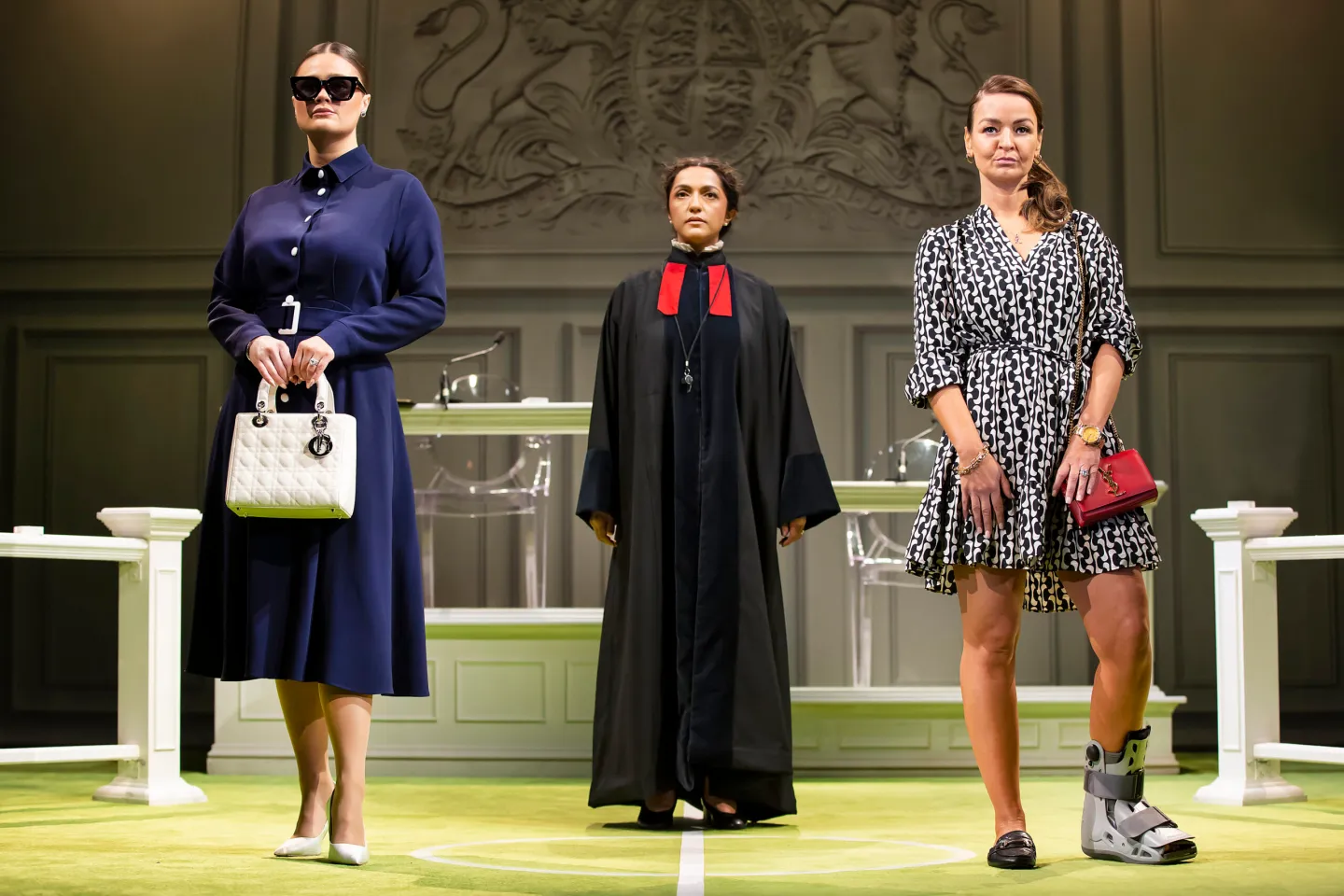
The Wagatha Christie Trial is one of those real-life stories so dramatically absurd it was always going to end up somewhere — and the West End got there first. “Vardy v Rooney: The Wagatha Christie Trial,” written by Tim Firth and playing at the Ambassadors Theatre in London’s Covent Garden, turns a High Court defamation case about Instagram leaks into sharp, genuinely funny theatre. If you’re building a London itinerary and this is on your radar, here’s everything you need before you book.
What the Wagatha Christie Trial Show Is Actually About
The story sounds too good to be made up — because it wasn’t. In October 2019, Coleen Rooney (wife of footballer Wayne Rooney) posted a now-famous Instagram statement accusing Rebekah Vardy (wife of Jamie Vardy of Leicester City) of leaking stories about her private life to The Sun. The post ended with the line: “It’s…. Rebekah Vardy’s account.” It went viral within minutes and became one of the most-shared social media posts in UK history.
Three years of legal proceedings followed. Witness testimonies. Deleted WhatsApp messages. A phone allegedly dropped into the North Sea. A WhatsApp group called “Wagatha Rooney.” The trial had everything.
Tim Firth — who also wrote Calendar Girls — adapted it into a stage play that runs just under two hours. The genius is in its fidelity to the actual court record: much of the dialogue comes directly from transcripts, which means the audience watches something stranger than fiction. The production frames the whole thing as a kind of drawing-room comedy of manners. You know the verdict before you sit down. The tension comes from watching how it gets there.
The Real Story: A Primer for International Visitors
If you’re visiting from outside the UK, the WAGs (Wives and Girlfriends of Premier League footballers) cultural context might be unfamiliar. The compressed version: English football attracts enormous tabloid coverage, and players’ partners become public figures in their own right. Coleen Rooney was photographed at almost every major celebrity event for fifteen years. So when she publicly accused a fellow WAG of systematic betrayal, it was front-page news across the country for weeks.
Rebekah Vardy sued for defamation. Coleen counter-sued. The case reached a full High Court trial in May and June 2026. Mrs Justice Steyn ultimately ruled in favour of Coleen Rooney. The phrase “Wagatha Christie” — coined on social media to describe Coleen’s methodical Instagram trap — is now part of British cultural vocabulary.
The show handles the context well enough that international visitors won’t feel lost. The production does enough scene-setting in the first fifteen minutes that you don’t need prior knowledge of the coverage to follow what’s happening.
How Tim Firth Turned a Lawsuit Into Theatre
Courtroom dramas live or die on pacing. Firth’s script solves this by cutting the duller procedural passages and concentrating the best material — the moments where the absurdity of the whole situation breaks through legal formality. The early exchanges between barristers establish the class dynamics and the distinctive flavour of British legal theatre that runs underneath the entire show.
The staging at the Ambassadors is deliberately spare. No elaborate set changes, no projection screens. The courtroom stays fixed throughout. This is a writer’s piece and an actor’s piece — performance is the spectacle. For a 444-seat house like the Ambassadors, that’s exactly the right call. The intimacy of the room means nothing gets lost.
Who Should See This Show — and Who Probably Shouldn’t
This show suits: anyone who followed the original trial, fans of sharp British comedy, and visitors who want something culturally specific and contemporary rather than another revival or jukebox musical. It’s a strong pick for people who’ve already done Hamilton, Mamma Mia!, or Les Misérables and want something that feels genuinely different.
It’s probably not the right choice if football culture and celebrity gossip hold zero interest for you, you need spectacle or music to stay engaged, or you’re bringing children under 12. The humour is adult throughout, though not explicit.
One useful comparison: if you enjoyed Ink at the Almeida or the National Theatre’s The Lehman Brothers — serious stagecraft applied to real events — this sits comfortably in that tradition. It’s sharper than most people expect going in, and considerably better than the tabloid premise might suggest.
Ambassadors Theatre Ticket Prices and Which Seats to Choose
The Ambassadors holds around 444 people across three levels, making it one of London’s smaller West End venues. Most of the house has workable sightlines, but specific sections have meaningful differences worth knowing before you pay.
| Seating Area | Typical Price Range | View Quality | Best For |
|---|---|---|---|
| Stalls (rows A–D) | £55–£75 | Excellent — close to the action | First-timers wanting full immersion |
| Stalls (rows E–L) | £45–£65 | Very good — ideal sightlines | Best overall value in the house |
| Royal Circle (front) | £45–£65 | Good — elevated angle over staging | Those who prefer an overview perspective |
| Royal Circle (rear/sides) | £25–£40 | Restricted — check seat details before booking | Budget-conscious visitors willing to trade view |
| Grand Circle | £15–£30 | Distant but unobstructed full view | Last-minute or budget bookings |
Where to Book and How to Save Money
Book through the official show website or the Ambassadors Theatre box office directly — both avoid third-party markups and give accurate seat descriptions. For day-of or next-day availability, TodayTix is worth checking; they often carry tickets at 15–30% below face value. Their Rush lottery releases same-day seats for £15–£25 if your schedule allows committing that morning.
Avoid Viagogo and similar resale platforms entirely. The Ambassadors maintains an anti-touting policy, and tickets bought from unauthorised resellers can be — and sometimes are — invalidated at the door. Don’t risk it.
Matinee performances (typically Wednesday and Saturday afternoons) run slightly cheaper and draw calmer crowds. For the most comfortable experience without fighting a Saturday night West End crowd for a bar spot, a Wednesday matinee is the reliable choice.
How Far Ahead Should You Book?
For Friday and Saturday evenings: three weeks minimum. They sell out. Midweek evenings are more available — sometimes a week’s notice is enough. During UK school holidays and bank holiday weekends, add two to three weeks to those timelines. If you’re set on a specific date, book the moment your travel is confirmed.
Getting to the Ambassadors Theatre: Location and Transport
Where exactly is the Ambassadors Theatre?
The Ambassadors Theatre sits at West Street, London WC2H 9ND — right in the core of the West End, roughly ninety seconds from Cambridge Circus and a five-minute walk from Covent Garden Piazza. It neighbours the St Martin’s Theatre (home to The Mousetrap) and sits just off the main run of Shaftesbury Avenue theatres.
The building dates from 1913. It has a narrow Victorian frontage that’s easy to walk past if you’re not looking for it — no grand plaza or wide entrance canopy. There’s an illuminated sign above the door on West Street. If you’ve found The Mousetrap’s entrance, the Ambassadors is directly next door.
How to get there by Tube or on foot
The two most practical Tube options are Covent Garden (Piccadilly Line, five-minute walk) and Leicester Square (Northern and Piccadilly Lines, seven-minute walk). Both are Zone 1 and reachable from all the major tourist areas of central London.
From King’s Cross: Piccadilly Line direct to Covent Garden, around 10 minutes. From Waterloo: Northern Line to Leicester Square, about 8 minutes. From Paddington: Circle or District Line to Embankment, then a 15-minute walk up the Strand — or change to the Piccadilly Line at Earl’s Court for Covent Garden directly.
Walking from Trafalgar Square takes roughly 12 minutes through St Martin’s Lane. From the Strand, the route through Maiden Lane is marginally shorter. Both are pleasant in the evening and well-lit.
Parking and Accessibility
Driving is not worth it. The NCP on Upper St Martin’s Lane charges £25–£40 for an evening, and the post-show Covent Garden foot traffic makes walking back to a car genuinely miserable. Take the Tube.
For wheelchair users and visitors with accessibility requirements: the Ambassadors has level access at the main entrance and designated wheelchair spaces in the stalls. Book these directly through the box office at 020 7395 5405 — the website can’t always confirm exact availability for accessible seating, so a phone call is the safer route.
Honest Verdict: Is It Worth Seeing?
For most visitors: yes. At £45–£65 for a decent stall seat, this sits in the comfortable middle of West End pricing and delivers well above what a celebrity-drama premise might lead you to expect. This is tightly written, well-performed theatre — not a novelty show that trades on tabloid nostalgia and runs out of steam by intermission.
Where to Eat and Drink Before and After the Show
The Covent Garden area has more restaurants than you can realistically choose between, which means the trap is falling into a tourist-facing place on the Piazza charging £18 for pasta. Move one or two streets in any direction and the options improve immediately.
Pre-theatre restaurants within easy walking distance
- J Sheekey (28–32 St Martin’s Court, WC2N 4AL) — five-minute walk, a London seafood institution. Pre-theatre set menu typically around £30 for two courses. The Atlantic Bar section sometimes takes walk-ins when the main restaurant is fully booked. Worth the splurge at least once.
- Dishoom Covent Garden (12 Upper St Martin’s Lane, WC2H 9FB) — Bombay café-style Indian cooking, reliably excellent. Doesn’t take bookings for smaller groups at dinner. Arrive at 5:30pm for a typical 20-minute queue. Expect £25–£40 per head with drinks.
- Rules (35 Maiden Lane, WC2E 7LB) — Britain’s oldest restaurant, opened 1798, specialising in traditional game and seasonal British dishes. Three courses run £60–£75 per head. Worth it once, purely for the room and the sense of occasion it provides.
- Flat Iron (17–18 Henrietta Street, WC2E 8QH) — excellent flat iron steaks at £15–£18, no bookings taken, queues move quickly. The right option when you want a genuinely good dinner without spending another theatre ticket’s worth on a meal.
Post-show drinks near the Ambassadors
- The Lamb and Flag (33 Rose Street, WC2E 9EB) — one of London’s most atmospheric pubs, dating to 1772. Tight and busy after shows, genuinely good. Cash preferred. Closes at 11pm most nights.
- Terroirs (5 William IV Street, WC2N 4DW) — natural wine bar with small plates, under ten minutes’ walk. Good for a post-show debrief over proper wine without Piazza prices. Closes at 11pm.
- The Ivy Market Grill bar (1a Henrietta Street, WC2E 8RU) — the bar section takes walk-ins when the restaurant is fully booked. Cocktails run £14–£18. The room itself is the draw; it’s a strong setting for ending the evening if you want something more polished than a pub.
One practical note: evening performances typically wrap around 10–10:30pm. Covent Garden Station gets very crowded in the twenty minutes after West End curtain calls across the area. If you’re heading south or east, walking to Charing Cross mainline station (about 12 minutes) often gets you home faster than waiting on the Underground platform.
As more real-event dramatisations move from documentary television into live theatre, the Wagatha Christie Trial as a stage production represents something worth watching closely — the form keeps proving that absurdity, properly handled, ages into something more than its headlines. The shows that get this right tend to outlast the news cycles that inspired them.