
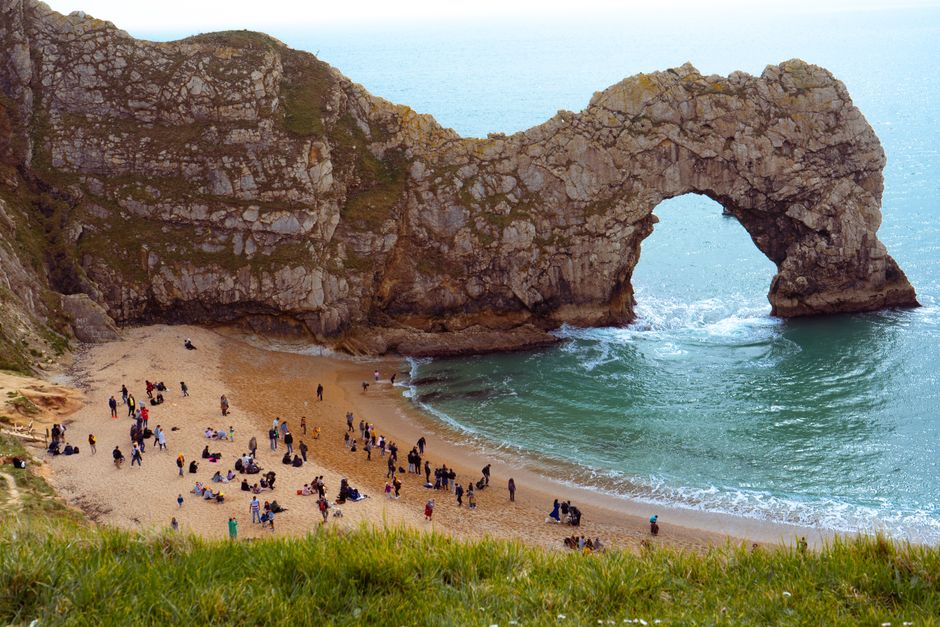
Dorset’s Jurassic Coast rewards curiosity and a flexible plan. Along this stretch of southern England, pale limestone arches give way to fossil-bearing cliffs, broad shingle beaches and working harbours. You can enjoy it without understanding geology, but looking closely at the rocks adds another dimension to a coastal holiday. Choose a manageable section, leave room for the weather, and allow time for the walks between viewpoints and the sea.
Choose a section before choosing your stops
The Jurassic Coast extends into East Devon, but Dorset alone offers enough variety for several visits. Despite its name, the wider coastline records more than the Jurassic period. Different rocks respond differently to erosion, which helps explain why neighbouring stretches can look so unlike one another.
For planning purposes, think in three areas. Lyme Regis and Charmouth in the west suit fossil curiosity and seaside wandering. West Bay and Chesil Beach offer harbour landscapes, striking cliffs and shingle. Farther east, Lulworth Cove, Durdle Door and the Isle of Purbeck bring some of the coast’s most recognisable limestone scenery.
Build each day around one main destination and one optional stop. Parking, beach access and repeated climbs can take more effort than a map suggests. A short coastal walk may be demanding, especially when the path drops into a valley and immediately climbs out again.
Explore Lyme Regis and Charmouth
Lyme Regis is a comfortable starting point when you want coastal scenery with a town close at hand. Wander its streets, spend time along the seafront and view the curving Cobb harbour wall. Avoid exposed harbour structures when waves or strong winds make them unsafe. A town-based day gives you more options if conditions change.
Charmouth is another useful introduction to the fossil coast. Consider a guided fossil walk before searching independently. Learning to recognise an ammonite shape or an ancient shell makes the beach more interesting, even if you leave without a discovery. Finding a fossil should be a bonus rather than the measure of a successful outing.
Read the local fossil collecting code and ask the heritage centre for guidance. Stay away from cliff bases and mudflows, never dig into cliffs, and leave fossils embedded in bedrock alone. Collecting rules vary by location, so advice for one beach does not apply everywhere. If something seems scientifically important, report it for expert assessment.
See West Bay and Chesil Beach
West Bay combines harbour activity with impressive sandstone cliffs. It works well for a group whose interests range from gentle waterfront wandering to longer walks. Enjoy the cliffs from designated paths and viewpoints, keeping a generous distance from their edges and bases. Attractive stretches of sand beneath cliffs can still be exposed to rockfalls.
Chesil Beach offers a different experience: a long shingle barrier separating the sea from the Fleet lagoon along much of its length. Pause to appreciate its sweep rather than expecting an easy stroll across firm ground. Loose stones make walking tiring, and even a modest outing can feel strenuous.
Use permitted routes around the Fleet and respect wildlife restrictions. Leave pebbles in place and avoid disturbing birds. Chesil is best approached as a landscape to observe carefully; steep shelving shingle and powerful sea conditions make it unsuitable for a casual swimming stop.
Give Lulworth Cove and Durdle Door enough time
Lulworth Cove’s rounded shape and Durdle Door’s limestone arch reveal the sea’s ability to reshape rock. Spend time examining the changing layers around the cove before setting off uphill. The route towards Durdle Door includes substantial climbs and exposed ground, so treat it as a proper walk rather than a quick transfer between attractions.
You do not need to descend to the beach to appreciate the arch. Beach access can involve steep steps and uneven surfaces, followed by a demanding return climb. Check official access descriptions if anyone in your group has limited mobility or if you are bringing a pushchair. Choose a shorter visit when the terrain does not suit everyone.
Stay on established paths and keep back from cliff edges. Never climb the arch or jump from rocks. If wind or rain makes the route uncomfortable, turn back. Enjoying the cove at a relaxed pace can be more satisfying than squeezing both landmarks into unsuitable conditions.
Match your base to your transport
Travelling by car
Choose accommodation near your main interests. Lyme Regis suits a western focus, Weymouth can work for Chesil and nearby coastal outings, and Swanage offers a base for exploring Purbeck. Compare actual routes before booking: rural roads and indirect journeys can make a seemingly central location less practical than expected.
Save official parking and access information before leaving. Have a backup destination in case your first choice is busy. Never use gateways or passing places for parking, and leave valuables out of sight. Planning fewer stops also reduces the temptation to hurry along unfamiliar lanes.
Using public transport
Start with a town that has useful onward connections, then select outings that match the services available. Check current routes and timetables with official operators. Rural services can vary by day and season, and a stop named after a landmark may still leave a considerable walk.
For a linear walk, establish your return journey first. Taking transport to the start and walking towards your accommodation can reduce pressure later, provided the route suits your group. Keep a realistic alternative in mind if weather or fatigue changes your plans.
Check tides, access and weather
Before a beach walk, consult local tide predictions, the forecast and official coastal safety advice. Identify exits and turn back well before rising water threatens your route. Never assume that following other walkers around a headland is safe. Rockfalls can happen without warning, even when the weather seems calm.
Access near military training areas around Lulworth depends on official arrangements. Check permitted routes and closures before travelling, and obey signs and barriers on arrival. Erosion can also cause path diversions elsewhere, so combine a downloaded map with attention to local notices.
- Wear shoes with reliable grip and carry a waterproof layer.
- Pack water, food and sun protection for exposed walks.
- Keep dogs under close control near livestock, wildlife and cliffs.
- Carry out litter and leave natural features undisturbed.
Leave room to linger
Pair a fossil outing with a leisurely afternoon in Lyme Regis, or make Lulworth Cove the centre of a day with an optional hill walk. In poor weather, a local museum or heritage display can give context to the scenery you will see later. A rewarding visit comes from paying attention to each place, with enough flexibility to enjoy the coast on its own terms.