Spring in Seville rewards a slower kind of sightseeing. Orange trees soften the streets, small squares offer somewhere to pause, and courtyards reveal how the city creates shade and privacy. You can enjoy its great monuments while leaving room for these quieter details. The most satisfying plan combines a few reserved visits with unhurried walks, a proper lunch break and time outdoors when the light feels gentler.
Plan around the season and the weather
Orange blossom, known as azahar, is one of Seville’s most memorable spring pleasures, but its timing depends on the weather. Treat it as a possible bonus rather than the sole reason for choosing your dates. Even when the flowers have faded, the trees, tiled courtyards and gardens give the city much of its character.
Early spring can bring cool mornings and rain, while later spring may feel hot in exposed squares. Pack light layers, comfortable walking shoes, sun protection and a compact waterproof layer. Carry water, and plan a break indoors or in reliable shade when the afternoon feels warm.
Check whether your visit overlaps with Semana Santa or the Feria de Abril. These celebrations can transform the atmosphere and affect accommodation availability, access and transport. Choose festival dates deliberately if you want to experience them. If your priority is relaxed wandering, consider another part of spring and consult the official city events calendar before booking.
Begin with Santa Cruz’s small plazas
Santa Cruz is a good introduction to the relationship between Seville’s streets and its sheltered spaces. Its narrow lanes open into plazas with trees, benches and whitewashed walls. Start with a simple destination, such as Plaza de Doña Elvira, then allow yourself to take a few turns without trying to cover every lane.
Come early if you prefer more room to look around. This is a popular district, so quiet moments are easier to find away from the busiest routes. Notice the balconies, ceramic details and changes in light as much as the landmarks. A square does not need a famous name to deserve a pause.
Keep a map available, but resist checking it at every junction. Narrow streets can make orientation confusing, and a short wrong turn rarely matters when you have allowed enough time. If walking with others, step into a wider space before stopping to discuss directions, leaving entrances clear.
Choose patios you can actually visit
A beautiful courtyard glimpsed through a gate is not necessarily a public attraction. Many patios belong to homes, workplaces or accommodation. Enjoy views from the street, respect closed doors and ask before photographing people or entering a space whose access is unclear. An open doorway alone is not an invitation.
For a planned courtyard visit, choose a palace, museum or monument with an established visitor entrance. Casa de Pilatos and the Palacio de las Dueñas are options to research if patios are a particular interest. Check their official visitor information for access arrangements, reservations and any restrictions, then choose whichever fits your route and interests.
Look beyond the flowers
Spend a moment noticing how the courtyard works. Shade, planting, water and surrounding rooms help create a different atmosphere from the street outside. Look at the arrangement of arches, the use of tiles and the transition between enclosed rooms and open air. These spaces make practical responses to the climate part of the pleasure of looking around.
Leave room for the cathedral and Alcázar
The cathedral and the Real Alcázar sit close together, but visiting both can make for a demanding stretch of sightseeing. If you have several days, separate them. If your stay is short, allow a generous break between visits and avoid filling the remaining afternoon with another major attraction.
The cathedral’s Patio de los Naranjos connects the orange-tree theme with one of the city’s defining monuments. Check the cathedral’s official information to understand how the courtyard fits into the visitor route. Do not assume that every entrance or courtyard is freely accessible independently of a visit.
At the Alcázar, leave time for the gardens as well as the palace interiors. Reserve through the official visitor channel and read the entry requirements carefully. Save your booking confirmation somewhere accessible without a mobile connection. These small preparations make it easier to enjoy the spaces once you arrive.
Balance grand plazas with park shade
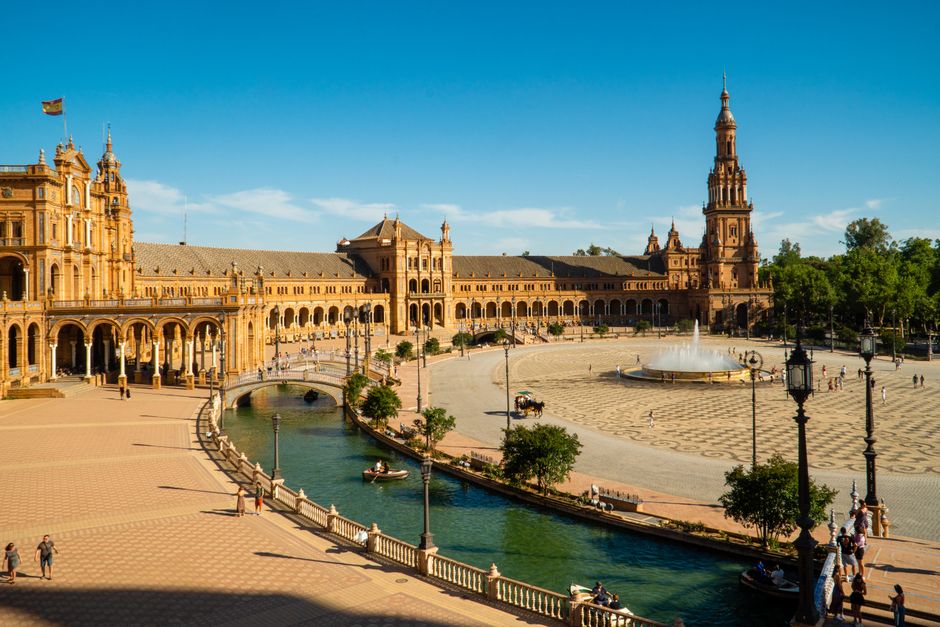
Plaza de España offers a dramatic change from Santa Cruz’s enclosed streets. Its broad architectural sweep and decorative ceramics invite a slower look, but the open space can feel warm in strong sunshine. Visit when conditions suit you, then continue into nearby María Luisa Park for a gentler pace.
The park’s paths, fountains and planted corners reward exploration beyond the nearest entrance. Rather than following a strict circuit, choose a direction and pause where there is shade. Take breaks before you feel tired; a pleasant garden walk can still add considerably to the distance covered during the day.
Do not expect every fountain to be running or every path to be available. Maintenance and weather can change what you find. Enjoy the overall setting, from leafy avenues to smaller garden spaces, without turning the visit into a checklist of individual features.
A flexible outline for two days
Group nearby sights to reduce unnecessary walking. Adjust this outline around confirmed reservations, the forecast and your energy level.
- First morning: Walk through Santa Cruz and its plazas, then visit either the cathedral or the Alcázar if you have booked.
- First afternoon: Take a long lunch break, followed by one accessible patio visit or a short neighbourhood walk.
- Second morning: Explore Plaza de España and María Luisa Park before the day becomes too warm.
- Second afternoon: Visit your remaining priority monument, or leave the time free for a riverside stroll and returning to a favourite square.
With only one day, choose one major interior visit and one outdoor area. Trying to fit every palace, courtyard and garden into the same day leaves little time for the pauses that make spring here enjoyable.
Make the practical details support your visit
Choose accommodation with your likely walking routes in mind, checking access if you have heavy luggage or limited mobility. Historic streets may include uneven surfaces, narrow pavements and obstacles. Ask attractions directly about step-free routes and accessible facilities; a central location alone does not guarantee an easy visit.
Keep meals flexible enough to provide a real rest. Look at a menu before sitting down, check dietary questions with staff and avoid scheduling lunch immediately before a timed entry. During festivals, allow extra time to cross the centre and follow local instructions around processions or temporary barriers.
Before setting out, check current details with official attraction, tourism and transport sources. Then leave some space in the day. A shaded bench, the scent of blossom or a courtyard seen through a grille can become the moment you remember most clearly.