Exploring Yellowstone with kids means making room for surprises: steam drifting across a boardwalk, a geyser erupting, or a bison appearing beside the road. The park rewards curiosity, but its size and hazards require thoughtful planning. A successful family visit combines a few memorable places with enough food, rest and flexibility to enjoy them. Build your days around what your children can comfortably manage, and Yellowstone becomes a landscape they can investigate rather than a checklist you have to finish.
Plan around small areas of the park
Yellowstone is spread out, and a route that looks manageable on a map can feel much longer with traffic, wildlife delays and repeated stops. Choose one main area for each day, then add nearby sights only if everyone has energy. Avoid promising children a distant attraction after an already full morning.
For a first visit, several days give you more breathing room than a single sweep around the roads. You might devote separate days to the geyser basins, the canyon area and the northern landscapes. With less time, choose the experiences your family most wants: bubbling thermal features, waterfalls or patient wildlife watching.
Check the National Park Service’s official Yellowstone information before choosing your entrance and accommodation. Road access, weather, trail conditions and visitor services affect what is practical. Standard driving itineraries should not be assumed to work in winter, when access and transport arrangements are very different.
Choose accommodation for the journeys it saves
Think about where each day begins and ends before booking somewhere to sleep. Staying inside the park can reduce some journeys, while accommodation in a gateway community may suit your family’s needs better. Either way, calculate the drive to your intended sights rather than measuring only the distance to an entrance.
Changing bases can help on a longer trip, but packing up every morning creates its own workload. Families with small children may prefer fewer moves and a smaller sightseeing area. Ask about food storage, cooking facilities and sleeping arrangements, and confirm current details directly before committing.
Make thermal areas a shared discovery
Old Faithful and the Upper Geyser Basin
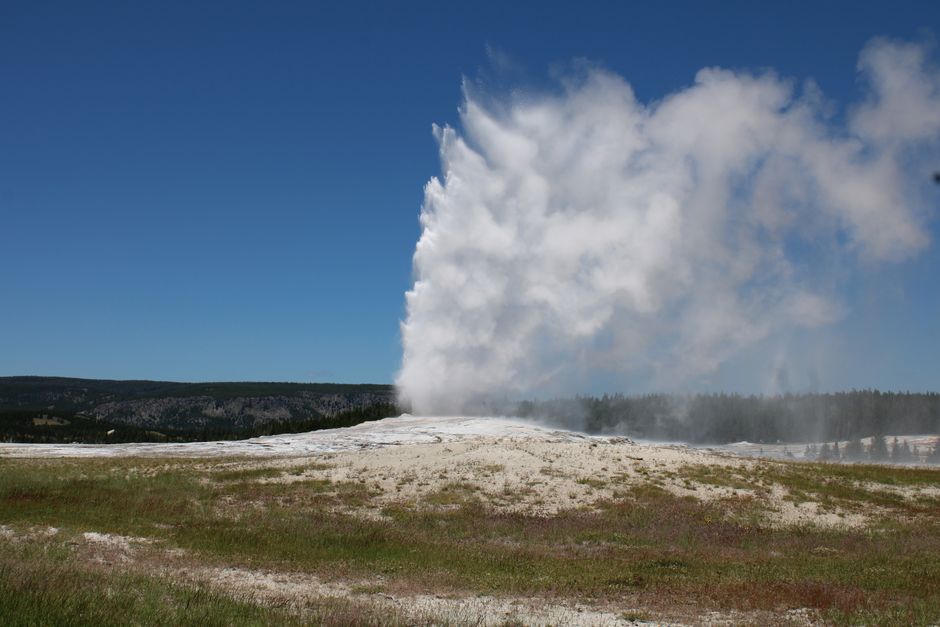
Old Faithful gives children an obvious event to anticipate, but the surrounding Upper Geyser Basin also deserves attention. Check official eruption predictions where available and remember that these describe natural activity rather than a guaranteed performance. Have a snack and an extra layer ready for waiting.
Choose a manageable section of the designated paths instead of assuming you must walk every route. Ask children to notice differences in sound, steam and colour. A quieter moment watching a small feature can be as engaging as a famous eruption, especially when children have space to ask their own questions.
Grand Prismatic Spring and Mammoth Hot Springs
At Midway Geyser Basin, Grand Prismatic Spring offers striking colours, although steam and viewing conditions influence what you can see. The boardwalk experience differs from the elevated overlook reached by a separate trail. Decide which suits your family’s stamina and current conditions; you do not need both to appreciate the area.
Mammoth Hot Springs provides a different scene, with mineral terraces rather than an erupting geyser as the focus. Routes can include steps and exposed stretches. Review current route information before taking a stroller, and choose a short outing if tired legs or strong sunshine are already becoming a problem.
Set clear rules before the first boardwalk
Thermal areas require close supervision. Explain the rules while everyone is calm: stay on designated trails and boardwalks, walk without running, and keep beside an adult. Thin ground around thermal features can conceal dangerously hot water. Never touch the water or step off a path for a photograph.
Hold young children’s hands where needed, and keep them within immediate reach. If a child drops something beyond the boardwalk, leave it and tell a ranger. Carrying a tired toddler may be more manageable than negotiating another crowded stretch, but use a carrier you can handle securely and watch your footing.
Teach these boundaries as part of understanding the park. Children can still lead the observations, choose which feature to sketch or ask questions about the steam. Clear limits give them a way to explore safely without turning each stop into a stream of corrections.
Balance geysers with waterfalls and wildlife
The Grand Canyon of the Yellowstone offers dramatic views of rock walls and waterfalls. Pick designated overlooks that match your children’s mobility, and check whether the approach involves steep paths or stairs. Stay behind barriers, supervise closely near drop-offs and resist squeezing in another viewpoint once concentration begins to fade.
Hayden Valley and Lamar Valley are places to watch open landscapes for wildlife, but sightings are never guaranteed. Binoculars make distant animals more interesting for children. Let them search for movement or compare grazing behaviour rather than promising a particular species. A short, attentive stop can work better than a long wait.
Animals need generous space even when they appear relaxed. Consult the park’s current wildlife guidance for required distances, and move farther away whenever your presence affects an animal. Never feed wildlife or approach for a photograph. Use designated pullouts, keep roads clear and remain in your vehicle when getting out would put you too close.
Give children something to investigate
Ask at a visitor centre about the Junior Ranger programme and current family activities. An activity booklet can give purpose to a stop, whether a child enjoys drawing, searching for clues or talking to a ranger. Leave time to complete any programme requirements instead of treating the badge as another hurried errand.
You can also create simple observation games without collecting anything. Look for contrasting rock colours, listen for different bird calls or sketch the shape of a waterfall. Older children might keep a field journal or choose the day’s question to research. Leave rocks, plants and other natural objects where they belong.
Pack for changes in weather and energy
Keep everyday essentials within reach rather than buried under luggage. Conditions can feel different between a sheltered car park and an exposed viewpoint. Bring layers and rain protection even when the day starts pleasantly, and let children break in their walking shoes before the trip.
- Refillable water bottles and familiar, filling snacks.
- Sun hats, sunscreen and warmer clothing.
- A compact first-aid kit and necessary personal medication.
- Binoculars, pencils and a small notebook.
- Downloaded maps and a paper backup for navigation.
- Spare clothes and bags for rubbish or wet items.
For walks beyond developed sightseeing areas, consult ranger advice about conditions and bear safety, including carrying bear spray and knowing how to use it. Keep your group together. Store food and scented items according to park instructions, and use designated facilities for meals and rubbish disposal.
Leave space for an unfinished day
Build in toilet stops, meals and quiet time before anyone desperately needs them. Check official alerts and weather each morning, then decide on one priority and an optional extra. If rain, traffic or tiredness changes the plan, choose a shorter visit or return to your accommodation.
Before leaving a favourite stop, invite everyone to name one thing they noticed. Children may remember the sound of bubbling water or the first animal they spotted themselves more vividly than the landmark you came to see. Giving those small discoveries time is what makes a family visit to Yellowstone feel rewarding.