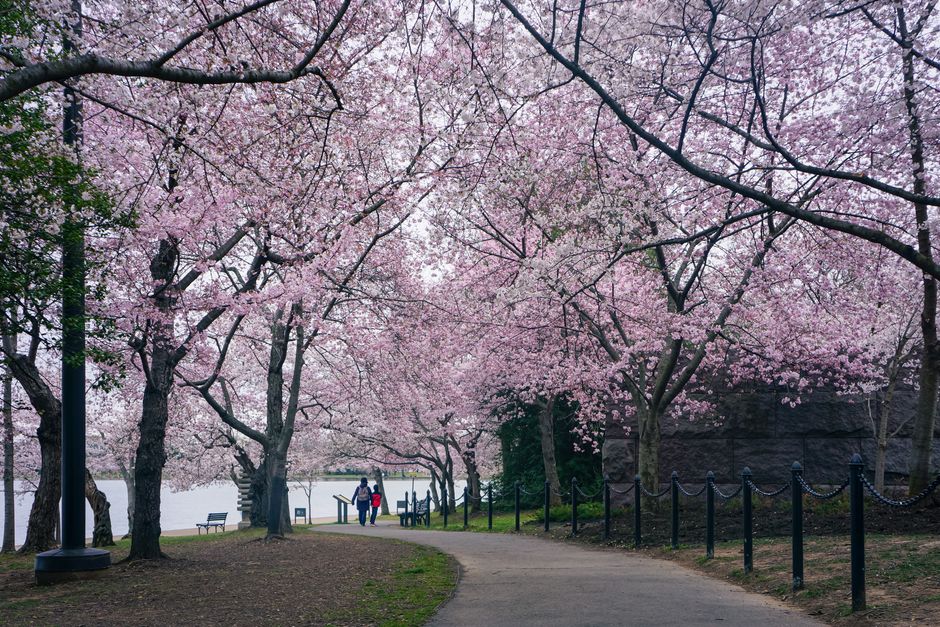
Cherry blossom season gives Washington, D.C. a softer edge. Pale flowers frame the water, memorials appear through branches, and an ordinary walk becomes something worth lingering over. The pleasure is real, but so are the crowds and the uncertainty of flowering dates. A satisfying visit depends on leaving room to adapt. Build your trip around a flexible blossom walk, a manageable journey across the city, and something enjoyable to do if the weather changes.
Plan around the trees
The main blossom season generally falls in early spring, often around late March or early April, but weather can shift the timing. Warm conditions can accelerate flowering, while cooler spells can slow it. Forecasts become more useful as the buds develop, so treat an early prediction as guidance rather than a promise.
Follow the National Park Service’s Bloom Watch as your departure approaches. Peak bloom describes a stage in flowering, rather than a single appointment you must keep. Trees can still be lovely on either side of that point, although wind and rain affect how long the flowers remain. Avoid building your entire holiday around one predicted day.
If your dates are fixed, choose a trip you would enjoy even without full blossom. Washington’s museums, memorials, and neighbourhood walks provide plenty of substance. If you have flexibility, consider accommodation and transport arrangements that allow changes, and read the conditions before booking.
Choose a base with an easy journey
You do not need a room beside the Tidal Basin to enjoy the season. A convenient walk to a Metro station can matter more than a vaguely central address. Compare the complete journey from your accommodation, including transfers and the walk after leaving the station. A room that looks close on a map may still leave you with a tiring approach.
Think about your evening as well. Staying somewhere with places to eat nearby makes it easier to recover after a long outdoor day. If you are travelling with children or anyone who needs regular breaks, an uncomplicated return route deserves particular weight. Check whether your chosen location works for the rest of your sightseeing too.
Arrive with realistic expectations
The Tidal Basin is the classic setting, with flowering branches beside the water and views towards the Jefferson Memorial. Smithsonian is a useful Metro station for approaching it, but arriving at the station does not put you directly under the trees. Allow for the walk across the surrounding monumental landscape.
Driving can add uncertainty when roads are busy and parking is difficult. Check the Washington Metropolitan Area Transit Authority’s official journey planner and service notices before setting out. Consult National Park Service alerts for walking access: maintenance, events, or temporary closures can change the route you expected to use.
Save your route before leaving your accommodation and agree on a meeting point if your group separates. Around crowded paths, a clearly identified landmark is easier to find than a message saying you are somewhere near the water. Keep enough phone battery for the journey back.
Make your blossom walk manageable
Choose one stretch first
A complete circuit can sound like the obvious goal, but you do not need to walk every section to appreciate the setting. Pick an initial stretch, see how crowded it feels, and decide whether to continue. Movement can be slow where people stop for photographs, and your return journey still needs energy.
The Jefferson Memorial, Franklin Delano Roosevelt Memorial, and Martin Luther King, Jr. Memorial offer different perspectives around the basin. Choose the places that interest you instead of treating them as a checklist. When entering a memorial, give its history and commemorative purpose the same attention as the scenery.
Leave space for pauses
An early start may make walking more comfortable, but popular mornings can still attract substantial crowds. Evening light can be beautiful too, although you should consider visibility and the journey back. Pick a time that suits your group rather than sacrificing sleep for an empty-path photograph that may never materialise.
Step aside where space permits before checking your phone or taking pictures. Keep paths clear, avoid backing towards the water, and let other visitors pass. If a viewpoint feels congested, keep moving and look for another composition. A wider view of branches, water, and sky can be just as pleasing as a close portrait.
Keep another blossom outing in mind
East Potomac Park offers another setting for cherry trees, though it should not be treated as a guaranteed empty escape. Check access and transport before deciding to go, and look carefully at walking distances. A place that appears just beyond your current position may require more effort than expected.
The U.S. National Arboretum provides a different kind of visit, with a varied collection of flowering cherries. Different types flower at different times, so the Tidal Basin forecast does not describe every tree there. Consult the arboretum’s own visitor information and seasonal guidance. Plan it as a separate outing with its own transport needs, rather than an impulsive extension of an already long walk.
Separate festival plans from blossom timing
The National Cherry Blossom Festival adds cultural activities and celebrations to the season, but its programme and the trees follow different calendars. Choose an event because it interests you, then check the organiser’s official details for its location, access arrangements, and any reservation requirements.
Avoid squeezing a crowded event, a long basin walk, and several museums into one day. Give each day one main commitment and one optional addition. This leaves room for slow journeys, a proper meal, or an unexpectedly lovely patch of flowers. Make time to sit down away from the busiest paths before deciding what comes next.
Pack for a changeable outdoor day
Spring can feel chilly beside the water even when the afternoon forecast looks mild. Comfortable shoes and adaptable layers make it easier to stay outside without turning the walk into an endurance test.
- Bring a light waterproof layer and something warm you can remove.
- Carry drinking water and a small snack for gaps between meals.
- Pack sun protection for exposed paths.
- Keep your navigation essentials in a compact, comfortable bag.
Find restrooms before you urgently need one, and check the current official visitor map for facilities. If you use a wheelchair, mobility aid, or pushchair, review accessible routes and temporary diversions in advance. Crowds and narrow sections can make an otherwise straightforward route more demanding. Choose a shorter outing if that leaves everyone more comfortable.
Take care of the setting
Stay on designated routes and respect barriers around roots or planting areas. Do not climb trees, pull branches closer for photographs, or pick blossoms. Take your rubbish away and leave space for others to enjoy the view.
If rain interrupts your plans, switch to an indoor visit after checking official entry arrangements. If the flowers are already fading, notice the petals on the water and fresh leaves among the branches. A thoughtful walk and time to observe the details can make the visit memorable without perfect timing.