
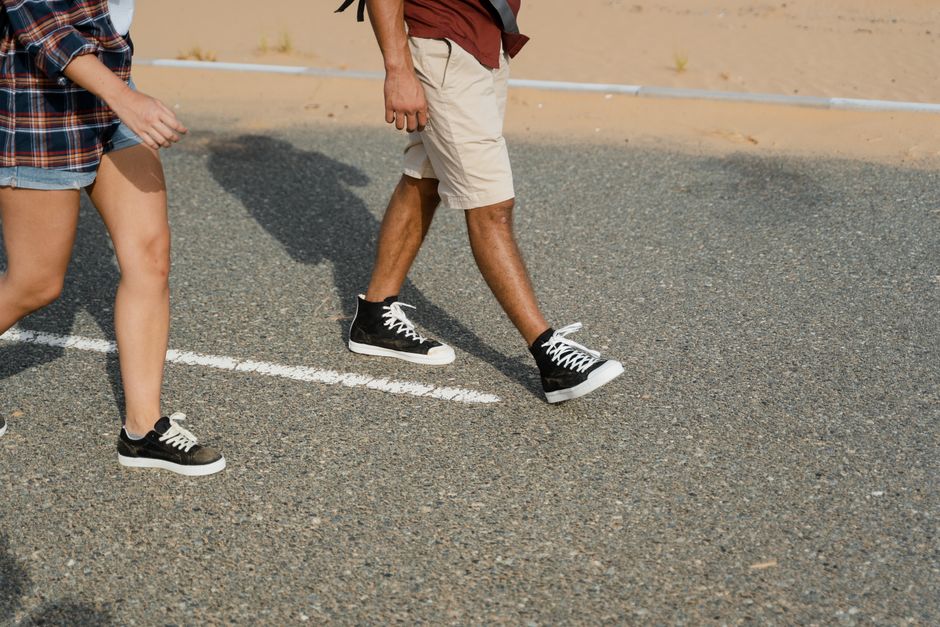
A city break can keep you on your feet for much of the day, from the first walk to a station to the last detour after dinner. Choosing Comfortable Walking Shoes for City Trips starts with thinking about those ordinary hours: standing in galleries, crossing uneven streets, climbing steps and finding your way back to your accommodation. The right pair should suit your feet and your plans. This guide focuses on fit, surfaces and testing before departure, so you can choose shoes with confidence.
Start with the walking your trip involves
Look beyond the distance between attractions. A compact historic centre may involve cobbles, slopes and repeated staircases, while a larger city can mean long stretches on pavement between transport connections. Standing in queues also feels different from walking continuously. Think through a typical day, including the journey from your accommodation and any evening plans, before deciding what your shoes need to handle.
Weather matters too. Warm conditions call for ventilation, while a wet forecast makes grip and drying time more important. For destination conditions, access restrictions or seasonal route closures, check current details with official tourism and transport sources. You do not need a different shoe for every possibility, but you do need a pair that suits the conditions you are most likely to meet.
Make fit the deciding factor
Try shoes with your travel socks
Bring the socks you expect to wear on the trip when trying on shoes. A thick sock can change the fit of a shoe that felt comfortable with a thin one. If you already use an insert, try it inside the shoe as well. Judge the complete combination rather than assuming you can make adjustments after buying.
Try both shoes and walk around. Your feet may differ slightly in size, so make sure each feels comfortable. Testing later in the day can help you assess fit when your feet are less fresh. Use the stated size as a starting point; the shape and internal space matter more than the number printed inside.
Check the toes, heel and widest part
Your toes should have room to move without touching the front during normal walking. The widest part of your foot should sit comfortably inside the shoe, without pressure along the sides. At the heel, look for a secure hold that does not rub. A little movement can be normal, but repeated slipping is a reason to try another fit.
- Walk briskly: notice whether you grip with your toes to keep the shoe in place.
- Use a slope if available: check whether your toes slide forward or your heel lifts repeatedly.
- Pause and stand: pay attention to pressure that becomes noticeable when you stop moving.
- Change direction: make sure your foot feels secure during turns.
A shoe should feel comfortable from the start. Some materials soften with wear, but you should not rely on that to solve pinching, cramped toes or a shape that feels wrong.
Compare cushioning, flexibility and stability
Softness is easy to notice when you first step into a shoe, but it is only one part of comfort. Very soft cushioning may feel pleasant in a shop yet less steady when turning or walking across uneven paving. A firmer pair may feel more controlled. Compare several options by walking in them, and notice how naturally you move rather than pressing the sole with your fingers.
Look for a shoe that allows a comfortable walking motion without feeling awkward or unstable. Neither extreme stiffness nor complete flexibility is automatically right for everyone. If the shape makes you alter your stride, or you feel perched above the ground, keep looking. Familiarity helps: a type of shoe that already works for your everyday walks is a useful starting point.
Match the outsole to city surfaces
Check the underside of the shoe. Smooth fashion soles may offer little traction on wet paving, while very bulky outdoor tread can feel unnecessary for streets and museums. For general city travel, look for a defined tread pattern and an outsole intended for walking on hard surfaces. No sole guarantees grip, especially on polished stone, wet metal covers or painted crossings.
If your route includes steep streets or long stairways, give downhill walking particular attention during testing. Secure fastening helps stop your foot sliding forward. Take shorter, careful steps on slippery surfaces, and allow yourself time to use handrails. Shoes are part of the solution; your pace and route choices matter too.
Choose materials for the likely weather
For warmer city breaks
Breathable uppers can feel more comfortable during warm days, although lightweight mesh may let water through readily. Walking sandals are another option if you already enjoy wearing them. Look for secure straps and a footbed that stays comfortable during a proper walk. Test every strap contact point, since rubbing may only become apparent after you have been moving for a while.
For damp or cooler conditions
Water-resistant shoes can be useful for occasional showers, while waterproof designs may suit persistently wet conditions. The trade-off can be less ventilation. Read the manufacturer’s description carefully: water resistance and waterproof construction are different claims. Remember that water can still enter through the opening, and a soaked shoe needs time to dry.
Consider your accommodation routine as well. Removable insoles and uppers that dry readily can be useful if you encounter rain. Follow the manufacturer’s care guidance and avoid assuming that direct heat is suitable for drying. Start each morning with dry socks, and give damp shoes as much air as practical overnight.
Give your shortlist a realistic trial
Before buying, check the retailer’s current return conditions so you know where and how you can test the shoes. Begin indoors, then build up to longer walks once you are keeping them. Include the surfaces and activities you expect on your trip: pavement, steps, standing and a short walk carrying your usual day bag.
Pay attention to small annoyances. A seam that repeatedly catches your toe or a heel that keeps rubbing deserves attention before departure. Adjusting the laces or trying a different sock may help, but avoid repeatedly tightening a poor fit to force it to work. Your trial should answer whether you would willingly put the same shoes on again tomorrow.
Plan for comfort across the whole day
Choose socks that stay in position, with seams that do not irritate your toes. Carrying a spare pair is useful after rain or a particularly warm walk. If you have room for another pair of shoes, pick a familiar option that gives you an alternative when your main pair is damp or uncomfortable. It does not need to serve every sightseeing purpose.
Build sitting breaks and transport options into ambitious days, especially early in the trip. If rubbing begins, stop somewhere suitable and check the shoe, sock and any grit inside before continuing. The best purchase is a pair that fits comfortably, suits the streets you plan to explore and has already proved itself on a realistic walk. That leaves you free to enjoy the city and decide where the next turning leads.